



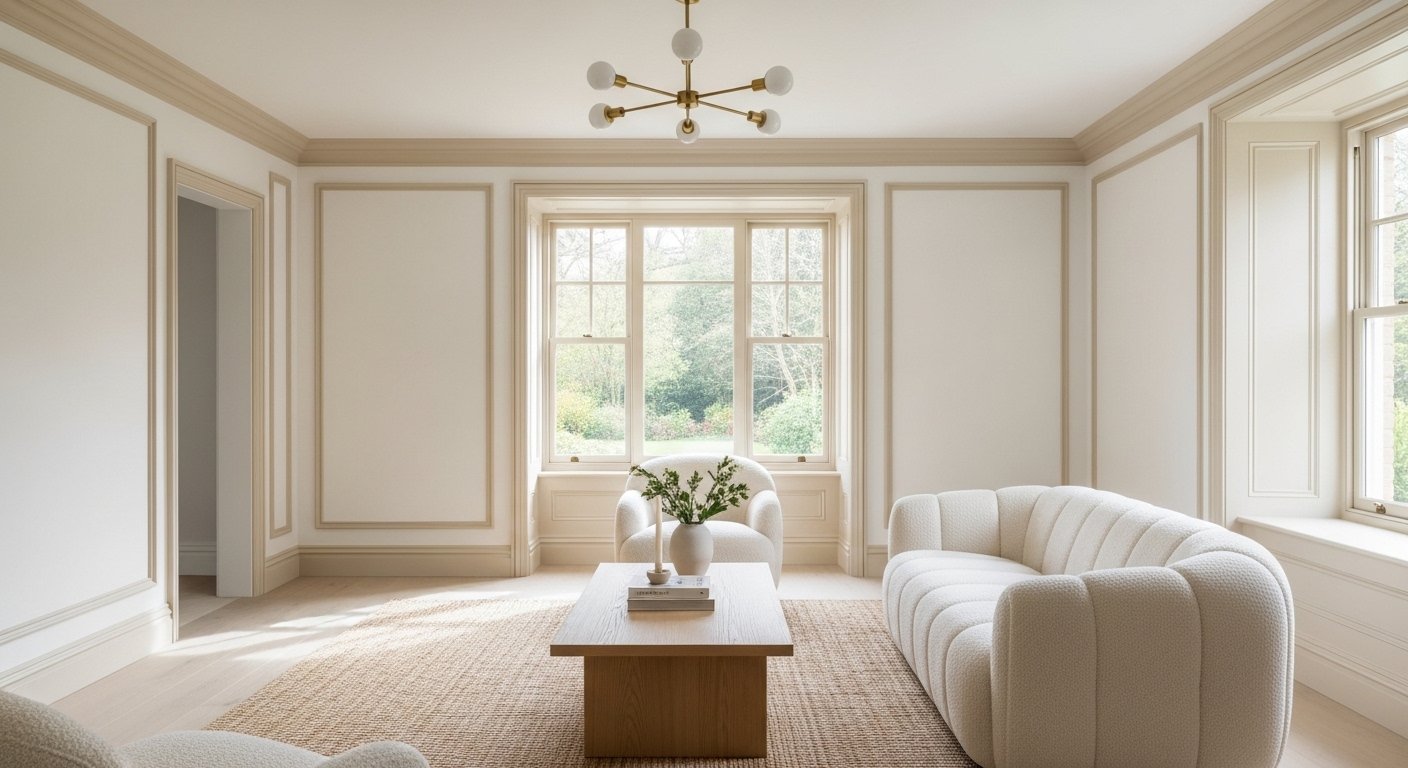
Choosing a home color palette can feel like a total nightmare. You want something fresh but not cold. You want style but not a passing fad. Pairing white walls with beige trim is the secret sauce for a cozy home. This look gives you the best of both worlds. It feels clean like a modern gallery but warm like a classic cottage. Many people stick to white-on-white because it feels safe. But adding beige to your trim can totally change the vibe of your space. It adds a layer of sophistication that pure white just can’t touch. This guide will show you exactly how to nail this look.
Why Choose the Beige Trim and White Walls Combination?
- A Fresh Alternative to White-on-White: Breaking away from standard white trim adds instant depth to your room.
- Creating Visual Balance: White walls stay airy while beige trim grounds the architectural bones of the house.
- Warmth and Atmosphere: Creamy undertones stop your home from looking like a sterile hospital wing.
- Timelessness vs. Trendiness: This combo is a classic that won’t look dated in five years.
- Versatility Across Styles: It works for everything from modern organic to traditional farmhouse vibes.
Understanding the Role of White Walls in Modern Design
White walls are the ultimate MVP of interior design. They act as a massive reflector for any light coming through your windows. This makes even the smallest, cramped rooms feel way more open. When you use white walls with beige trim, you create a soft backdrop. This backdrop lets your personality shine through your furniture and art. It is the perfect way to make a room feel expensive without trying too hard. White is also great because it goes with literally everything you own. You don’t have to worry about your couch clashing with the paint.
- Maximizing Perceived Space: Light colors trick the eye into seeing more square footage.
- A Blank Canvas for Decor: Your colorful rugs and art will pop against a neutral white wall.
- Enhancing Natural Light: White paint bounces sunshine into those annoying dark corners.
The Impact of Beige Trim on Architectural Features
Trim is like the frame on a beautiful painting. If the frame is the same color as the wall, it kind of disappears. Using beige trim makes the architecture of your home stand out. It highlights the craftsmanship of your baseboards and crown molding. This is especially great in older homes with lots of character. The beige color gives the room a sense of history and weight. It makes the house feel sturdy and well-built. It also helps transition the eyes from the bright walls down to the floor.
- Defining the Room’s Bones: It draws attention to window casings and door frames.
- Adding Structural Weight: Darker trim makes a room feel more grounded and solid.
- Coordinating with Flooring: Beige acts as a bridge between white walls and wood floors.
Critical Considerations Before Picking Your Palette
You might want to run to the store and grab the first beige you see. Slow down because that is a recipe for disaster. Paint looks wildly different depending on where you put it. You have to think about your specific house before you commit. What works in a magazine might look like mud in your hallway. Take your time during the planning phase. It will save you a massive headache later on. You want to make sure the white and beige actually play nice together.
- The Golden Rule: Never Skip Sampling: Always buy a small jar and paint a patch on the wall.
- The Alabaster Exception: Only skip the test if you have used the color a million times.
- Identifying Transitions: Plan where the trim color stops in open-concept living areas.
Choosing the Perfect Pair: Contrast, Tone, and Lighting
Contrast Levels

The amount of contrast you choose determines the mood of the room. A subtle transition feels very calm and peaceful. This happens when the beige is only a few shades darker than the white. It is great for bedrooms where you want to relax. On the other hand, a high contrast look is very bold. This makes a huge architectural statement. It tells everyone that you made a specific design choice. Think about how much you want the trim to “pop” against the wall.
Identifying Undertones
Every paint color has a hidden “undertone” that can ruin your life. Some beiges look pink, while others look green or yellow. You need to match the undertone of your white walls with your beige trim. If your white is warm, your beige should be warm too. If you mix a cool white with a warm beige, it might look dirty. Neutral tones are the safest bet for beginners. They stay true to color regardless of what else is in the room. Always check the undertone in natural daylight.
The Role of Lighting
Light is the biggest factor in how paint looks. A room with huge windows will wash out light colors. In that case, you might need a darker beige so it doesn’t just look white. Dark rooms like basements are the opposite. A dark beige can look very heavy and gloomy in a basement. You want to pick something lighter to keep the space feeling friendly. Check your paint samples in the morning, afternoon, and at night. Artificial light from your lamps will also change the color.
Expert Color Combinations and Recommendations
The Author’s Proven Duo

- Sherwin Williams Greek Villa (Walls): This is a creamy, soft white that feels very cozy.
- Sherwin Williams Natural Linen (Trim): This beige is breezy and light like a vacation home.
Other High-Performing Combinations
Finding the right mix is easier when you look at what pros use. Sherwin Williams Pure White is a fan favorite for walls. It is very clean but doesn’t feel like a cold refrigerator. Pairing it with Accessible Beige creates a very modern look. Accessible Beige is famous because it is a “greige” that works in almost any light. If you want something a bit more traditional, look at Kilim Beige. It has more warmth and looks great in homes with lots of wood furniture.
- Sherwin Williams Pure White & Accessible Beige: The ultimate modern neutral duo.
- The White Paint Edit: Use curated lists to find whites that don’t turn yellow.
- Alternative Favorites: Look into Alabaster for a warm wall or Debonair for a unique trim.
Flooring Considerations: Anchoring the Palette

Your floors take up a huge amount of visual space. You have to make sure your white walls with beige trim don’t clash with them. If you have oak floors, a warm beige trim will look amazing. It pulls the honey tones out of the wood. For those with gray-toned wood or tile, a cooler beige is better. You want the trim to feel like an extension of the floor. This creates a seamless flow from the ground up to the ceiling. It makes the whole design feel intentional.
- Hardwood Harmony: Use beige to highlight the natural grain in your wood floors.
- Carpet Selection: Pick a neutral carpet that is a shade lighter or darker than the trim.
- Tile and Stone: Beige trim looks expensive when paired with marble or travertine floors.
- The Rug Factor: Use a large rug to tie the white walls and beige trim together.
Hardware and Metallic Accents

The jewelry of your home is the hardware. Your doorknobs and hinges can change the whole vibe. When you have white walls with beige trim, you have a few great options. Matte black hardware looks super sharp and modern. It creates a high-contrast look that feels very current. If you want a softer, more elegant feel, go with brass or gold. These metals enhance the warmth of the beige trim. It makes the room feel like a high-end hotel suite.
- The Power of Black: Matte black handles pop beautifully against beige doors and trim.
- Warmth with Brass and Gold: Gold accents make beige trim look rich and glowing.
- Classic Polished Nickel: This metal is great for a sophisticated, traditional look.
- Lighting Fixtures: Choose lights that match your hardware for a finished appearance.
Furnishing a White and Beige Space
Furniture is where you can add layers of interest. A neutral room needs texture so it doesn’t feel flat. Think about using fabrics like linen, wool, or leather. These materials have a natural look that fits the beige and white theme. You can also mix different wood tones in your furniture. A dark walnut table looks great against a light beige trim. Don’t be afraid to add a few pops of color too. Sage green or navy blue look stunning in a neutral room.
- Layering Textures: Use cozy blankets and pillows to add physical depth to the room.
- Wood Tones in Furniture: Mixing light and dark woods adds a custom feel.
- Injecting Accent Colors: Use small items like vases or art to add a splash of color.
- Drapery Choices: White curtains make the room feel taller and more open.
Application Beyond Baseboards: Expanding the Beige Palette
Don’t stop at the floor! You can use your trim color in other places too. Painting your interior doors beige is a total pro move. It makes the doors look like custom furniture rather than just a way to enter a room. You can also use beige on your staircase. Painting the spindles or the handrail can make the stairs a focal point. If you have a fireplace, the mantel is a great spot for beige paint. It frames the fire and makes the living room feel extra snug.

- Doors and Entryways: Beige doors add a high-end feel to your hallways.
- Staircase Transformations: Paint the risers beige for a unique, structured look.
- Window Casings and Mantels: Use trim color to frame your views and your fireplace.
- Cabinetry Integration: Match mudroom cabinets to the trim for a built-in appearance.
Practical Tips for a Professional Paint Finish
You want your paint job to look like you hired a pro. The secret is all in the prep work. You can’t just slap paint on a dirty wall. You need to clean your trim and sand down any bumps. Caulking the gaps between the trim and the wall is also huge. It makes the line look perfectly straight. When it comes to the actual painting, use the right tools. A high-quality brush will prevent those annoying streak marks. Take your time and don’t rush the drying process.
- Surface Preparation: Sanding and cleaning ensure the paint actually sticks.
- Choosing the Right Sheen: Use satin for trim because it is easy to wipe clean.
- Cutting-In Techniques: Use a steady hand or painter’s tape for crisp lines.
Maintaining and Refreshing Your Neutral Space

Beige trim is actually easier to keep clean than white trim. It hides a bit more dust and those annoying scuff marks from shoes. But you still need to take care of it. Use a damp cloth to wipe down baseboards every few weeks. This keeps the color looking fresh and bright. Always keep a small can of your trim paint in the garage. You will want to do quick touch-ups if you move furniture or have pets. A well-maintained home always looks more expensive.
- Cleaning Beige Trim: A simple soap and water mix works best for most scuffs.
- Touching Up: Keep a tiny brush handy for fixing chips on door frames.
- Evolving the Room: Swap out your pillows to change the vibe for summer or winter.
Final Design Thoughts
At the end of the day, your home should make you happy. Choosing white walls with beige trim is a safe but stylish bet. It creates a warm environment for your family and friends. Don’t let the fear of picking the “wrong” color stop you from trying. If you follow the tips in this guide, you will end up with a beautiful space. Remember to test your samples and trust your gut feeling. Your home is your sanctuary, so make it look exactly how you want.
- Trusting Your Instincts: If a color makes you smile, it is the right choice.
- Invitation to Experiment: Don’t be afraid to try something new with your trim.
- Resource Guide: Check out design sessions if you need a little extra help.
| Feature | Description | Impact on the Room |
| Primary Wall Color | Crisp or warm white shades like Greek Villa or Alabaster. | Creates a sense of openness and reflects natural light. |
| Trim Color Palette | Beige, tan, or “greige” tones like Natural Linen or Accessible Beige. | Grounds the room and adds architectural definition. |
| Visual Contrast | The level of difference between the white and beige shades. | Determines if the vibe is subtle and calm or bold and modern. |
| Undertone Matching | Aligning the hidden colors (pink, yellow, green) of both paints. | Ensures the colors look intentional and don’t clash. |
| Lighting Response | How the chosen colors react to sun and lamps. | Prevents light beiges from washing out or looking muddy. |
| Trim Paint Sheen | Usually a satin or semi-gloss finish for the woodwork. | Adds a slight glow and makes surfaces much easier to clean. |
| Wall Paint Sheen | Usually a flat or eggshell finish for the drywall. | Hides wall imperfections and provides a soft, matte look. |
| Flooring Integration | Coordinating the trim with wood, tile, or carpet tones. | Acts as a bridge between the walls and the ground. |
| Hardware Pairing | Choosing metals like matte black, brass, or polished nickel. | Acts as the “jewelry” to complete the neutral design. |
| Textural Layering | Using linen, wool, and wood in furniture and decor. | Adds physical depth so the neutral space doesn’t feel flat. |
| Architectural Focus | Highlighting doors, stairs, mantels, and window casings. | Turns standard trim into a custom-looking design feature. |
| Maintenance Factor | The ability of beige to hide dust and scuff marks. | Offers a more forgiving surface than high-maintenance pure white. |
| Style Versatility | Adaptability to Farmhouse, Modern, or Traditional styles. | Makes it a safe and flexible choice for any home renovation. |
| Room Perception | The psychological effect of the color combination. | Feels warm and inviting while maintaining a clean appearance. |
Frequently Asked Questions About White Walls with Beige Trim
Can I use beige trim with cool-toned white walls?
It is possible but you have to be very careful. Cool whites often have blue or gray undertones that can clash with the yellow in beige. If you want this to work, choose a “greige” trim that bridges the gap between gray and beige. This keeps the room from looking mismatched or messy.
What is the best paint finish for white walls?
An eggshell or flat finish is usually the best choice for walls. Eggshell has a tiny bit of shine that makes it easy to wipe down. Flat paint is great because it hides bumps and bruises on your drywall. Both look great next to a shinier beige trim.
Will white walls with beige trim make my ceiling look lower?
Actually, it can make your ceiling look higher if you do it right. If you paint your crown molding the same beige as your baseboards, it draws the eye up. This vertical movement creates the illusion of more height. Keep the ceiling itself a bright, crisp white to maximize this effect.
Is beige trim harder to sell when I list my house?
Neutral homes are almost always easier to sell. Most buyers love the look of white walls with beige trim because it feels move-in ready. It looks more custom than a basic flip house. It gives off a warm and inviting vibe that helps people imagine living there.
Should I paint my window grids beige too?
Yes, painting the actual window grids or “muntins” can look amazing. It creates a framed view of the outdoors. If your windows are vinyl, make sure you use a paint that sticks to plastic. It adds a high-end designer touch that most standard homes don’t have.
Can I use this color combo in a small bathroom?
This is a great idea for small bathrooms. White walls keep the tight space from feeling like a cave. The beige trim adds just enough color to make the room feel styled. Pair it with a light wood vanity to keep the organic theme going.
Does beige trim work with modern black window frames?
This is a very popular trend right now. The black frames provide a sharp edge, while the beige trim softens the transition to the white wall. It creates a layered, professional look. It is perfect for modern farmhouse or industrial styles.
What color should my light switches and outlets be?
You have two main choices for your electrical covers. You can go with white to match the walls so they disappear. Or you can go with a metallic finish like brass to match your hardware. Try to avoid beige plastic covers as they often look dated.
Can I use different shades of beige in different rooms?
It is better to stick to one beige throughout the main areas of the house. This creates a sense of “flow” that makes the home feel bigger. You can switch to a different shade in a bedroom or office. Just make sure the undertones are similar so it doesn’t feel jarring.
How do I pick a white that doesn’t look yellow next to beige?
Look for a “true white” or a white with a slight gray base. If your white is too creamy, the whole room might end up looking too yellow. A clean white provides the right amount of “breathing room” for the beige trim. Always hold the two swatches together before buying.
Should my kitchen cabinets match the beige trim?
Matching your cabinets to your trim is a genius design move. It makes your kitchen feel like it was custom-made for the house. It creates a very high-end, “built-in” look. This works especially well in open-concept homes where you can see the trim and cabinets at the same time.
Is beige trim okay for a nursery?
Beige is a fantastic choice for a nursery. It is gender-neutral and very calming for a baby. It also grows with the child better than pink or blue. You can change the decor as they get older without ever repainting the trim.
Can I use this palette with dark antique furniture?
The warmth in beige trim actually helps dark antiques look less heavy. It bridges the gap between the dark wood and the bright white walls. This creates a balanced look that feels curated over time. It keeps old furniture from looking out of place.
What if my floor is a cool gray tile?
If your floor is cool, you should look for a “mushroom” beige. This is a beige that has a lot of gray in it. It will look warm enough to be beige but cool enough to match the tile. This prevents the “clash” between warm trim and cool floors.
Should I paint the ceiling trim beige or white?
In most cases, you should match the ceiling trim to the baseboards. This “encloses” the white walls and makes the room feel finished. If you want the ceiling to feel infinite, you can paint the crown molding white. Most designers prefer the beige crown for a more tailored look.
Is it okay to have white doors with beige trim?
It is usually better to paint the doors the same beige as the trim. If the doors are white and the trim is beige, it can look a bit busy. A beige door looks like a deliberate design choice. It adds a lot of character to a plain hallway.
Can I add a third color to this mix?
Yes, a soft “third” neutral like sage green or dusty blue works perfectly. You can use this for an accent wall or built-in bookshelves. These colors naturally complement the earthiness of beige. It keeps the room from feeling too one-dimensional.
How does beige trim handle sunlight over time?
Beige is very durable when it comes to sun exposure. It doesn’t show “yellowing” as much as some white paints do. However, you should still use a high-quality UV-resistant paint. This keeps the color from fading if your room gets a ton of direct sun.
What rug patterns work with this look?
Jute and sisal rugs are the natural partners for beige trim. They share the same earthy tones and textures. If you want a pattern, look for a Persian rug with some cream and tan in it. Avoid rugs that are too bright or neon as they will overwhelm the palette.
Can I use beige trim in a very modern, minimalist home?
Minimalism doesn’t have to be all white and cold. Using a very light, sandy beige trim adds “soul” to a minimalist space. It keeps the clean lines but adds a layer of comfort. It is a great way to make a modern home feel more livable.

