
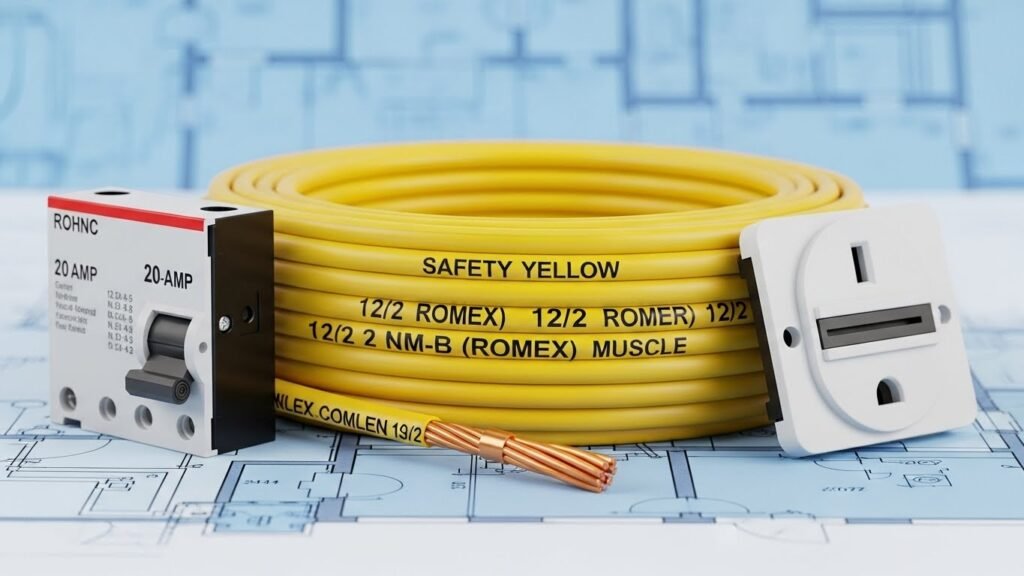
Choosing the right wire size is the most important part of any electrical project. If you are asking what gauge wire do i need for 20 amps, you are in the right place. Picking the wrong wire can cause serious trouble in your home. It might lead to fires or ruin your expensive tools and gadgets. Most folks think any wire will work, but that is just not true. You need the right thickness to keep the electricity flowing smoothly and safely. This guide will help you understand the rules for a 20-amp circuit. We will make it super easy to follow so you can feel like a pro.
Importance of Correct Wire Gauge for Electrical Systems
Safety is the number one reason we care about wire size. When you run too much power through a thin wire, it gets hot. Think of it like water trying to rush through a tiny straw. The pressure builds up and causes a lot of friction. In a wire, that friction turns into heat that can melt things. This is exactly how electrical fires start in many houses. You want to make sure your wires stay cool even when things are running.
Proper sizing also makes your electrical system work much better. If the wire is too small, your appliances might not get enough power. Your lights might flicker or your microwave might take longer to heat food. Using the right gauge ensures your infrastructure stays strong for a long time. It stops the system from straining under a heavy load. This keeps your monthly power bill from spiking due to wasted energy. It also protects your electronics from getting damaged by low voltage.
The integrity of the conductor depends on its ability to handle heat. Every wire has a limit on how much heat it can take before the skin of the wire melts. This skin is called insulation and it keeps the electricity inside. If the insulation melts, sparks can fly and hit your wooden wall studs. Thicker wires have less resistance, so they do not get as hot. This balance is what keeps your family safe while you sleep at night.
Understanding Wire Gauge and Ampacity Fundamentals
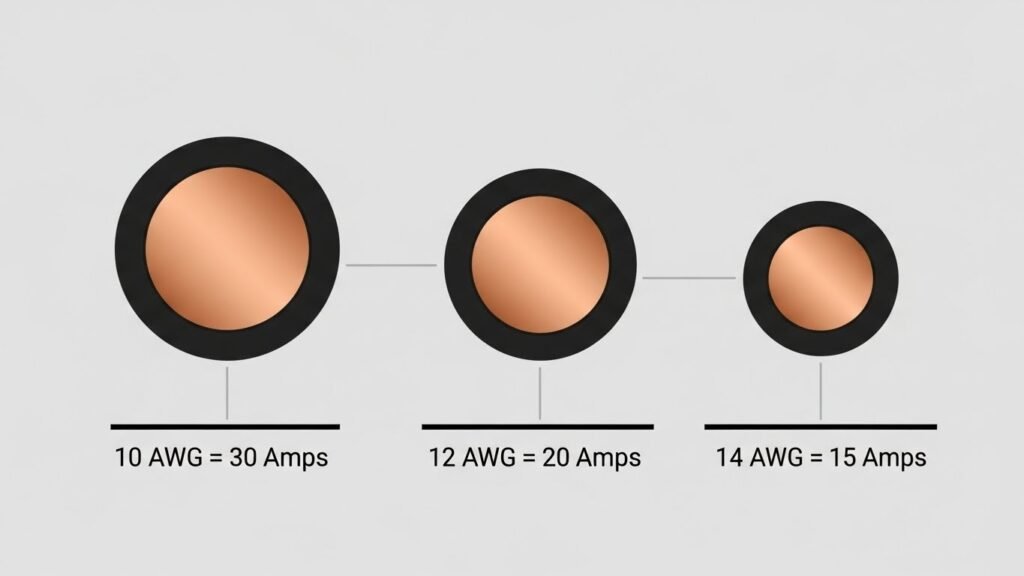
The American Wire Gauge (AWG) system is how we measure how thick a wire is. It can be a little confusing because the numbers work backward. A bigger number actually means the wire is thinner and smaller. For example, a 14-gauge wire is thinner than a 12-gauge wire. If you need more power, you need a smaller AWG number. Just remember that smaller numbers mean more “muscle” for your electricity.
Ampacity is a big word that just means how much “juice” a wire can carry. It is the maximum amount of current a conductor can handle safely. If you go over this limit, the wire starts to deteriorate and break down. This limit is set by the type of metal and the insulation used. For a 20-amp circuit, you must use a wire with the right ampacity. This ensures the wire never gets hot enough to cause a disaster.
Different metals carry electricity in different ways. Copper is the king of residential wiring because it is a great conductor. It lets electrons flow through it very easily with little resistance. Aluminum is another option, but it does not carry power as well as copper. Because of this, you usually need a thicker aluminum wire to do the same job. Understanding these materials helps you make the right choice for your specific project.
Recommended Wire Sizes for 20-Amp Circuits
12 AWG Copper Wire
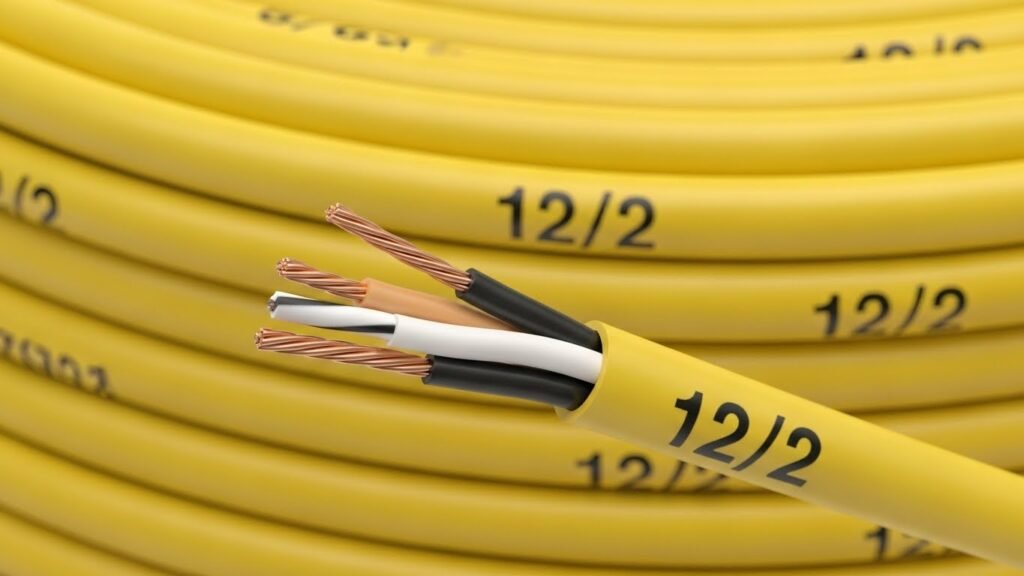
In most homes, 12-gauge copper wire is the standard choice for 20-amp circuits. It is the perfect size for handling the power needs of modern living. Most electricians reach for a roll of yellow Romex when they see a 20-amp breaker. This wire is tough, reliable, and fits perfectly into standard outlet terminals. It is the minimum size required by the National Electrical Code for this circuit.
- Kitchen Outlets: You need 12 AWG for small appliances like blenders and coffee makers.
- Bathroom Receptacles: High-heat hair dryers require the strength of a 20-amp circuit.
- Laundry Rooms: Washing machines pull a lot of power and need 12-gauge wire.
- Garage Workshops: Power tools run much better on 12 AWG than on thinner wires.
This wire size works great for standard runs that stay under 100 feet. Most rooms in a house are close enough to the panel for this to work. You will get full power to your devices without any major issues. It is easy to bend and pull through the holes in your wall studs. Just make sure you are using a 20-amp breaker to match this wire size.
10 AWG Copper Wire
Sometimes you need to go even thicker and use 10-gauge copper wire. This usually happens when the distance from the panel is very long. When you go past 100 feet, electricity starts to lose its “oomph” as it travels. Using 10 AWG helps push the power further without losing strength. It acts like a wider highway for the electricity to travel on. This is a smart move for detached garages or sheds in the backyard.
Heavy-duty equipment also benefits from the extra thickness of 10-gauge wire. If you have a big air compressor or a table saw, this wire is best. These machines pull a massive amount of power right when they start up. The thicker wire handles that initial surge much better than 12 AWG would. It ensures your tools don’t bog down or trip the breaker constantly. Think of it as “future-proofing” your workshop for bigger and better tools.
10 AWG Aluminum Wire
Aluminum wire is a bit different than copper because it resists flow more. To get 20 amps safely through aluminum, you must use 10-gauge wire. You cannot use 12-gauge aluminum for a 20-amp circuit because it will overheat. While aluminum is cheaper, it requires more care during the installation process. Many modern homes still use aluminum for the main lines coming from the street. However, it is less common for the small circuits inside your rooms.
- Lower Cost: Aluminum is lighter and costs less than copper for long runs.
- Expansion Issues: Aluminum expands and contracts more than copper when it gets warm.
- Oxidation Risk: Raw aluminum can grow a “skin” that stops electricity from flowing well.
- Special Paste: You must use anti-oxidant cream on the ends of aluminum wires.
If you choose aluminum, you must use connectors rated for it. Look for the “AL/CU” stamp on your outlets and wire nuts. This means the metal in the connector won’t react badly with the aluminum. If you use the wrong connectors, the wires can become loose over time. Loose wires create sparks, and sparks create house fires very quickly. Always double-check your parts when working with aluminum wiring.
Key Factors Influencing Wire Selection and Performance
Voltage Drop Considerations
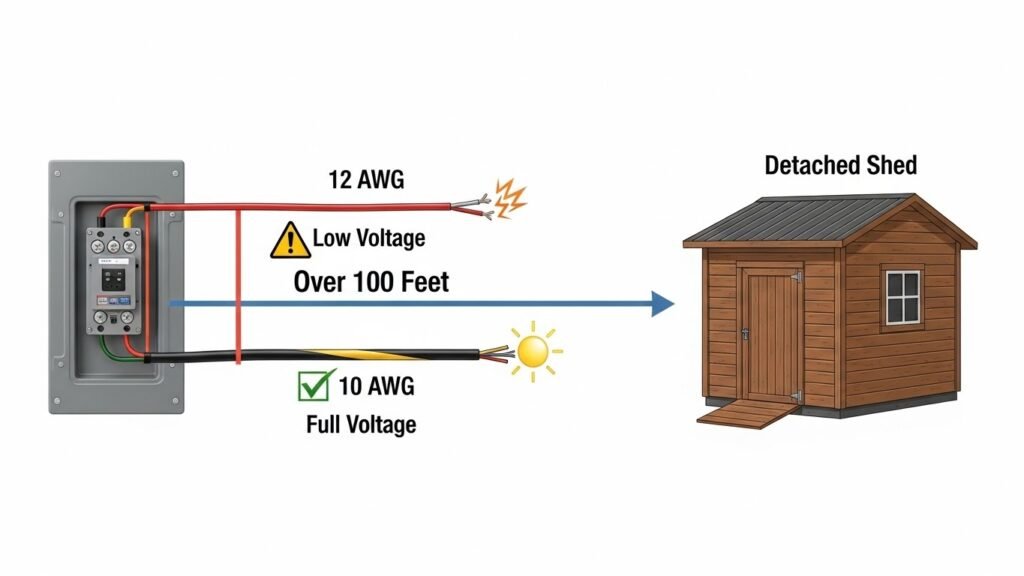
Voltage drop is what happens when electricity loses pressure over a long distance. The National Electrical Code (NEC) says you should not lose more than 3%. If you lose too much voltage, your electronics might start acting very weird. Your computer might crash or your LED lights might flicker and die early. This is why we upsize the wire when the run is very long. It keeps the electrical pressure high enough for all your gear to work.
Resistance is the main enemy when it comes to long electrical runs. Every foot of wire adds a tiny bit of resistance to the flow. Over 100 or 150 feet, those tiny bits add up to a big problem. Thicker wires have less resistance because they have more surface area for electrons. You can use a voltage drop calculator to see if you need bigger wire. It is a simple tool that saves you from a lot of headaches later.
Ambient Temperature and De-rating
The temperature of the air around your wires actually matters quite a bit. If a wire is in a super hot attic, it cannot cool down easily. This means it cannot carry as much power as it could in a cool basement. This process of lowering the power limit is called de-rating. You might have to use a 10-gauge wire instead of 12-gauge in hot spots. This keeps the wire from melting its own insulation in the summer heat.
The NEC has special tables that tell you how to adjust for heat. Electricians use these charts whenever they run wires through hot industrial areas. Even in a home, a bunch of wires bundled together can get too hot. If you have ten wires in one small hole, they all share their heat. Giving your wires some breathing room is a great way to keep them safe. Proper airflow around your conduits and cables is always a good idea.
Circuit Breaker and Overcurrent Protection
The circuit breaker is the “brain” that protects your wires from burning up. You must always match the breaker size to the wire size you are using. A 20-amp breaker is designed specifically to protect 12-gauge copper wire. If you put too much load on the circuit, the breaker trips to stop the flow. This happens before the wire has a chance to get dangerously hot and melt. It is the most important safety device in your entire electrical panel.
- Fire Hazard: Never put a 20-amp breaker on 14-gauge wire.
- Mismatched Parts: The wire will melt before the breaker knows there is a problem.
- Code Violation: Inspectors will fail your house if they see mismatched breakers.
- False Security: A breaker that is too big gives you a fake sense of safety.
Important Calculations and Load Limits
The 80% Rule for Continuous Loads
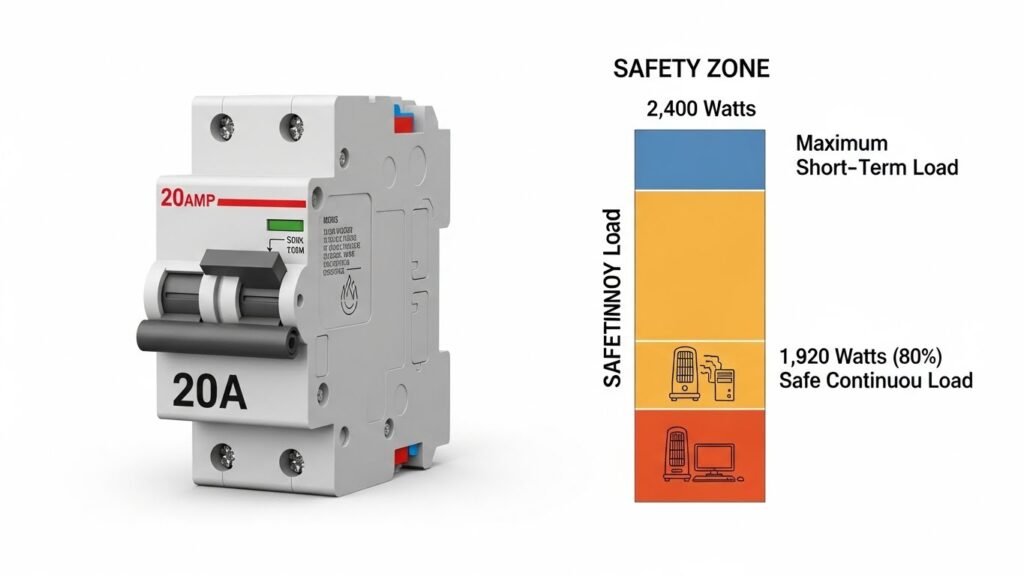
There is a golden rule in the electrical world called the 80% rule. It says you should only use 80% of a circuit’s capacity for long periods. A continuous load is anything that runs for three hours or more at once. This includes things like your home office lights or a space heater. If you run a full 20 amps for hours, the breaker might get too hot. Sticking to the 16-amp limit keeps everything running cool and stable all day.
- Safe Margin: 16 amps is the target for long-running devices on this circuit.
- Space Heaters: These are the biggest cause of tripped breakers in the winter.
- Lighting Systems: Large arrays of lights can stay on for many hours.
- Server Racks: Home computers that stay on 24/7 are considered continuous loads.
Total Circuit Capacity and Wattage
You can figure out how much a circuit can handle with a simple math trick. Take the amps and multiply them by the volts to get the total watts. For a 20-amp circuit at 120 volts, the total capacity is 2,400 watts. This is the absolute maximum amount of energy you can pull at one time. If you plug in a 1,500-watt heater and a 1,000-watt vacuum, the breaker will trip. Knowing your wattage helps you plan where to plug in your big appliances.
- Load Management: Don’t put two high-wattage items on the same circuit.
- Dedicated Circuits: Big items like refrigerators should have their own 20-amp line.
- Shared Circuits: Most bedroom outlets share one circuit, so watch your total usage.
- Kitchen Planning: Spread out your toaster and microwave to different outlets.
Essential Materials for a 20-Amp Circuit
- 12 AWG Copper Wire: This is the standard “muscle” for your 20-amp circuit and the minimum size required by the National Electrical Code.
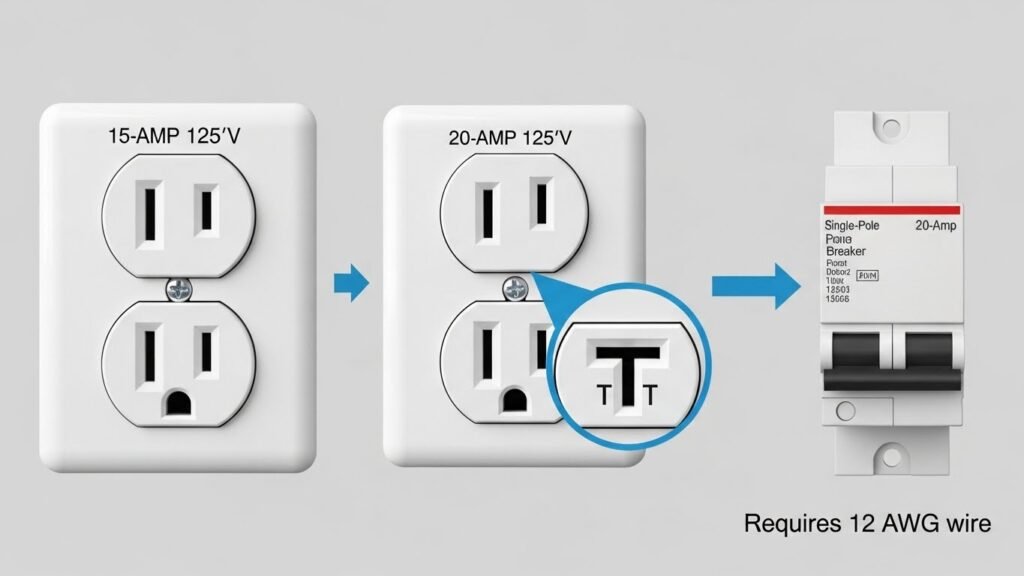
- 20-Amp Circuit Breaker: You must match this specifically to your 12-gauge wire to ensure the “brain” of your system can trip before the wire gets too hot.
- Electrical Box: You will need a plastic or metal box to house your outlets or switches safely.
- 20-Amp Receptacles: Ensure the outlets you buy are rated for 20 amps, which you can usually identify by a small horizontal “T” slot on the face.
- Wire Nuts or Connectors: Use these to join wires together; if you are mixing copper and aluminum, ensure they are specifically labeled “AL/CU”.
- Staples or Conduit: Use electrical staples to secure Romex (NM-B) inside your walls, or use THHN wire inside a conduit if the wire is exposed.
- Wire Strippers: A tool that lets you remove the insulation without damaging the copper underneath.
Optional Items for Long Distance or Special Locations
- 10 AWG Copper Wire: If your project is more than 100 feet away from the panel, use this thicker wire to prevent “voltage drop”.
- GFCI Outlet: This is a special safety outlet required for wet areas like kitchens, bathrooms, or outdoors.
- Anti-Oxidant Paste: Only needed if you are using 10-gauge aluminum wire to prevent the connections from corroding.
Best Practices for Installation and Code Compliance
Following the National Electrical Code (NEC) is not just a suggestion; it is the law. These rules are updated every few years to keep up with new technology. They ensure that every house is wired in a way that prevents deaths and fires. Always check your local building codes before you start any DIY electrical work. Some cities have extra rules that are even stricter than the national ones. Staying in line with the code also helps when you want to sell your home.
The type of insulation on your wire matters just as much as the thickness. For indoor dry areas, most people use Romex (NM-B) cable because it is easy. If you are running wire through a pipe, you should use THHN or THWN wire. For wires going underground to a lamp post, you need UF-B cable. This cable has a tough plastic skin that protects it from moisture and bugs. Choosing the right cable type ensures your wiring lasts for decades without rotting.
- NM-B (Romex): Standard indoor wire for walls and ceilings.
- THHN: Single wires used inside metal or plastic conduits.
- UF-B: Direct-burial cable for going under the yard or garden.
- MC Cable: Metal-clad wire used in places where the wire might get crushed.
If you ever feel confused, you should call a licensed electrician for help. Electricity is not something you want to guess about when it comes to safety. A pro can make sure your connections are tight and your ground wires are correct. They have the tools to test your circuits and find hidden problems. It might cost some money, but the peace of mind is worth every penny. Your home and your family are too important to risk on a bad wiring job.
Frequently Asked Questions
Can I run a 20-amp circuit using 14-gauge wire if the load is small?
No, you should never do this because it is a fire hazard. A 20-amp breaker is designed specifically to protect 12-gauge copper wire. If you put 20 amps through 14-gauge wire, the wire will get hot enough to melt its own insulation before the breaker trips.
Why does the NEC recommend a 3% limit for voltage drop?
If you lose too much voltage, your electronics might start acting very weirdly. Your computer might crash, or your LED lights might flicker and die early. Staying within the 3% limit keeps the electrical pressure high enough for all your gear to work safely.
How does bundling multiple 20-amp wires together affect safety?
A bunch of wires bundled together can get too hot because they all share their heat. Giving your wires some breathing room is a great way to keep them safe. Proper airflow around your conduits and cables is always a good idea to prevent overheating.
What is the maximum wattage a 20-amp circuit can handle at 120 volts?
For a 20-amp circuit at 120 volts, the total capacity is 2,400 watts. This is the absolute maximum amount of energy you can pull at one time. If you exceed this, such as by running a 1,500-watt heater and a 1,000-watt vacuum simultaneously, the breaker will trip.
What exactly is a “continuous load” on a 20-amp circuit?
A continuous load is anything that runs for three hours or more at once. This includes things like your home office lights, server racks, or a space heater. For these loads, you should only use 80% of the circuit’s capacity to keep everything running cool.
Why is 12-gauge copper wire usually wrapped in yellow insulation?
Most electricians reach for a roll of yellow Romex when they see a 20-amp breaker. This color-coding makes it easy to identify the wire as 12-gauge, which is the standard choice for 20-amp circuits in modern homes. It helps inspectors and DIYers quickly verify that the wire matches the breaker size.
Is it necessary to use a 20-amp circuit for a bathroom?
Yes, high-heat hair dryers and other styling tools require the strength of a 20-amp circuit. The National Electrical Code requires this to ensure the circuit can handle the heavy pull of power these devices demand.
Can I use 10-gauge wire for a 20-amp circuit even if the run is short?
Yes, you can use a thicker wire like 10-gauge copper for a 20-amp circuit. While 12-gauge is the minimum, 10-gauge acts like a wider highway for the electricity to travel on. It is often used to “future-proof” workshops for bigger tools.
Why does aluminum wire require a special anti-oxidant paste?
Raw aluminum can grow a “skin” through oxidation that stops electricity from flowing well. You must use anti-oxidant cream on the ends of aluminum wires to ensure a safe connection. Without it, the connection can become resistive and create a fire risk.
What are the risks of using the wrong connectors with aluminum wiring?
If you use the wrong connectors, the wires can become loose over time because aluminum expands and contracts more than copper. Loose wires create sparks, and sparks create house fires very quickly. Always look for the “AL/CU” stamp on your outlets and wire nuts.
How do I identify a 20-amp rated outlet?
While not explicitly in the text, 20-amp receptacles are designed to fit the power needs of modern living and standard outlet terminals. They are matched to the 20-amp breaker to ensure the circuit is fully rated for the load.
Why is copper considered the “king” of residential wiring?
Copper is a great conductor that lets electrons flow through it very easily with little resistance. It is tough, reliable, and fits perfectly into standard electrical components.
What happens if I use a breaker that is too large for the wire?
A breaker that is too big gives you a fake sense of safety. The wire will melt before the breaker even knows there is a problem because the breaker won’t trip at the wire’s lower heat limit.
Can a long wire run cause my computer to crash?
Yes, if the wire is too long, you will experience a voltage drop. This means your devices won’t get the full 120 volts they need, which can cause computers to crash or electronics to break down.
What type of wire should I use for an underground run to a shed?
For wires going underground, you need UF-B cable. This cable has a tough plastic skin that protects it from moisture and bugs. It ensures your wiring lasts for decades without rotting in the dirt.
How many outlets should I ideally put on a single 20-amp circuit?
Most pros recommend putting no more than 10 to 12 outlets on one 20-amp circuit. While there may be no strict limit in some codes, having too many outlets can lead to nuisance tripping.
Why do washing machines need a dedicated 20-amp circuit?
Washing machines pull a lot of power and need the strength of 12-gauge wire on a 20-amp circuit. Heavy-duty appliances should have their own dedicated line to prevent overloading shared circuits.
What is the difference between THHN and Romex (NM-B) wire?
NM-B (Romex) is the standard indoor wire for walls and ceilings. THHN consists of single wires used specifically inside metal or plastic conduits. Choosing the right type depends on whether the wire is protected by a pipe or hidden in a wall.
When should I use MC (Metal-Clad) cable?
MC Cable is metal-clad wire used in places where the wire might get crushed or damaged. The metal skin provides extra physical protection compared to standard plastic-jacketed Romex.
Does the ambient temperature in an attic affect the wire’s capacity?
Yes, if a wire is in a super hot attic, it cannot cool down easily. This requires “de-rating,” which lowers the power limit the wire can safely carry. In some hot spots, you might have to use a 10-gauge wire instead of a 12-gauge to prevent the insulation from melting.