
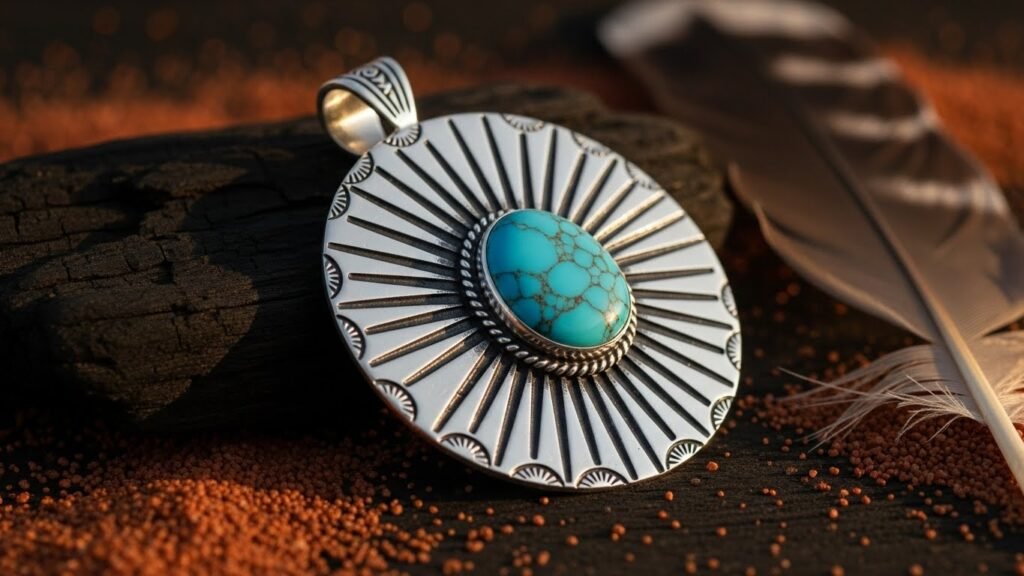
The world of high-end jewelry is usually pretty stuffy. Most brands just follow the same old trends. But then you run into tsunaihaiya and everything changes. This brand is not just about looking flashy. It is about a deep connection between two very different worlds. You get the crazy precision of Japan mixed with the raw soul of Native American art.
Tsunaihaiya is a name that sticks in your head. It comes from the Apache language and means sunlight or sunrise. This choice of name tells you exactly what the brand is about. It is a fresh start and a bright light in the fashion world. The founder did not just read about these cultures in a book. He lived them and breathed them.
When you hold a piece of tsunaihaiya jewelry, you feel the weight of history. It is heavy silver that feels like it has a soul. This isn’t mass-produced junk from a factory. It is the result of years of traveling and learning ancient secrets. It is the kind of stuff that makes people stop and ask questions.
The Genesis of Tsunaihaiya
Understanding this brand starts with its name. Tsunaihaiya represents the moment the sun hits the horizon. In Apache culture, the sunrise is a powerful symbol of new life and hope. The brand uses this energy to create pieces that feel alive. Every ring and pendant carries that morning glow within the metal.
The Vision of Yusuke Kuwano
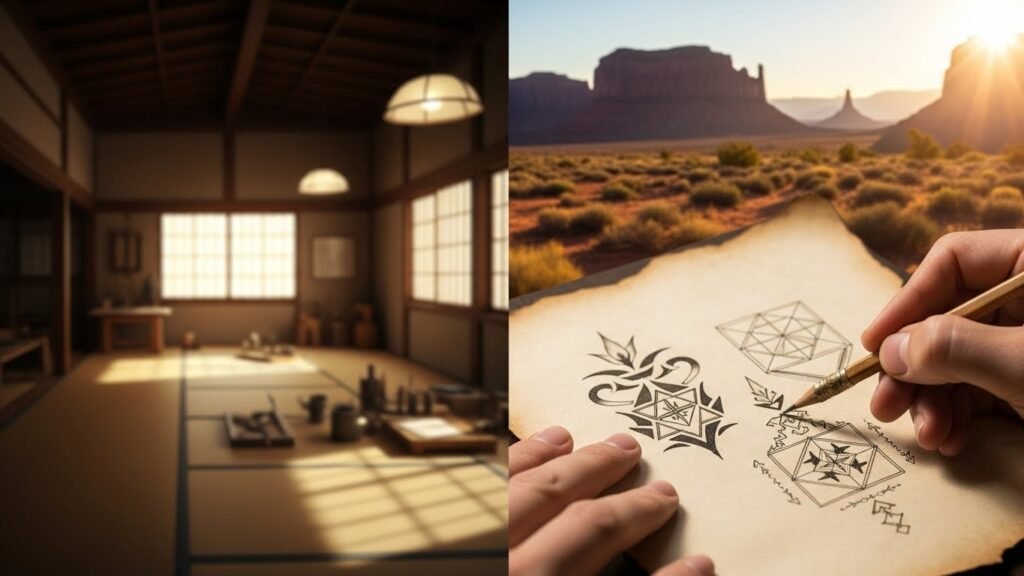
Yusuke Kuwano is the mastermind behind this whole operation. He didn’t start out wanting to just make jewelry. He wanted to find a deeper meaning in his work. This led him on a wild journey from Japan all the way to the American Southwest. He wanted to see if he could blend his own heritage with something completely different.
His vision was clear from the start. He wanted to honor the traditions he loved without just copying them. He saw a link between the quiet focus of Japanese makers and the spiritual art of the Apache. This vision is what keeps the brand so consistent and cool today.
A Cultural Bridge
Tsunaihaiya acts as a physical bridge between East and West. It takes the “less is more” vibe of Japan and adds tribal complexity. The result is a style that doesn’t really fit into one box. It creates a new category of jewelry that respects both sides of the ocean.
- Global Connection: It links Japanese silver techniques with American desert stories.
- Spiritual Ties: The jewelry reflects a shared respect for the natural world.
- Artistic Evolution: It shows how two old traditions can make something totally new.
The Apprenticeship: Bridging Two Worlds
Yusuke Kuwano did not take the easy way out. He didn’t just watch videos online to learn his craft. He actually went to the American Southwest to find a master. He spent time living with Apache people to understand their way of life. This was a real-deal apprenticeship that most people would never try.
Learning from the Source
He learned by doing, not just by watching. He sat in small workshops and worked with his hands for hours. This immersion helped him understand why certain patterns are used. He learned that every line carved into silver has a specific meaning. It wasn’t just about making things look pretty.
Mastering the Silver
Working with silver is harder than it looks. It requires a lot of physical strength and a soft touch at the same time. Kuwano had to master the heat of the torch and the strike of the hammer. He learned how to make the metal move like it was liquid. This mastery is what gives tsunaihaiya its high-quality feel.
Returning to Japan
After years of learning, he went back to Japan. He took all that desert knowledge with him to a small workshop. He didn’t lose his Japanese roots, though. He combined his new skills with the famous Japanese focus on perfection. This mix is what makes his work stand out in the crowded jewelry market.
Historical Context: The Japanese Obsession with Americana
To really get tsunaihaiya, you have to know about Japan’s love for American style. Since the end of World War II, Japan has been obsessed with “Americana” fashion. This includes things like vintage denim, leather jackets, and tribal jewelry. They don’t just like it; they study it until they become the world experts.
The Post-War Influence
After the war, American culture flooded into Japan. Young people fell in love with Western movies and rock and roll. They started dressing like cowboys and rebels. Over time, this evolved into a very serious hobby for many Japanese men. They wanted the most authentic gear they could find.
The Evolution of Native Jewelry in Japan
Native American jewelry became a huge part of this fashion scene. Brands like Goro’s paved the way for others. Goro Takahashi was a legend who brought these styles to Tokyo decades ago. Kuwano is part of the new wave that is taking this even further. He is adding even more technical skill to the foundation built by the legends.
The Filtering Process
Japanese artisans are famous for “filtering” foreign ideas. They take something from another country and strip away the junk. Then they refine the best parts until it is almost perfect. This is exactly what happens with tsunaihaiya. It feels like the best version of Southwest jewelry you have ever seen.
Core Philosophy and Artistic Vision
The brand is built on a few big ideas. These ideas act as a compass for everything they make. If a design doesn’t fit the philosophy, it doesn’t get made. This keeps the brand from feeling like it is just chasing a paycheck. It feels authentic because it is authentic.
Monozukuri Meets Tribal Wisdom
In Japan, “Monozukuri” means the art of making things with pride. It is about doing a job so well that the object almost feels alive. When you mix this with tribal wisdom, you get something special. The jewelry honors the spirits of the past while using the best modern tools. It is a perfect balance of old and new.
The Concept of Sunlight
Everything comes back to the light. The sun is the ultimate source of energy for the brand. Many pieces feature rays or circles that represent the morning sun. This gives the jewelry a positive and uplifting vibe. It is meant to be a companion that helps you through your day.
Wabi-Sabi in Jewelry
Wabi-Sabi is a Japanese idea about finding beauty in things that aren’t perfect. It celebrates things that are old or worn down. Silver is perfect for this because it changes over time. As you wear tsunaihaiya, the silver will get darker in the cracks and shinier on the edges. This makes the piece look better the more you wear it.
- Natural Aging: The silver develops a unique look based on how you live.
- Unique Flaws: Tiny marks from the hammer show that a human made it.
- Growing Beauty: The jewelry tells the story of your life as it ages with you.
Mastery of Techniques: The Technical Foundation
The way these pieces are made is honestly mind-blowing. Most jewelry today is cast from a mold, which means thousands are exactly the same. But tsunaihaiya uses methods that take way more time. This is why the brand is so respected by people who know their stuff.
Native American Overlay Techniques
Overlay is a classic Southwest style. It involves soldering two sheets of silver together. The top sheet has a design cut out of it with a tiny saw. This creates a 3D effect that looks like a carving. It takes a lot of patience to get the edges perfectly clean.
Traditional Stamp Work
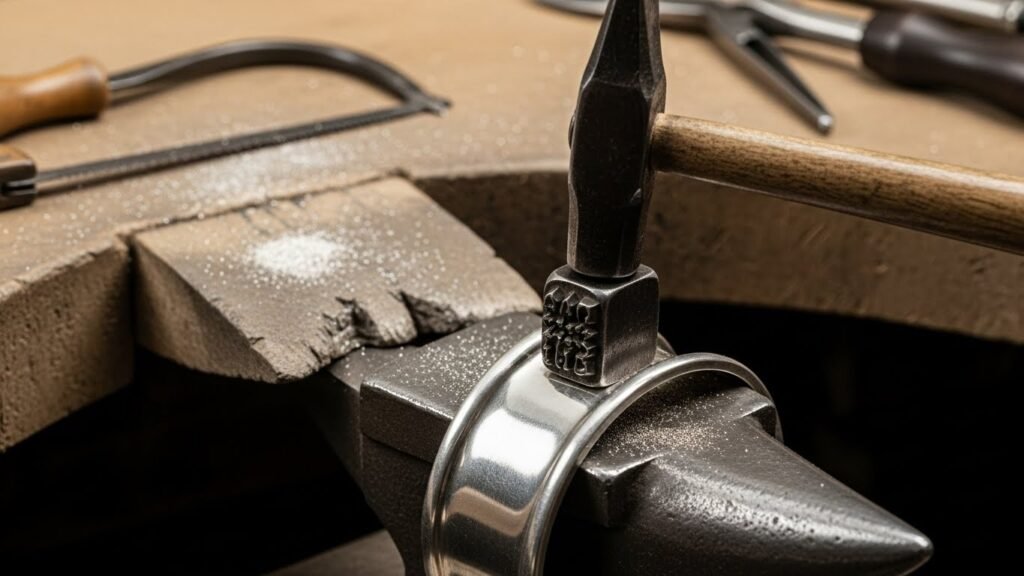
Stamping is where the artist uses metal tools to punch designs into the silver. Kuwano often makes his own stamps by hand. This means his patterns are exclusive to him. He hits the stamps with a hammer to create deep, crisp images. If he hits too hard or too soft, the whole piece is ruined.
Japanese Precision Finishing
After the rough work is done, the Japanese side takes over. The finishing process is incredibly detailed. Every edge is smoothed out so it feels comfortable on your skin. The polish is applied with different levels of grit to create a deep shine. This level of finish is rarely seen in traditional tribal jewelry.
Hand-Hammered Textures
You can see the marks of the hammer on almost every piece. These aren’t mistakes; they are intentional. The hammer creates a faceted surface that catches the light like a diamond. It makes the silver look organic, like something you found in the earth. It gives the metal a rugged but high-class personality.
The Chemistry of Craft: Materials and Metallurgy
The science behind the jewelry is just as cool as the art. You can’t just use any old metal to get these results. The brand is very picky about what goes into the melting pot. This ensures that your jewelry won’t just fall apart after a year of wear.
The Sterling Standard
They use 925 sterling silver for almost everything. This is the gold standard for high-end jewelry. It is 92.5% pure silver and 7.5% other metals to make it strong. This mix allows for the deep stamp work without the metal cracking. It is the perfect balance of beauty and toughness.
The Alchemy of Oxidation
To make the designs pop, they use a process called oxidation. This involves using chemicals to turn the silver black in certain areas. They then polish the high spots to make them shiny again. This contrast makes the tiny details easy to see from across the room. It gives the jewelry an “antique” look right out of the box.
Gemological Integration
Sometimes they add stones to the mix. They don’t just use cheap plastic or glass. They use real turquoise from famous American mines.
- Bisbee Turquoise: Known for its deep blue color and chocolate-colored matrix.
- Kingman Turquoise: A classic sky-blue stone that everyone loves.
- Natural Variation: No two stones are the same, making your piece one-of-a-kind.
The Language of Symbols: Motifs and Meanings
Every shape you see on a tsunaihaiya piece means something. It is like a secret code that only a few people know how to read. These symbols come from centuries of tribal history. They add a layer of depth that most fashion brands can’t match.
The Sun and Celestial Bodies
The sun is the biggest symbol of all. It represents life, growth, and power. You might also see stars or moons on some pieces. These represent the cycles of nature and the passage of time. Wearing these symbols is like carrying a little bit of the universe with you.
Avian and Wildlife Imagery
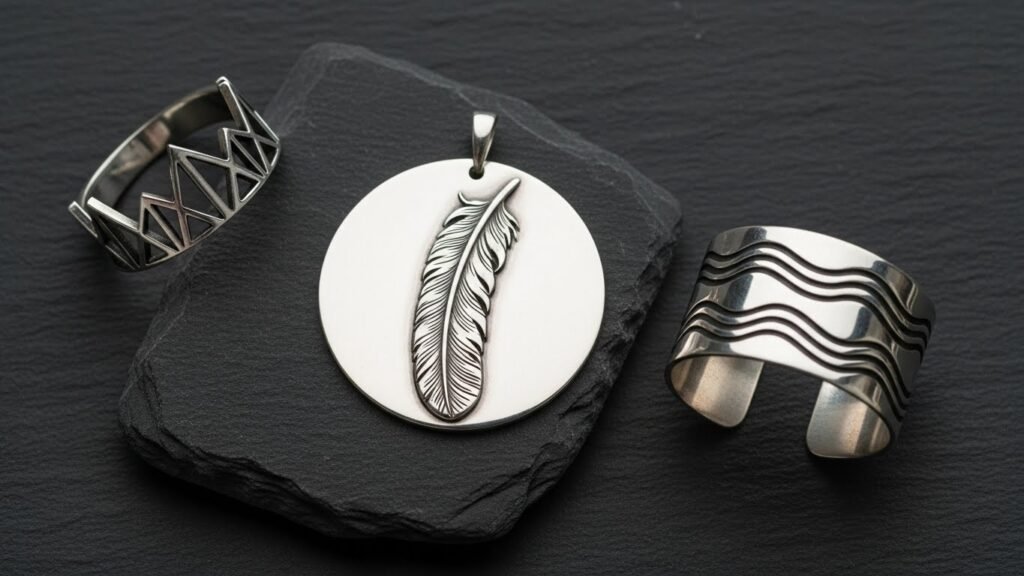
Birds are very important in Apache culture. They are seen as messengers between the earth and the sky. You might see eagle feathers or thunderbirds in the designs. These symbols are meant to offer protection to the person wearing them. They remind you to stay strong and keep your head up.
Geometric Storytelling
The straight lines and triangles aren’t just for decoration. They often represent the physical world. A series of triangles might be a mountain range. A wavy line might be a river. These patterns tell the story of a journey through a landscape. It is like a map carved into silver.
Water and Earth Elements
Life in the desert is all about finding water. Symbols for rain and clouds are very common. They represent abundance and the health of the community. Using these symbols shows a deep respect for the earth and everything it provides. It is a humble way to acknowledge our place in the world.
The Artisan’s Process: A Day in the Atelier
Stepping into the tsunaihaiya workshop is like going back in time. There are no big machines or computer screens. It is just a man, his tools, and a lot of silver. This slow process is why they can only make a small number of pieces every year.
The Solitary Craft
Kuwano likes to work alone. This allows him to stay focused on his vision without any outside noise. He controls every single step of the process. From the first sketch to the final polish, it is all his work. This is the definition of a “shokunin” or a master craftsman.
From Sketch to Silver
Every piece starts as a drawing on a piece of paper. He maps out where the stamps will go and how the overlay will look. Once the design is set, he starts cutting the metal. There is no “undo” button in silversmithing. If he makes a mistake, he has to melt the metal and start all over.
Tools of the Trade
He uses tools that look like they belong in a museum. He has heavy steel anvils for shaping the metal. He uses tiny saws with blades as thin as hair. His most prized possessions are his stamps. Each one is a unique tool that he created to make specific marks. These tools are extensions of his own hands.
| Tool Name | Purpose | Outcome |
| Hand Stamp | Punching designs | Deep, detailed patterns |
| Jeweler’s Saw | Cutting shapes | Sharp, clean edges |
| Blowtorch | Melting and soldering | Joining metal parts |
| Polishing Wheel | Buffing the surface | High-gloss finish |
The Collection Highlights: Iconic Designs
If you are looking to start your collection, there are a few key items to check out. These are the “greatest hits” of the brand. They show off everything that makes tsunaihaiya special. You can wear these with a suit or a t-shirt and they will still look amazing.
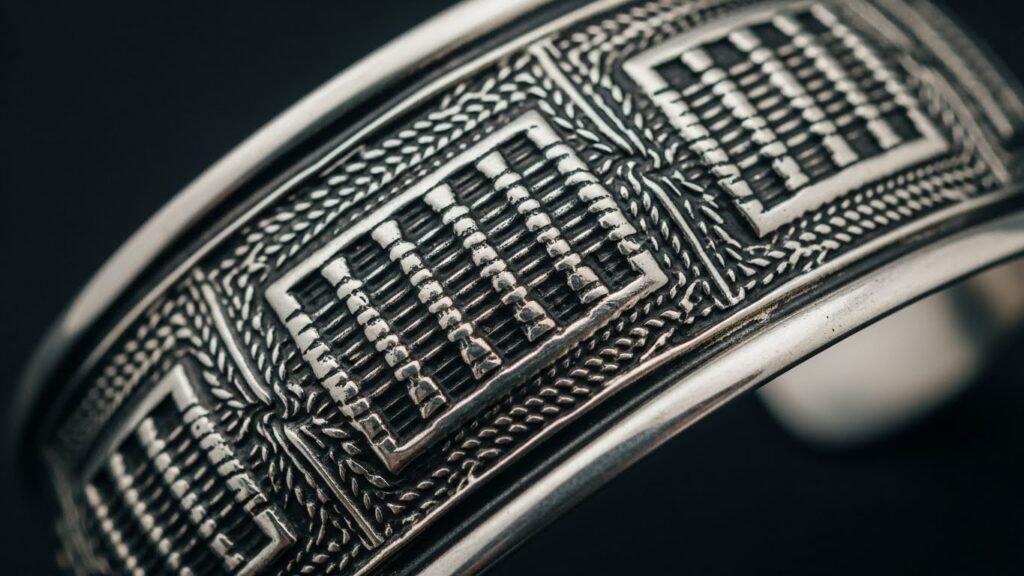
Signature Pendants and Medallions
The “Sunrise” pendants are the most famous. They are usually round and feature a sunburst design. Some have a single turquoise stone in the center. These are great because they aren’t too big, but they still have a lot of detail. They look great on a simple silver chain or a leather cord.
Bracelets and Cuffs
These are the heavy hitters of the brand. They are thick pieces of silver that wrap around your wrist. They usually feature the most complex stamp work. Some of them are almost two inches wide! When you wear one of these, you definitely feel the “power” of the brand.
Rings and Smaller Accessories
If you want something subtle, the rings are a great choice. They use the same techniques but on a smaller scale. You can get simple bands with tiny stamps or big “statement” rings with huge stones. They also make things like tie clips and money clips for a full lifestyle look.
The “Textile” Series
This is a really unique part of the brand. They make silver look like it was woven out of thread. They use tiny stamps to create a pattern that looks like a Navajo rug. It is a crazy technical feat that shows how talented Kuwano really is. It is a favorite among hardcore collectors.
The Psychology of the Collector
Why do people spend so much money on these pieces? It isn’t just because they look cool. There is a psychological reason why people get hooked on this brand. It fulfills a need for something real in a world that feels very fake.
Beyond Fashion
Most people don’t buy tsunaihaiya just to be “in style.” They buy it because it feels like a talisman. They feel like the symbols on the jewelry give them strength or luck. It becomes a part of their identity. It is more like a piece of art that you can wear every day.
The Value of the Hand-Made
We live in a world where everything is made by robots. Having something that was hit by a hammer thousands of times is special. You can see the tiny variations that make it human. This “soul” is what draws people in. It makes you feel connected to the person who made it.
Investment and Longevity
These pieces don’t lose their value. In fact, many people see them as an investment. Because they are made in small batches, they are hard to find. The prices often go up on the secondary market. It is one of the few fashion items that you can wear for 20 years and then sell for more than you paid.
Cultural Exchange and Respectful Fusion
A big question people ask is about cultural appropriation. Is it okay for a Japanese man to make Native American jewelry? The answer lies in how Kuwano does it. He isn’t just stealing designs; he is participating in a long-standing tradition of exchange.
Avoiding Appropriation
Appropriation is taking something without asking or understanding. Kuwano did the opposite. He asked for permission, he learned the language, and he lived with the people. He pays tribute to his teachers with every piece he makes. He is keeping a style alive that might otherwise be forgotten.
The “Shokunin” Spirit
In Japan, being a craftsman is a sacred duty. You have to be honest and work hard. Kuwano applies this spirit to his tribal work. He doesn’t take shortcuts. He honors the Apache people by making the best possible versions of their designs. This respect is felt by everyone who sees his work.
Global Appreciation
People all over the world love this stuff. It sells out in Tokyo, New York, and Paris. It shows that good art doesn’t have borders. You don’t have to be Japanese or Apache to appreciate the beauty of the work. It is a language that everyone can understand.
Maintenance and the Lifecycle of Silver
If you buy a piece, you need to know how to take care of it. Silver is a living metal. It reacts to the air and your skin. This is part of the fun of owning it, but you have to be smart about it.
The Beauty of Patina
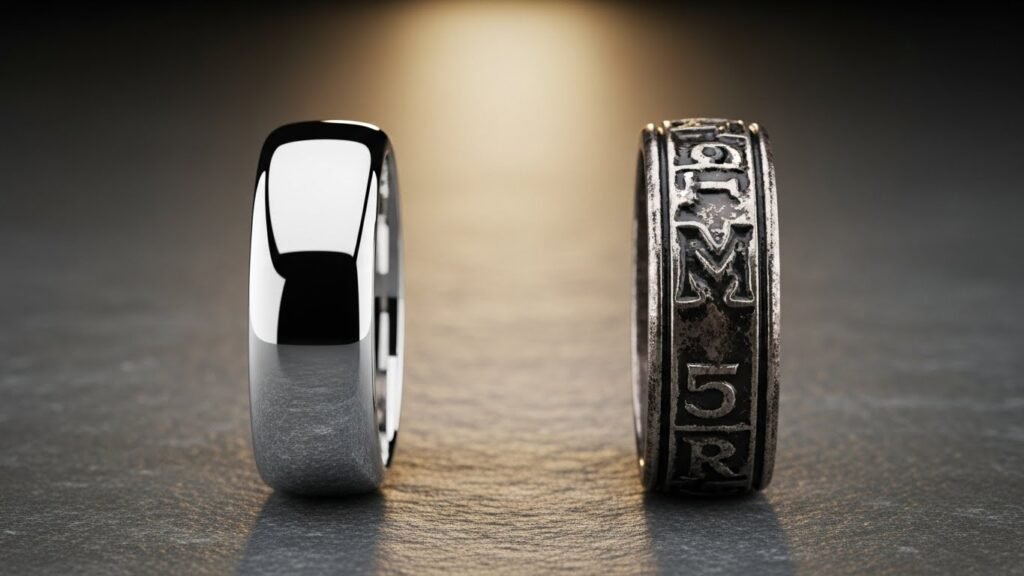
The blackening of silver is called patina. Most people think this makes the jewelry look better. It gives it a “lived-in” feel. You should never try to make a tsunaihaiya piece look brand new. Let it get a little dirty. Let it tell the story of where you have been.
Professional Care vs. Home Cleaning
If it gets too dark, you can use a polishing cloth. Just rub the high spots to bring back the shine. Avoid using liquid cleaners, as they can strip away the intentional oxidation in the cracks. If a stone gets loose, send it back to a professional. Don’t try to glue it yourself!
The Heirloom Mentality
This jewelry is built to last for hundreds of years. You should think of yourself as a temporary owner. One day, you will pass this down to your kids or grandkids. It is a way to leave a legacy behind. It is a piece of your history that they can carry with them.
- Daily Wear: Wearing it actually helps keep it clean through friction.
- Storage: Keep it in a dry place when you aren’t wearing it.
- Legacy: Write down the story of the piece for the next generation.
The Future of Tsunaihaiya
What is next for the brand? Kuwano isn’t the type to sit still. He is always looking for new ways to push himself. The brand will likely continue to evolve as he gets older and learns more.
Expanding the Artistic Narrative
We might see him start using different metals like gold or copper. He might also collaborate with other Japanese masters. Imagine a silver pendant with a hand-painted lacquer center. The possibilities are endless when you have this much skill.
The Legacy of Yusuke Kuwano
Kuwano is inspiring a lot of younger makers. They see that they don’t have to follow the rules of the fashion industry. They see that they can combine their own interests to make something unique. He is a pioneer of the “Cultural Hybrid” movement.
Conclusion: The Power of Sunlight
In the end, tsunaihaiya is a reminder of what humans can do when they work with their hands. It is a celebration of two beautiful cultures coming together. It is about the light that shines when we respect each other’s traditions.
Whether you are a hardcore collector or just someone who likes cool stuff, this brand has something for you. It isn’t just jewelry; it is a way of seeing the world. It is a reminder to always look for the sunrise.
Frequently Asked Questions about Tsunaihaiya
What inspired Yusuke Kuwano to name the brand in the Apache language?
Kuwano chose the name to honor the specific tribe that mentored him during his time in the United States. The term reflects his deep respect for their linguistic heritage and the spiritual significance they place on the dawn.
Does the brand use recycled silver for its creations?
While the brand focuses on high-purity sterling silver, it emphasizes sustainability through the “slow fashion” movement. By creating heirloom-quality pieces that last a lifetime, Tsunaihaiya reduces the waste associated with mass-produced jewelry.
How does the weight of Tsunaihaiya jewelry compare to mass-market silver?
Tsunaihaiya pieces are typically much heavier and denser because they are made from solid silver sheets rather than hollow molds. This weight is a hallmark of the traditional “overlay” and “stamp” techniques used by the artisan.
Can customers request custom engraving on existing designs?
Because each piece is handcrafted by Kuwano himself, the brand maintains a high level of exclusivity. While custom work is rare, the handcrafted nature ensures that no two items are ever truly identical.
What is the specific meaning of the “Sunrise” motif in Japanese culture?
In Japan, the sunrise is a symbol of the nation itself (the Land of the Rising Sun). By using this motif, Kuwano blends the Japanese national identity with the Apache spiritual meaning of “Tsunaihaiya”.
Does the brand offer jewelry for all genders?
Yes, the brand’s aesthetic is largely considered gender-neutral. The rugged textures and symbolic nature of the designs appeal to anyone who values craftsmanship and cultural history.
Is there a specific ritual Kuwano performs before crafting?
Kuwano approaches his work with a “Shokunin” (craftsman) spirit, which involves intense focus and a meditative-like state of mind. This dedication ensures that the spiritual energy of the symbolism is translated into the metal.
How does Tsunaihaiya ensure the ethical sourcing of turquoise?
The brand prioritizes high-quality, natural stones from reputable American mines. This ensures that the materials used are authentic to the Southwest traditions Kuwano studied.
What happens if a piece of jewelry develops a dark patina?
The darkening of silver is an intentional part of the “Wabi-Sabi” philosophy the brand embraces. It is viewed as a natural aging process that adds character and tells the story of the wearer’s life.
Are the stamps used in the jewelry commercially available?
No, Kuwano often hand-carves his own steel stamps to create unique textures and patterns. This ensures that the visual language of Tsunaihaiya remains unique to the brand and cannot be easily replicated.
How does the brand represent “Monozukuri” in its packaging?
The attention to detail extends beyond the jewelry to the entire presentation. This reflects the Japanese philosophy of taking pride in every aspect of the “making” process.
What is the significance of “overlay” in tribal jewelry?
The overlay technique involves two layers of silver, where the top layer has a cutout design that reveals the blackened or textured layer beneath. It creates a striking visual depth that is central to the Tsunaihaiya look.
Does Kuwano teach his silver techniques to others?
Kuwano primarily works as a solitary artisan to maintain the purity and authenticity of his vision. This makes every piece a direct product of the founder’s own hands.
Why is silver the primary medium instead of gold?
Silver is the traditional medium for both Southwest Native American jewelry and many heritage Japanese silver crafts. It allows for the specific “oxidation” and “patina” effects that define the brand’s style.
How does the brand contribute to the preservation of manual skills?
By refusing to use digital mass-production tools, Tsunaihaiya keeps ancient manual silversmithing techniques alive in the modern age. This encourages a deeper appreciation for human skill over machine precision.
Is Tsunaihaiya considered a “luxury” brand?
While it falls under the luxury category due to its price and quality, it is often described as “artisan luxury”. It focuses on the value of the story and the maker rather than just the brand name.
What is the best way to determine the authenticity of a Tsunaihaiya piece?
Authentic pieces feature the specific handcrafted hallmarks of Kuwano’s unique stamp work and high-quality finishing. They are typically sold through authorized retailers like The Crown Wings.
How long does it take to produce a single bracelet?
Because every step is manual—from hammering to polishing—a single complex piece can take many hours of dedicated labor. This limited production is why the items are highly sought after by collectors.
What role does nature play in the design process?
Nature is the primary inspiration, with motifs representing the sun, wind, and earth. The brand aims to create a harmony between the wearer and the natural world.
Why does the brand focus on “symbolic” jewelry?
The symbols serve as a bridge between the physical and spiritual worlds. Kuwano believes that jewelry should have a meaning that goes deeper than just fashion or decoration.