
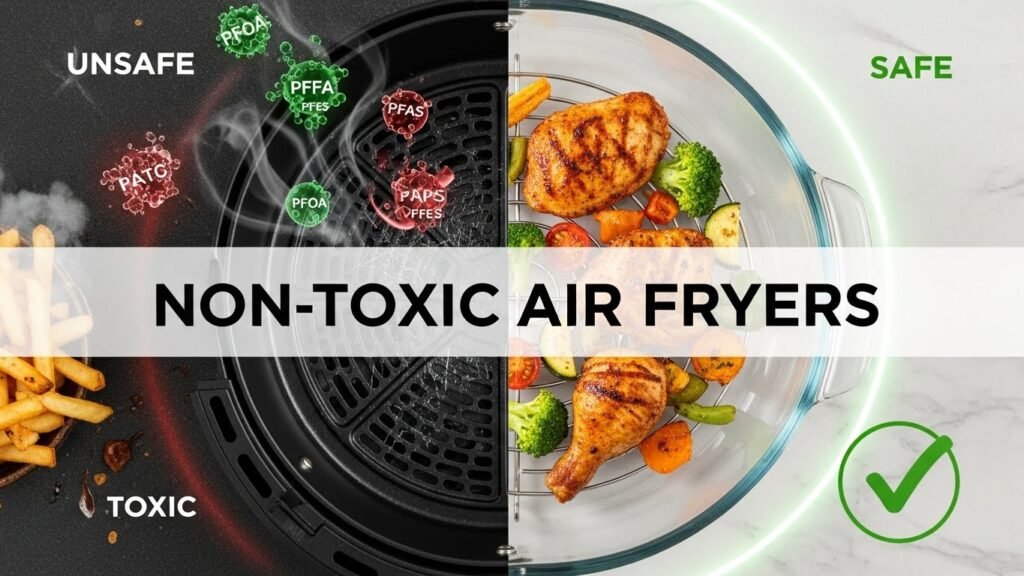
The air fryer is a game-changer in the kitchen. It lets you crisp up your favorite quick food like fries and chicken wings with way less oil than deep-frying. Everyone loves that! But here’s the scoop: not all air fryers are created equal when it comes to health. Many popular kitchen appliances, especially those with non-stick coatings, can actually bring toxic chemicals right into your home. This is why the search for truly Non-Toxic Air Fryers is so important. This guide will cut through the confusing labels and help you find an appliance that is genuinely safe for your family. We’re going to look closely at the materials, the risks, and the best options for 2026. Choosing a safe air fryer is a simple way to have a big positive impact on your health.
Deep Dive into Air Fryer Toxicity: Identifying the Hidden Risks
You bought an air fryer to be healthier. That’s the goal. But the truth is, many conventional air fryers can pose hidden health risks. These risks often come from the materials used in the interior, especially the non-stick coating on the basket or tray. Knowing these risks is the first step to making a smart buying decision.
The Pervasive Threat of PFAS: The “Forever Chemical” Problem
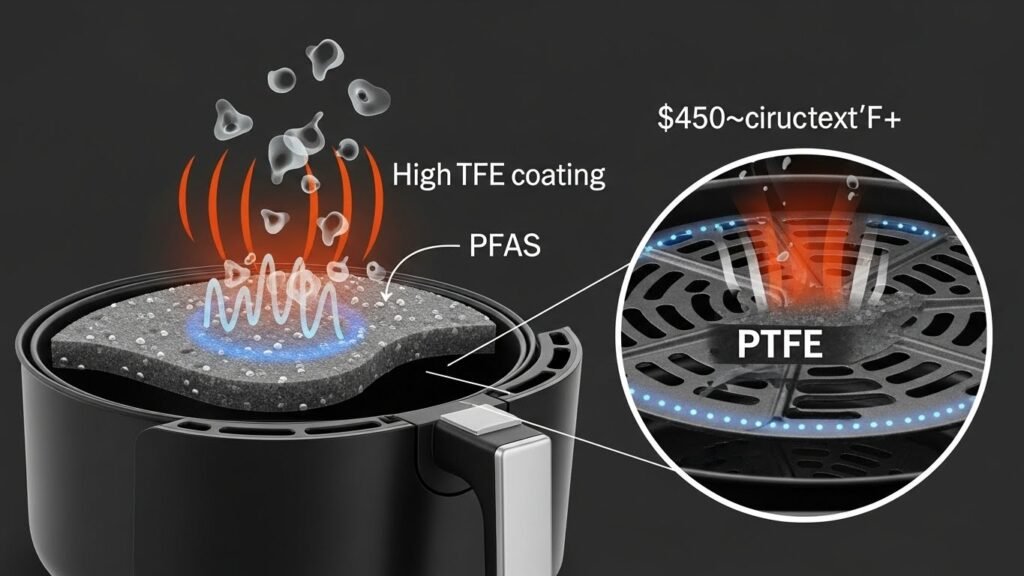
The biggest worry with many air fryers is a group of chemicals called PFAS. PFAS stands for per- and polyfluoroalkyl substances. These are often called “forever chemicals” because they don’t break down in our bodies or the environment.
- PTFE (Teflon) is a key concern: Many conventional non-stick coatings use PTFE, which is a type of PFAS. When air fryers run, they use high heat, often routinely above $400^{\circ}\text{F}$. This high heat can cause the non-stick coatings to break down. When they break down, they release toxic fumes and chemicals that can leach into your food.
- Health Hazards: Exposure to PFAS is linked to serious health problems. This includes things like cancer, hormonal disruptions, and developmental effects in children. High levels of exposure can also disrupt cholesterol and blood pressure.
- When Risk is Highest: The danger is especially high if the cooking surface gets scratched or overheated above $450^{\circ}\text{F}$.
- Tip for Toxicologists and Consumers: Even certain commercial oil sprays containing the emulsifier lecithin can slowly break down the non-stick coating over time.
Secondary Material Concerns in Non-Stick Alternatives
Manufacturers know people worry about Teflon. So, they often swap it out for other materials. But these alternatives can have their own set of risks, too.
- Ceramic Non-Stick Coatings: Ceramic is often marketed as a safer, non-toxic alternative. However, some ceramic coatings contain nanoparticles to enhance the non-stick properties. These may include silicon dioxide or titanium dioxide. Nanoparticles raise health concerns when inhaled or ingested. For example, if a surface gets scratched, silicon dioxide nanoparticles (SiNPs) could be released. This raises the risk of silicosis, an irreversible lung disease.
- Phthalates: Some products labeled as “PFAS-free” may use phthalates as an alternative agent. Phthalates are known hormone disruptors. They are associated with developmental issues, like lower IQ and ADHD, and reproductive harm.
- Aluminum Components: Some air fryer baskets, trays, or crumb trays use aluminum. Aluminum can leach into your food, especially if you cook acidic ingredients or use high heat. This exposure is a concern for neurological health. It’s a particular risk for children and developing bodies.
- Plastic Exposure: The outer plastic housing of an appliance is usually fine. But if plastic parts touch the hot air or steam inside the appliance, there is risk. Heated plastic can release bisphenols (BPA, BPS, BPF), phthalates, and other chemicals.
Non-Toxicity Concerns with the Cooking Process
The air frying method itself carries a small risk, too. This is not unique to air fryers, but it’s still good to know.
- Acrylamides in Burnt Food: When starchy quick food like fries or toast is heated to very high temperatures (above $338^{\circ}\text{F}$), it can form Acrylamides. Acrylamides are a potential carcinogen. To minimize this, avoid over-browning crusts and starchy foods.
Evaluating Safety and Claims: Regulatory Compliance and Verification
Buying a Non-Toxic Air Fryer means ignoring the buzzwords and looking for hard proof. Manufacturers use clever labels that can confuse the consumer. You need to understand what real safety verification looks like.
The Crux of “PFAS-Free” Verification: Why Labels Deceive
Labels like “PFOA-free” or “PTFE-free” sound good, but they are often insufficient. PFOA is just one PFAS that has been banned.
- The Swap Game: Manufacturers often simply replace PFOA or PTFE with other similar chemicals, like GenX. These substitutes are also PFAS and carry similar health risks. So, a “PFOA-free air fryer” is not the same as a “PFAS-free air fryer”.
- How to Verify: The only way to be sure is to look for the exact phrase “PFAS-free” on the product label or website. Even better, contact the brand’s rep directly to verify the coating material.
- Misleading Claims: Be skeptical of vague terms like “FDA-approved” or “very safe”. These coatings might use PFAS-ceramic blends or other undisclosed materials. Transparency from the manufacturer is essential.
Understanding California’s Regulations on Cookware
California has some of the strictest health regulations in the USA. These rules force manufacturers to be more transparent.
- Proposition 65 (Prop 65): This California law requires businesses to warn consumers if a product exposes them to chemicals known to cause cancer or reproductive harm. The warning is required even for trace amounts. So, a Prop 65 warning doesn’t always mean the product is unsafe.
- AB1200 (California Food Safety Act): This is a newer, important regulation. Since January 1, 2024, cookware manufacturers must disclose the presence of all chemicals of concern on product labels and online. This disclosure gives consumers like you much more authority and trust.
Prioritizing Materials: The Safest Air Fryer Options
If you want a truly Non-Toxic Air Fryer, you need to focus on what the food touches. The safest kitchen appliances use inert materials that won’t leach chemicals.
Best Materials for Food Contact Surfaces: Selection and Ranking
When you are shopping for a new air fryer, prioritize these materials for the basket, tray, or cooking chamber.
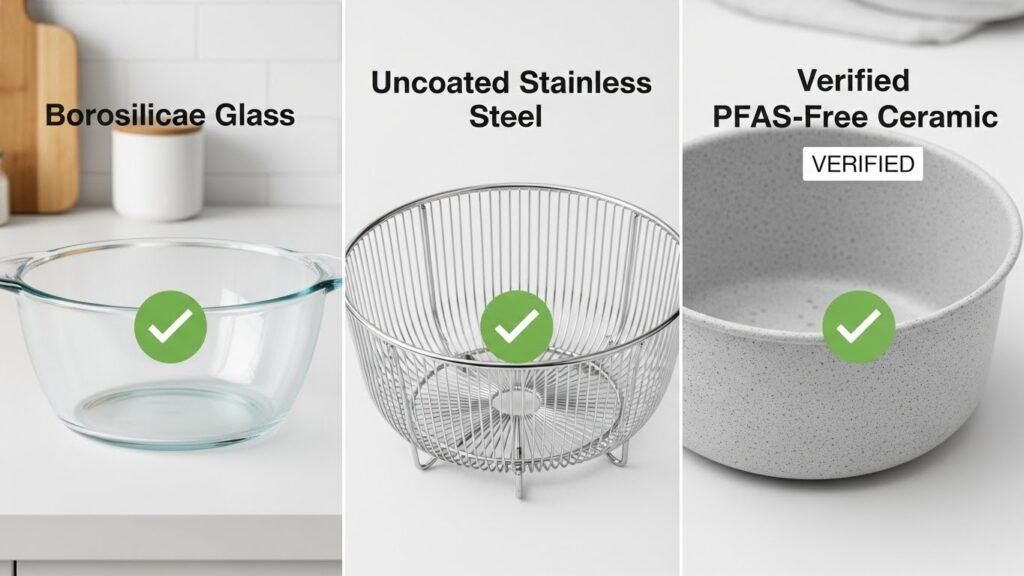
- Glass (Lowest Risk): Plain, uncoated glass, especially borosilicate glass, is the gold standard. It’s non-reactive, completely non-toxic, and avoids all non-stick chemical concerns.
- Uncoated Stainless Steel: This is the next best option. It is durable, non-reactive, and won’t leach chemicals into your food. Look for food-grade $18/8$ or $18/10$ stainless steel.
- Verified PFAS-Free Ceramic: This is acceptable only when the brand provides absolute transparency. They must confirm the coating is $100\%$ PFAS-free. This material balances non-stick functionality with lower toxicity risks.
Materials to Use with Caution: High-Risk Components
You should be very cautious about buying air fryers with these components.
- PTFE/Teflon: This material poses the highest risk. It can break down at high heat, releasing toxic fumes.
- Chrome-Plated/Nickel-Plated Steel: Plating is often used on wire racks. However, the plating can wear down over time. This might leach small amounts of nickel, which is a concern if you have a nickel allergy.
The Best Non-Toxic Air Fryers of 2026: Tested and Reviewed by Type
Based on material safety, performance, and transparency, here are the top-rated Non-Toxic Air Fryers for this year.
Basket-Style and Performance Powerhouses (Ceramic/Metal Focus)
These are great for fast, easy meals and usually take up less counter space.
- Typhur Dome 2 (Best Overall Performance): This model uses an all-metal chamber. The basket is coated with a PFAS-free ceramic-coated basket. It’s a powerhouse with dual top-and-bottom heating. This design crisps food fast and evenly without you needing to flip it. Its $5.6$-quart capacity fits a pizza.
- Bella Fits-Anywhere Air Fryer (Best Budget Pick / Space-Saver): This appliance is a perfect space-saver for dorms or RVs. It uses an EverGood™ Ceramic non-stick coating, confirmed to be PFAS-free ceramic. It is also highly affordable.
Glass-Dome and Fully Uncoated Options
These options give you maximum safety and the ability to watch your food cook.
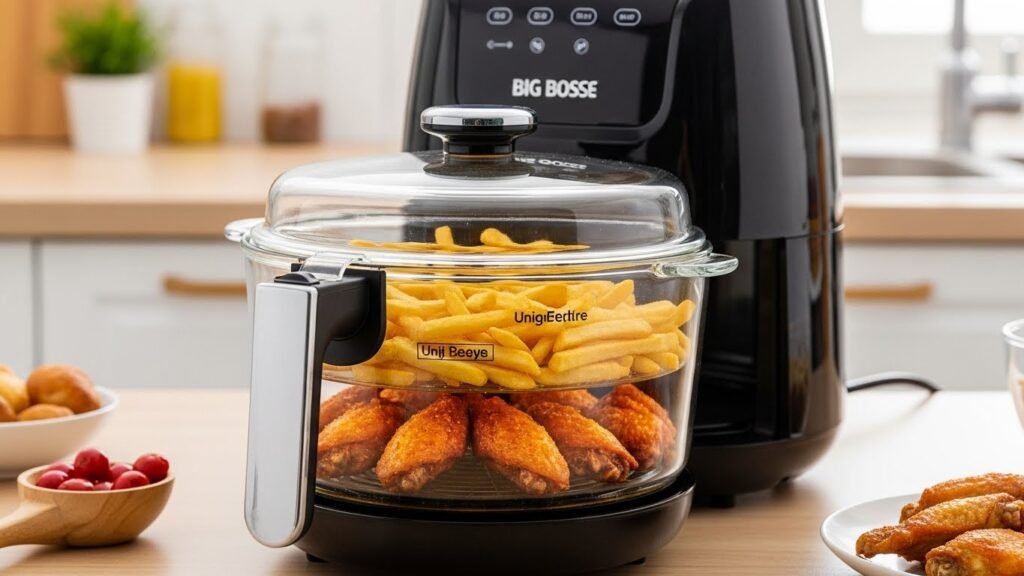
- Big Boss (Best Large Glass Air Fryer): This is a true coating-free design. It uses only glass and stainless steel with no plastic touching the food. The $16$-quart glass bowl is massive and lets you track your cooking progress.
- Fritaire (Best Medium Glass Air Fryer): This is another excellent glass option. Both the basket and the bowl are made of borosilicate glass. This ensures minimal chemical contact.
- Nutrichef Convection Oven (Best Budget Glass Air Fryer): Similar to the Big Boss, this model offers a coating-free, glass-and-stainless-steel design. It provides a huge $18$-quart capacity for a budget price.
- Ninja Crispi (Best Personal/Portable Air Fryer): Confirmed to be both PFAS- and plastic-free by a brand rep. It uses borosilicate glass bowls and all-metal internal components. It is compact and quiet, perfect for single meals.
Stainless Steel Oven-Style and Multifunctional Units
These are great appliances if you need more versatility like toasting, baking, or dehydrating.
- Midea Flexify French Door Air Fryer Oven (Best Value / Family Stainless Steel): This oven features stainless steel racks and interior. It is confirmed to be free from harmful PFAS-related chemicals. The French door design is user-friendly for a family.
- Cuisinart TOA-70NAS (Best Uncoated Oven-Style): This versatile toaster oven is built almost entirely from uncoated stainless steel. It has multiple functions like Air Fry and Convection Bake.
- Our Place Wonder Oven Pro (Best Design / Multifunctional): This oven is known for its beautiful design. It combines a stainless steel frame with a PFAS-free ceramic coating on the bake pan. It’s a 6-in-1 appliance with a steam-infusion system.
- GE Digital Air Fryer: This is a budget-friendly option with a complete stainless steel interior. Caution: The included baking rack contains lead, and the bake pan is aluminum. Replacement with $304$ stainless steel accessories is strongly recommended.
- Cafe Appliances: This is a high-end oven with an interior made of $100\%$ stainless steel. Caution: Requires replacing included non-stick porcelain and aluminum-coated pans.
Comparison: Top Glass and Uncoated Non-Toxic Air Fryers (2026)
This table compares the air fryers that offer the maximum reduction in chemical exposure by relying primarily on glass or uncoated metal for food contact.
| Model | Type & Design | Primary Food Contact Material | Capacity (Quart) | Key Feature | Approx. Budget |
| Big Boss | Glass-dome (Halogen Heating) | Glass, Stainless Steel | 16-qt (Large) | True coating-free design; see-through bowl; halogen element heats fast. | $100–$200 |
| Nutrichef Convection Oven | Glass-dome (Coil Heating) | Glass, Stainless Steel | 18-qt (Extra-Large) | Highest capacity for lowest cost; coating-free budget choice. | <$100 |
| Fritaire | Glass-dome (Coil Heating) | Borosilicate Glass | 12-qt (Medium) | Focus on premium borosilicate glass for maximum non-toxicity. | $100–$200 |
| Cuisinart TOA-70NAS | Oven-style (Analog) | Uncoated Stainless Steel | 17.8-qt (Large) | Highly versatile (Air Fry, Bake, Broil, Toast) with uncoated metal interior. | $100–$200 |
| Ninja Crispi | Glass-bowl (Basket-style) | Borosilicate Glass | 4-qt (Small/Personal) | Compact, all-glass design perfect for 1–2 people; confirmed plastic-free near food. | $100–$200 |
Key Takeaways from the Comparison
- Best Capacity & Value: The Nutrichef Convection Oven offers the largest $18$-quart capacity at the lowest price point, making it the best budget choice for families needing volume.
- Highest Purity: The Ninja Crispi and Fritaire emphasize borosilicate glass, which is highly resistant to thermal shock and chemical leaching, ensuring maximum material safety.
- Versatility: The Cuisinart TOA-70NAS is the winner if you need an appliance that can completely replace an analog toaster and perform multiple oven functions using only stainless steel.
Essential Non-Toxic Accessories for Your Air Fryer
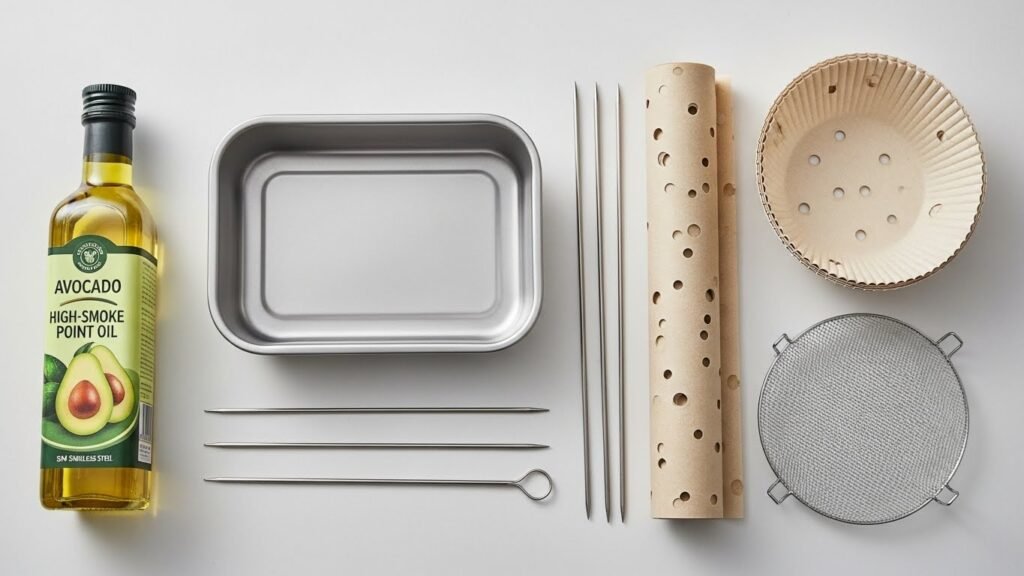
Even if you choose a glass or stainless steel air fryer, many manufacturers include low-cost, questionable accessories—such as aluminum pans or PTFE-coated racks—that must be replaced. Furthermore, adding the right accessories can drastically improve the usability and safety of any model.
Prioritizing $304$ Stainless Steel Replacements
The most critical step for maximizing non-toxic air frying is immediately replacing any included high-risk parts.
- Replacement Strategy: If your air fryer came with a PTFE basket, aluminum tray, or crumb tray, swap them out immediately.
- Material Standard: Always look for accessories made from 304 stainless steel. This grade is food-safe, durable, and non-reactive, ensuring no chemicals leach into your food, unlike the included aluminum or lead-containing accessories sometimes found with budget ovens.
- Examples: This includes small pans, wire racks, skewers, and mesh baskets that fit inside the main air fryer chamber.
Safe Cooking Liners and Inserts
Liners help with cleanup and can prevent smaller food items from falling through wire racks, especially in glass-dome models.
- Parchment Paper: Use unbleached parchment paper liners designed specifically for air fryers. They are non-toxic and greatly simplify cleanup after cooking messy items like chicken wings.
- Silicone Liners: Ensure any silicone used is high-quality, food-grade silicone (which should not be confused with the questionable plastic parts that melt or release fumes). Silicone is flexible, reusable, and offers easy cleanup.
Safe Food Prep Tools and Oils
To maintain the safety of your interior surfaces and protect your health, use the following tools:
- Utensils: Never use metal utensils on any coated surface, even PFAS-free ceramic, as scratching can lead to the breakdown of the material. Use wood or silicone utensils instead.
- Oil Selection: Use oils with a naturally high smoke point for air frying, such as Avocado oil or refined coconut oil.
- Avoid Harmful Sprays: Do not use low-smoke-point oils, like unrefined safflower oil. Crucially, avoid commercial cooking sprays containing lecithin, as this emulsifier can damage and ruin even non-toxic coatings over time.
Choosing the right accessories ensures that your commitment to a truly non-toxic air fryer is maintained from the moment you prepare your food until you clean the appliance.
Misleading “Non-Toxic” Models to Scrutinize
It pays to be skeptical of popular kitchen appliances that claim to be healthy. Many brands are not upfront about their materials. Here are some common examples of brands where chemical concerns or contradictory labeling have been verified by researchers.
Cautionary Examples and Contradictory Labeling
These models often get recommended as non-toxic but contain PTFE or other questionable components.
- Ninja Air Fryer 4-in-1 Pro (AF141): A company representative confirmed that this model typically features a PTFE-based non-stick coating. The rep also stated it may contain trace amounts of PFOA.
- Instant Pot Duo Crisp + Air Fryer: While the main pressure cooker surfaces are stainless steel, the crucial air fryer basket that touches your protein-rich food is confirmed to be coated with PTFE (Teflon). Consumers should immediately replace this basket with a stainless steel version.
- Ninja Combi Multicooker: The manufacturer was found to have contradictory labeling. They clarified that the nonstick Combi Pan uses a proprietary NeverStick™ coating, which is a PTFE-based polymer (a PFAS).
Maximizing Safety: Best Practices for Air Frying
You don’t need to live in fear of your kitchen appliances. If you already own an air fryer or are buying a model with minor concerns, you can take simple, actionable steps to make it safer.
Essential Maintenance and Usage Tips
These steps are about reducing your exposure and protecting your family’s health.
- Replacement Strategy: If your air fryer came with high-risk parts like a PTFE basket, aluminum tray, or crumb tray, replace them. Always swap them out for 304 stainless steel accessories like racks or pans.
- Coating Care: For any coated appliance, be gentle. Never use metal utensils that can cause scratches and breakdown. Avoid preheating an empty non-stick basket at high temperatures.
- Oil Safety: Use oils with a high smoke point. Avocado oil or refined coconut oil are great choices for air frying. Avoid low-smoke-point oils, like unrefined safflower oil. Also, avoid those commercial cooking sprays containing lecithin, which can ruin coatings.
- Cleaning and Ventilation: Regular cleanup is vital. Prevent burnt residues and unhealthy compounds by cleaning the basket often with soapy water. Also, ensure your kitchen is well-ventilated, especially when using high heat.
Safe Disposal and Environmental Impact (End-of-Life)
The pursuit of a non-toxic kitchen doesn’t end with a purchase; it extends to the responsible disposal of the old appliance it replaces. Since air fryers contain electronic components, metals, and plastics, they are classified as hazardous e-waste. Throwing them into the regular trash or recycling bin is illegal in many municipalities and poses a significant environmental risk due to the potential leaching of heavy metals and circuitry toxins into landfills.
E-Waste Classification and Why It Matters
An air fryer is a small electronic device. It contains circuit boards, plastic housing, metal wiring, and often has a non-stick coating that may contain persistent toxic chemicals like PTFE (Teflon) or other PFAS. Improper disposal means these components break down, releasing harmful substances into the soil and groundwater. The non-toxic philosophy requires protecting the environment as well as your personal health.
Responsible Disposal Methods for Old Units
Before throwing out an old appliance, determine if it can be reused. If it’s still in working condition, consider donating it to a charity, thrift store, or local community center. If the unit is broken or has a damaged non-stick surface, use one of these responsible disposal methods:
- Local E-Waste Recycling Centers: The safest and most common method is to take the air fryer to a dedicated e-waste recycling facility. These centers are designed to dismantle appliances, separate the metals, plastics, and electronic components, and ensure that hazardous materials are processed correctly.
- Retailer Take-Back Programs: Many large electronics and home goods retailers offer free in-store recycling programs for small electronics, regardless of where they were originally purchased. Check with stores in your area for their current recycling policies.
- Manufacturer Programs: Some air fryer brands offer mail-back or recycling programs, especially for end-of-life appliances. Check the manufacturer’s website for any brand-specific recycling initiatives.
- Municipal Collection Events: Check your local waste management calendar for “Hazardous Waste” or “E-Waste Collection Days,” where they may offer curbside pickup or neighborhood drop-off points for electronics.
Independent Testing and Certifications
While official regulatory labels like “FDA-approved” and state mandates like California’s Proposition 65 (Prop 65) are important, the non-toxic consumer needs assurance that goes deeper. Independent, third-party testing offers a more rigorous verification, especially concerning non-stick ceramic coatings and heavy metal content.
Key International Certification Standards
Look for these certifications for extra peace of mind when selecting a truly non-toxic model:
- LFGB Certification (German Food and Feed Code): This is one of the strictest food-contact standards in the European Union. LFGB certification confirms that the material not only complies with safety laws but also ensures the material will not change the taste or odor of food. It involves rigorous testing for material purity.
- NSF/ANSI 51: While often applied to professional restaurant equipment, this standard verifies that the materials used in the construction of food equipment are non-corrosive, safe, and will not leach harmful substances, giving a strong indication of overall material quality.
The Importance of Third-Party Laboratory Verification
Since some manufacturers may hide or fail to test for newer PFAS compounds like GenX, independent lab testing is the gold standard for verifying material safety.
- PFAS Verification: Reputable non-toxic brands will publish results from third-party labs confirming the $100\%$ absence of all PFAS, not just PFOA and PTFE.
- Heavy Metal Testing: These tests use specialized technology, such as X-ray fluorescence (XRF) or atomic absorption spectrometry, to confirm the cookware is free of dangerous heavy metals like lead and cadmium. Compliance with these heavy metal limits is essential for all food contact materials.
Monitoring Air Quality and Specific Vulnerabilities
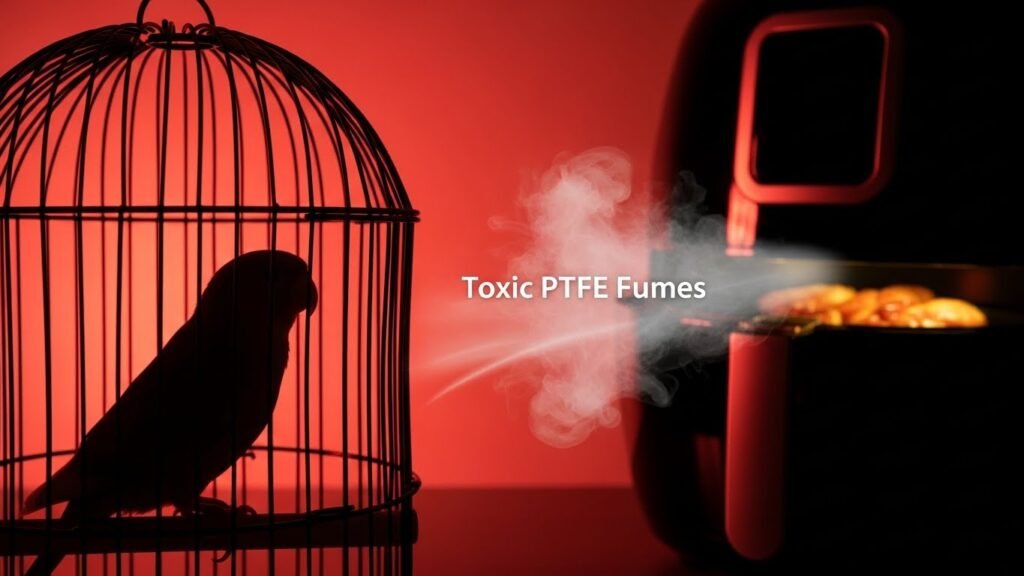
While proper ventilation is essential for all kitchens, specific air quality concerns and household inhabitants require extra caution, especially when cooking at high air fryer temperatures.
Critical Risk: PTFE Fumes and Pet Birds
The highest and most immediate toxicity risk associated with air fryers (and all non-stick cookware) is to pet birds.
- PTFE Toxicosis: When conventional non-stick coatings containing PTFE are overheated (often above $450^{\circ}\text{F}$), they release fine, odorless, and highly toxic fumes. These fumes cause a condition known as PTFE toxicosis or “Teflon flu” in birds.
- Fatal Risk: Due to their delicate respiratory systems, these fumes can be rapidly fatal to birds (parrots, parakeets, canaries, etc.) even if the appliance is in a separate room. If you own a bird, you must strictly avoid all PTFE-coated appliances.
Tools to Monitor Indoor Air Quality (IAQ)
To monitor safety, especially during high-heat cooking sessions, consider using an inexpensive Indoor Air Quality (IAQ) monitor in your kitchen:
- Monitoring TVOCs: Air monitors track Total Volatile Organic Compounds (TVOCs). A sudden spike in TVOCs during cooking can be an indicator of off-gassing from a chemical coating or heated plastic, signaling a ventilation problem.
- Tracking PM2.5: Cooking methods, including air frying, generate Fine Particulate Matter (PM2.5). While not always chemical, high PM2.5 levels are linked to respiratory issues. Using a monitor can confirm that your kitchen exhaust fan or ventilation system is effectively removing these airborne particles.
General Electrical Safety
Beyond chemical safety, air fryers are high-wattage appliances that require adherence to basic electrical safety rules to prevent overheating, tripped circuits, and fire hazards.
Preventing Circuit Overload and Fire Risk
Because air fryers draw significant power (often between 1200 and 1700 watts), they can easily overload standard household circuits.
- Dedicated Circuits: Always plug your air fryer directly into a wall outlet. Avoid using extension cords or surge protectors unless they are rated for the high amperage draw of the appliance. It is best practice to operate the air fryer on a dedicated circuit—one not shared with other major heat-producing appliances like your coffee maker, toaster, or microwave—to prevent circuit overload.
- Avoid Placing Near Cabinets: Never place the air fryer directly under a cabinet. Air fryers vent extremely hot air from the back or top; this heat can damage wood or vinyl cabinets over time. Ensure at least six inches of clear space around the unit for proper airflow.
Maintenance for Fire Prevention
Basic, consistent cleaning is crucial to prevent the buildup of flammable residue.
- Coil Cleaning: While the basket is easy to clean, don’t neglect the heating element (coil) inside the unit above the basket. Over time, grease and splattered food can accumulate on this coil. This residue can burn, cause smoke, and increase the risk of a grease fire. Always unplug the unit and use a gentle brush or damp cloth (once completely cool) to clean the heating element regularly.
- Inspect Power Cord: Routinely inspect the power cord for signs of damage or fraying, and ensure the plug fits securely into the wall socket to prevent electrical arching and overheating.
Conclusion and Final Recommendation
Choosing a Non-Toxic Air Fryer is a proactive step toward better public health for your household. While the market still lacks a $100\%$ perfect appliance, the safest options are crystal clear. They are the ones that use glass and uncoated stainless steel for food contact surfaces.
- For Performance and Speed: The Typhur Dome 2 is a top choice, provided you trust its verified ceramic safety claims.
- For Zero-Toxicity Risk: The Big Boss or Fritaire glass-dome models offer the ultimate peace of mind, as your food only touches glass and metal.
The power is in your hands as a consumer. Demand transparency, choose safe materials, and enjoy your crispy, delicious, and truly healthy air-fried meals.
Frequently Asked Questions (FAQs) About Non-Toxic Air Fryers
What is the difference between a ceramic coating and a PTFE (Teflon) coating?
PTFE (Polytetrafluoroethylene), known by the brand name Teflon, is a fluoropolymer plastic. When overheated (typically above $500^{\circ}\text{F}$ or $260^{\circ}\text{C}$), it releases toxic fumes. Ceramic coatings, on the other hand, are generally made from an inorganic material, often a silicone-based polymer (called Sol-Gel) that is cured onto the metal surface. High-quality ceramic coatings are PTFE and PFOA-free, do not contain PFAS, and are considered the safest non-stick alternative.
Why are glass air fryers considered the safest option?
Glass air fryers (like the Big Boss or Fritaire models) are the ultimate non-toxic choice because the food is contained in a borosilicate glass bowl or basket. Glass is an inert, non-porous material that does not leach chemicals or heavy metals, even at high temperatures. It offers $100\%$ zero risk of chemical transfer to food.
How safe is the use of silicone accessories (liners, baskets) in an air fryer?
Food-grade silicone is generally considered safe for air frying. It is highly heat-resistant, typically up to $450^{\circ}\text{F}$ to $500^{\circ}\text{F}$ ($230^{\circ}\text{C}$ to $260^{\circ}\text{C}$), which covers the operating temperature of most air fryers. High-quality silicone is chemically inert, BPA-free, and does not off-gas harmful chemicals when used within its temperature limits. Always ensure the liner is food-grade and doesn’t block critical airflow.
Are there risks associated with aluminum or aluminum foil in an air fryer?
You can use aluminum foil in an air fryer, but it must be weighed down with food to prevent it from flying up and touching the heating element, which could cause a fire. The primary non-toxic concern is when cooking highly acidic foods (like tomatoes, vinegar-marinated meats, or citrus) on aluminum foil. The acid can cause the aluminum to leach into the food at higher concentrations. For this reason, it’s best to use parchment liners or silicone when cooking acidic items.
What is the estimated lifespan of a high-quality ceramic non-stick air fryer coating?
Unlike PTFE coatings, ceramic coatings can be more durable against scratching, but their non-stick properties still degrade over time. Depending on frequency of use and care (avoiding metal utensils, handwashing), a ceramic non-stick coating on an air fryer basket typically lasts between one and five years before food begins to stick significantly.
Can a stainless steel air fryer basket rust or require seasoning?
High-grade stainless steel (like 304 or 18/8 food-grade) is highly resistant to rust and corrosion and does not require “seasoning” like cast iron. However, stainless steel is not naturally non-stick. To prevent food from sticking, you must preheat the basket and use a small amount of high-smoke-point oil.
What are the risks of using plastic components near the heat vents of an air fryer?
Many air fryers have plastic housing or controls, especially near the back or top vents. While manufacturers use high-temperature, BPA-free plastics in these areas, there is a risk of chemical off-gassing (such as BPA or other phthalates) if low-quality plastics are used or if the plastic is exposed to excessive, prolonged heat. Choosing models with all-metal interiors or glass contact surfaces minimizes this risk.
Does air frying food create cancer-causing compounds like acrylamide?
Any high-heat cooking method that browns food (frying, roasting, baking, or air frying) can produce acrylamide, a chemical classified as a probable human carcinogen. Acrylamide forms in starchy foods (like potatoes) when cooked above $250^{\circ}\text{F}$ ($120^{\circ}\text{C}$) due to the Maillard reaction. However, air frying generally produces significantly less acrylamide than deep-frying because it uses less oil and often requires slightly lower temperatures.
Should I put my non-stick air fryer basket in the dishwasher?
Even if the manufacturer claims the basket is “dishwasher safe,” it is highly recommended to handwash any non-stick air fryer basket, including ceramic ones. The harsh detergents and high heat in a dishwasher can accelerate the degradation of the non-stick coating, causing it to wear out faster and potentially flake off sooner.
What internal components, besides the basket, should I be concerned about regarding non-toxic materials?
Beyond the food-contact basket, concerns include the following:
- Heating Element and Fan: These are usually metal (stainless or aluminum) and pose minimal risk.
- Insulation: The material used to insulate the outer housing from the heat (often fiberglass or mineral wool) should be protected to prevent particles from entering the cooking chamber.
- Interior Metal Walls: In toaster oven-style air fryers, the interior walls should be stainless steel to avoid non-stick coatings.
How do I ensure my oil choices align with a non-toxic cooking environment?
Use oils with a high smoke point (e.g., avocado oil, refined coconut oil, or high-oleic safflower oil) when air frying. When oil is heated past its smoke point, it breaks down and releases free radicals and an unpleasant odor. High smoke-point oils are more stable at the high temperatures air fryers reach, making them a healthier choice.
What is the energy consumption of an air fryer compared to a conventional oven?
Air fryers are significantly more energy-efficient than conventional ovens. A typical air fryer uses between 1,200 and 1,500 watts, while a conventional oven can use up to 5,000 watts. Since air fryers cook food faster and heat up a much smaller space, they use less energy overall.
If a non-toxic air fryer breaks down, is it repairable?
Air fryers that use stainless steel or glass components are often designed with more durable, user-replaceable parts. Common failures (like a blown fuse, a malfunctioning fan, or a burnt-out heating element) can sometimes be repaired by a qualified technician or by ordering replacement parts from the manufacturer, which is a more sustainable practice than disposal.
How often should I deep-clean the heating element to maintain a non-toxic environment?
While the basket should be cleaned after every use, the heating element (coil) should be deep-cleaned at least once per month or after every 10–15 uses. This prevents accumulated grease and food splatter from burning and producing smoke, which would release particulate matter into your kitchen air.
What is Borosilicate Glass and why is it safer for air frying than regular glass?
Borosilicate glass is a specialized glass that contains boron trioxide, which gives it a very low coefficient of thermal expansion. This means it can withstand rapid and extreme temperature changes (thermal shock) without cracking or shattering, making it significantly safer and more durable for high-heat cooking in air fryers compared to standard soda-lime glass.
Is enamel coating on air fryer accessories a non-toxic option?
High-quality porcelain enamel (a type of glass powder fused to metal at extreme heat) is considered non-toxic, durable, and chemically inert. However, low-quality or colored enamel coatings can sometimes contain lead or cadmium, which can leach if damaged or improperly manufactured. Always look for third-party certifications (like Lead/Cadmium-Free verification) when choosing enamel-coated items.
What is the maximum temperature at which PTFE (Teflon) coatings are safe?
PTFE coatings are generally considered stable up to around $392^{\circ}\text{F}$ ($200^{\circ}\text{C}$). Past $500^{\circ}\text{F}$ ($260^{\circ}\text{C}$), the material begins to break down, releasing harmful, irritating fumes (polymer fume fever/Teflon flu). Since most air fryers can reach $400^{\circ}\text{F}$ ($204^{\circ}\text{C}$) or more, the margin of safety for PTFE is very narrow, hence the recommendation to avoid it entirely.
What is the significance of the LFGB Certification for air fryers?
The LFGB (German Food and Feed Code) is a rigorous European standard for food-contact materials. This certification is highly sought after because it proves not only that the materials are safe and non-toxic (like being free from heavy metals and specific chemicals) but also that the material will not negatively impact the taste or odor of the food.
Why are stainless steel basket air fryers less common than non-stick ones?
Stainless steel air fryer baskets are less common primarily because they are more expensive to manufacture and lack natural non-stick properties, which is the main convenience factor for most consumers. They require users to add a small amount of oil to prevent sticking, which goes against the “oil-free” marketing of some air fryers.
Should I use parchment paper liners, and are they non-toxic?
Non-bleached, food-grade parchment paper liners are a good non-toxic option for easy cleanup, as they provide a barrier between the food and the basket. They are considered safe as long as they are specifically designed for air fryers (with ventilation holes) and are weighed down by food to prevent them from hitting the heating element and potentially catching fire.