
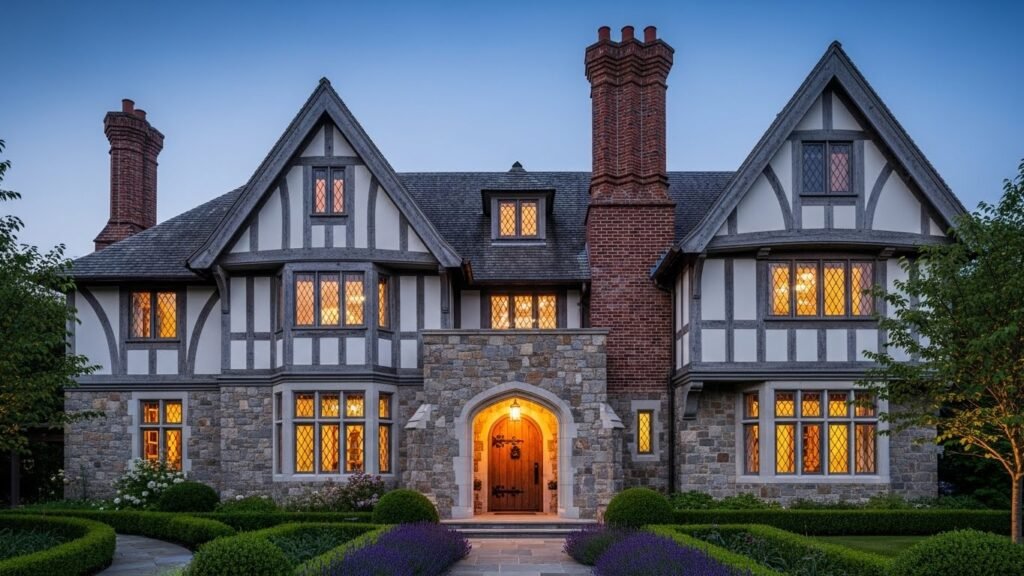
Discover the magic of the tudor style house and why it stays a top choice for luxury and charm. This guide covers everything from old-school history to modern curb appeal ideas for your next home project.
Understanding the Tudor Legacy
The tudor style house is one of the most famous looks in residential architecture history. People love it because it feels like a cozy storybook come to life. It has a very strong and unique shape that stands out in any neighborhood. Today, this style is becoming a huge hit again for high-end estate homes and cozy cottages.
During the golden era between 1890 and 1940, these homes were everywhere in American neighborhoods. In the 1920s alone, about one out of every four new houses was built in this style. It was a dominant force in the suburbs because it looked fancy and sturdy. Many people wanted a home that felt like it had been there for centuries.
Experts often use a field guide to American houses to help identify these homes. This guide helps builders and fans spot the real deal from the fakes. It shows how these houses use specific shapes to create a timeless house feel. Knowing the rules of the style makes it easier to do a great renovation.
We are now seeing a massive modern rebirth of the tudor style house. New home builders are moving away from cheap, mass-production looks. They want to go back to the high-craftsmanship roots of the early 20th century. This new wave of building focuses on quality materials and hand-crafted details.
Historical Evolution and Architectural Variations
The Pre-1920 Tudor Influence
Early versions of the tudor style house actually looked a bit different than what we see now. Before 1920, many of these homes borrowed ideas from the Craftsman style. You might see things like wide roof overhangs that were common on bungalows. Some even had full-width verandas where families could sit outside.
- Mixed Styles: Builders often blended English building traditions with American Craftsman vibes.
- Wider Porches: Older Tudors sometimes have bigger porches than the ones built in the 1930s.
- Sturdy Foundations: These early homes used very thick stone masonry and brick accents.
English Country and Storybook Styles
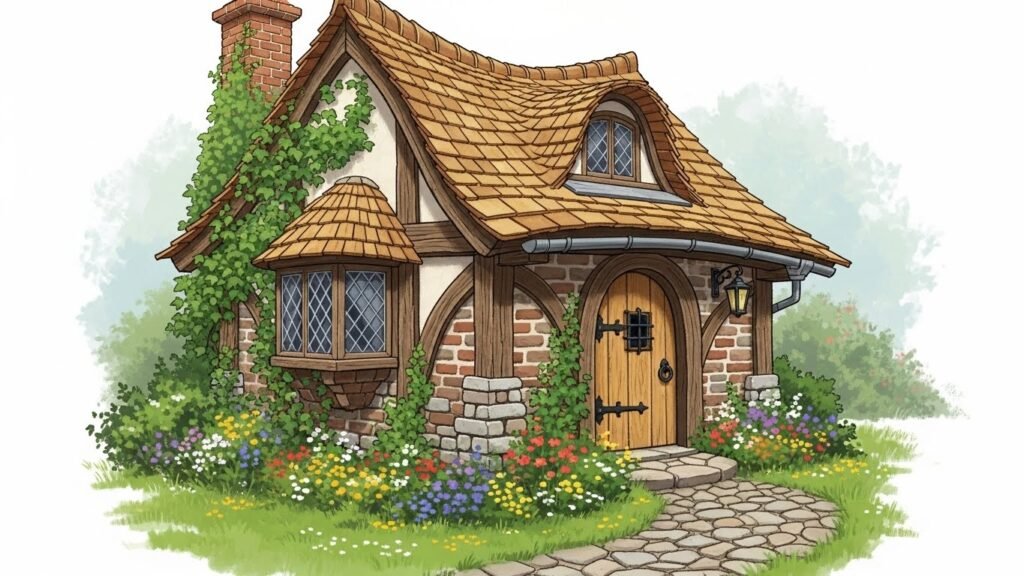
Some tudor style house designs focus on a very whimsical English Country Cottage look. These homes feel like they belong in a fairytale woods. Architects used soft lines and natural building materials to get this effect. It is a very popular choice for people who want a unique home with tons of character.
- False Thatched Roof: Builders use roofing materials to mimic the look of old straw roofs.
- Curved Edges: The rooflines often have soft, rolled edges to look organic.
- Small Scale: These cottages usually have a smaller, more intimate lot size.
The Evolution of the Wing Detail
A very cool part of the tudor style house is the front facing gable with a wing. This is an old-school detail that is showing up a lot lately in new estate homes. Many folks think this is a brand-new Farmhouse trend, but it is actually quite old. It helps the house look bigger and more interesting from the street.
- Modernized Tudor: Many “new” Farmhouses are really just updated Tudor designs.
- Asymmetrical Look: The wing detail adds to the random and cool shape of the house.
- Interior Flow: This layout allows for more creative interior arrangements and floor plans.
Foundational Architectural Characteristics
Iconic Rooflines and Gables
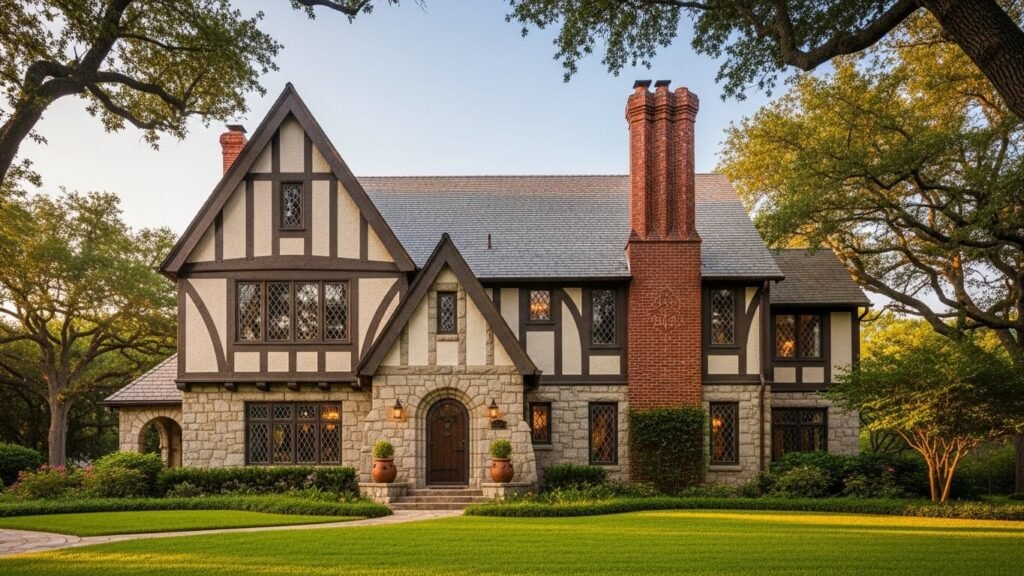
The most obvious part of a tudor style house is the roof. These houses have very steep front facing gables that point high into the sky. This is not just for looks; it is actually very smart for Northern climates. Steep roofs are perfect for shedding heavy snow and rain quickly.
- Gable Hierarchy: Most homes have one main gable and several smaller dormers.
- Side-Gabled Base: The main body of the house often sits on a side-gabled roof.
- Parapet Gables: Fancy versions might have masonry edges that rise above the roofline.
Decorative Half-Timbering and Wall Textures
You cannot miss the half-timbering on a classic tudor style house. This is the wood trim that looks like a cage over the walls. Most people go with a neutral palette like white plaster or cream color for the walls. Then they use dark wood to create a high-contrast facade.
- Brick Accents: Many homes use brick for the first floor and stucco for the second.
- Herringbone Patterns: Fancy builders put bricks in a V-shape called herringbone inside the timber.
- Stone Masonry: Heavy stone is often used around the base or the entryways.
Doorways and Windows
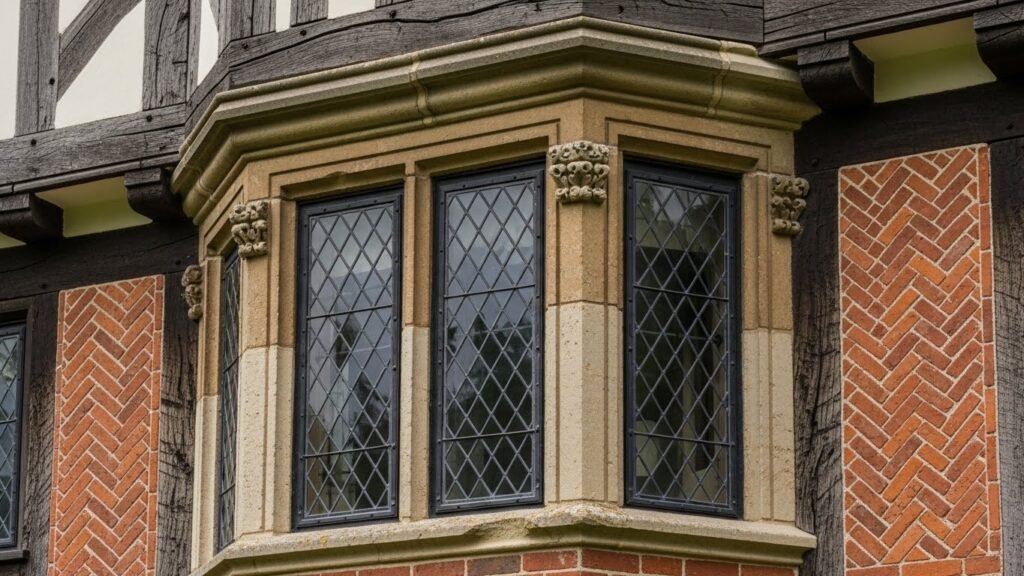
The windows on a tudor style house are usually tall and very narrow. They are often grouped together in sets of three or more. This lets in a lot of light while keeping the house looking tall. The glass often has a leaded glass look with diamond shapes.
- The Tudor Arch: Most front doors sit inside a round or flattened archway.
- Oriel Windows: These are small bay windows that float on the second floor.
- Heavy Doors: Authentic doors are usually made of thick wood with iron hardware.
- Prominent Chimneys: Huge chimneys with decorative pots are a must-have for this style.
10 Core Reasons for the Enduring Popularity of Tudor Homes
Versatility in Scale and Massing
The tudor style house works great whether it is huge or small. You can have a tiny cottage or a massive mansion that both look amazing. Because the shapes are asymmetrical, you can add rooms wherever you need them. It does not have to be a perfect box like a Colonial house.
- No Stylistic Straitjacket: You have way more freedom to change the layout.
- Small Scale Success: A small Tudor still looks expensive because of the detail.
- Unique Shapes: No two Tudor houses ever look exactly the same.
Structural Integrity and Performance
These houses are famous for being solid and sturdy. When built right, a tudor style house can last for a very long time. They use heavy materials like stone, brick, and thick timber. This makes them feel very permanent and high-quality compared to modern builds.
- Long-Lasting Value: These homes tend to hold their value very well over time.
- Weather Proof: The steep roof pitches are a huge win in snowy areas.
- Dense Materials: Thick walls help with sound and keep the house feeling quiet.
Efficient Use of Space and Footprint
Many older neighborhoods have narrow lots where a wide house won’t fit. The tudor style house is perfect for these spots because it grows up, not out. It has a compact footprint that leaves more room for landscaping. You get a lot of living space without needing a giant piece of land.
- Frugal Design: There is very little wasted space in a well-planned Tudor.
- Walkability: You often find these homes in cool, walkable inner-ring suburbs.
- Vertical Living: Multiple floors allow for better privacy between bedrooms and living areas.
Aesthetic and Social Value
There is something very special about a hand-crafted look. A tudor style house feels like it was built by an artist, not a machine. This adds a lot of curb appeal to the whole neighborhood. It creates a picturesque street that people love to walk down.
- Curb Appeal Ideas: Adding black windows or fresh exterior paint can make an old Tudor pop.
- Neighborhood Vibes: These houses pair perfectly with trees and older landscapes.
- Instant Character: Even a brand-new Tudor feels like it has a rich history.
The Tudor Interior: Translating the Exterior Magic Indoors
Traditional Interior Elements
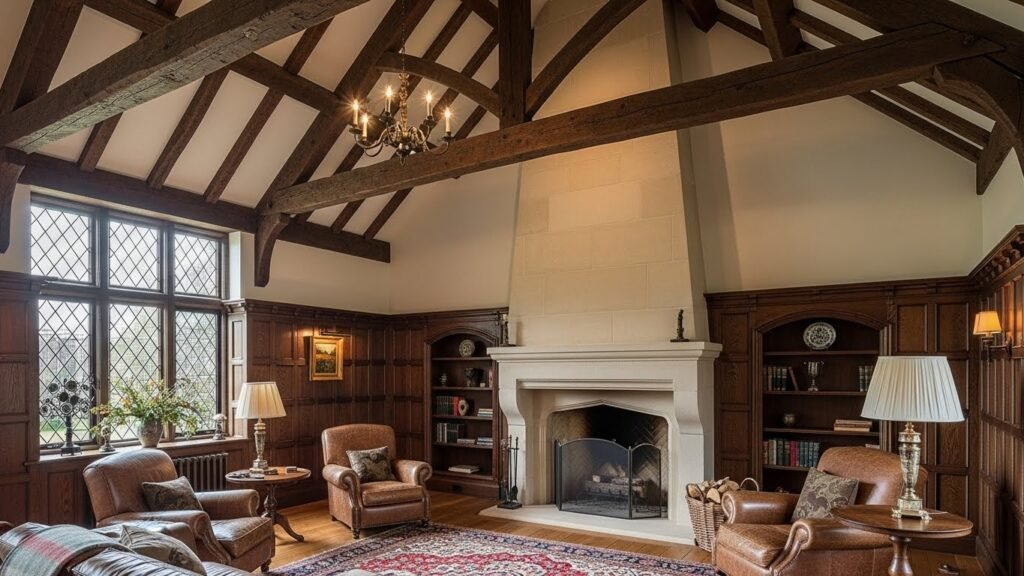
The inside of a tudor style house should feel just as warm as the outside. Designers often use exposed ceiling beams to show off the structure. Dark wood panelling, also called wainscoting, is another classic move. It makes the rooms feel cozy and very high-end.
- Great Halls: Larger homes might have a massive living room with a high ceiling.
- Stone Fireplaces: A big fireplace is usually the heart of the main room.
- Nooks and Crannies: Tudor layouts often have built-in benches or small reading spots.
Modern Tudor Interior Design
If you want a more modern feel, you can lighten things up. Many people now use a lightened palette with white walls and light oak. This keeps the character but makes the home feel much more airy. It is a great way to mix old-school style with today’s trends.
- Clean Trim: Use simpler wood trim instead of heavy, dark moldings.
- Open Floor Plans: Modern Tudors often have kitchens that open up to the living area.
- Mix and Match: Modern furniture looks really cool against a vintage brick wall.
| Feature | Traditional Tudor | Modern Tudor |
| Color Palette | Dark brown, cream, deep red | White, light oak, soft gray |
| Wood Finish | Dark stained oak | Natural or white-washed wood |
| Window Frames | Wrought iron or dark wood | Black metal or slim wood trim |
| Lighting | Heavy iron chandeliers | Sleek lanterns or recessed lights |
Modern Tudor vs. Classic Tudor: The New Interpretation
The Modern Tudor Exterior
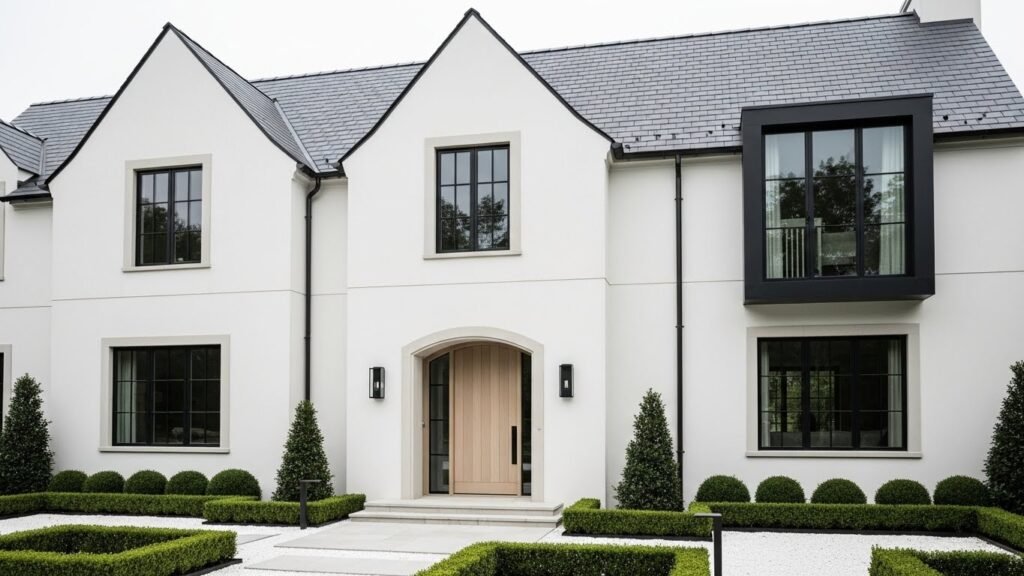
The new version of the tudor style house is much cleaner. Builders are getting rid of some of the “clutter” like heavy timbering. Instead, they focus on the bold shape of the gable roof and the facade. They often use high-contrast colors like black windows against white plaster.
- Monochromatic Schemes: Some new homes are all one color, like dark gray or white.
- Minimalist Details: The focus is on the quality of the stone and the roofline.
- Estate Feel: This style is perfect for large, luxury homes on big lots.
The Modernized Farmhouse Connection
It is funny how much the “Modern Farmhouse” owes to the Tudor. If you look closely, many of those trendy homes have Tudor bones. They use the same steep front facing gables and wing details. The main difference is usually just the choice of siding and windows.
- Board and Batten: Farmhouses use vertical wood, while Tudors use stucco.
- The Wing Detail: Both styles love that extra side section for a bigger look.
- A New Hybrid: Some architects are now building “Tudor-Farmhouse” mashups.
Landscaping the Tudor Estate
English Garden Foundations
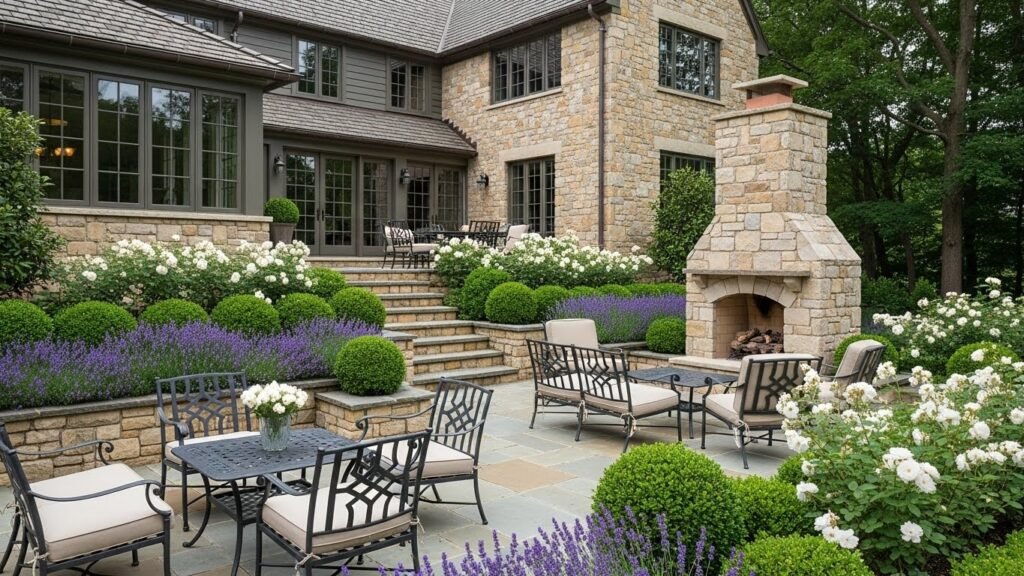
A tudor style house looks best when it is surrounded by a lush garden. Think of an English garden with lots of structure. You can use boxwood hedging to create “rooms” in your yard. This makes the outdoor space feel as organized as the inside of the house.
- Flagstone Paths: Winding paths made of stone add to the storybook style.
- Climbing Vines: Wisteria or ivy can make a stone wall look very old and soft.
- Flower Beds: Use a mix of colors to contrast with the neutral palette of the home.
Modern Curb Appeal Enhancements
If you are doing a renovation, lighting is key. Using copper or iron lanterns can highlight your entryways at night. Good landscaping can also help hide some of the bulky parts of a home. It is all about making the house feel like it belongs in nature.
- Hardscaping: Build stone patios that match the brick accents on the house.
- Specimen Trees: One big, beautiful tree can frame a steep gable perfectly.
- Hidden Tech: Use modern outdoor speakers and lights that hide in the plants.
Modern Tudor Exterior Color Palette Ideas
Choosing the right colors is essential for achieving that perfect balance between historical charm and contemporary sophistication. A modern approach often involves simplifying the traditional multi-colored facade into a more cohesive and high-contrast look.
The Monochromatic Charcoal Estate
This palette focuses on depth and drama by using varying shades of dark gray and black. It is a popular choice for large new builds that want to emphasize the bold geometry of the gables without the distraction of many different materials.
- Primary Stucco: Iron Ore or a deep charcoal gray.
- Half-Timbering: Matching black or one shade darker than the stucco for a subtle texture.
- Window Frames: Thin-profile black aluminum.
- Stone Accents: Dark slate or blue-stone masonry around the foundation.
The High-Contrast “Nordic” Tudor
Inspired by Scandinavian design, this look uses a bright, clean base with sharp black accents. It feels incredibly fresh and is the go-to choice for homeowners looking to “brighten up” an older Tudor home during a renovation.
- Primary Stucco: Pure white or a very light “Swiss Coffee” cream.
- Half-Timbering: Bold matte black or “Tricorn Black.”
- Front Door: Natural light oak wood to add a touch of organic warmth.
- Roofing: Black asphalt shingles or dark gray synthetic slate.
The Earthy Sage and Stone
For those who want their home to blend into a wooded or lush landscape, earthy tones provide a softer alternative. This palette replaces the stark black-and-white contrast with muted greens and natural tans.
- Primary Stucco: Muted sage green or a warm olive.
- Half-Timbering: Dark walnut brown or a deep “Bronze” metallic finish.
- Window Frames: Sand-colored or bronze frames.
- Brickwork: Reclaimed “Chicago” style brick with variations of tan, red, and cream.
Sample Floor Plan for a Small Tudor Cottage
Designing a small Tudor cottage requires a focus on vertical space and “frugal” planning. The goal is to maximize every square inch while maintaining the signature asymmetrical look that makes the style so desirable.
Ground Floor: The Public Living Zone
The first floor is designed around the “Great Room” concept but maintains the cozy nooks typical of the style. By placing the kitchen and dining area in the “wing” of the house, the main living space feels more expansive.
- The Entry Vestibule: A small, arched foyer that prevents cold air from entering the main house, featuring a built-in coat bench.
- Great Room: Centered on a large stone fireplace with 10-foot ceilings and exposed decorative beams.
- The Kitchen Wing: A galley-style kitchen that opens into a breakfast nook tucked into a bay window.
- The Powder Room: Tucked discreetly under the staircase to save space.
Second Floor: The Private Sanctuary
Taking advantage of the steep rooflines, the second floor often features sloped ceilings and dormer windows, which add immense character to the bedrooms.
- Master Suite: Located under the primary front-facing gable, featuring an oriel window and a walk-in closet.
- Guest Bedroom: A cozy space with a built-in window seat situated in a side dormer.
- Shared Bath: A “Jack and Jill” style bathroom with vintage-inspired hex tile and a pedestal sink.
- Laundry Closet: Stacked units located in the hallway to eliminate the need for a dedicated laundry room.
The Outdoor Living Extension
Because a Tudor cottage has a compact footprint, the “hardscaping” acts as an additional room. A stone patio out back provides the space needed for entertaining that might be missing inside.
- Arched Side Porch: A small covered area off the kitchen wing for herb gardening or morning coffee.
- Sunken Fire Pit: A stone-walled seating area in the backyard that mirrors the masonry of the home.
- Detached Garage: Often styled as a “carriage house” to match the main home’s aesthetic without taking up valuable interior square footage.
Design Mistakes and Considerations in Tudor Construction
Common Pitfalls in Reproduction
Building a brand-new tudor style house can be tricky. If the proportions are wrong, it can look like a cheap “mock-Tudor”. One big mistake is making the roof pitch too shallow. Another issue is using thin, flimsy wood trim for the half-timbering.
- Scale Issues: Small windows on a giant wall can look very weird.
- Synthetic Materials: Shiny plastic siding usually ruins the vintage homes vibe.
- Flat Facades: Real Tudors have depth with overhangs and oriel windows.
Strategic Planning for New Builds
When working with residential architects, focus on the massing. You want the house to look like it grew over time. This means the asymmetry should look intentional, not messy. Always make sure the chimney is big and placed where people can see it.
- Quality Blueprints: Don’t just use cheap stock plans; get something unique.
- Material Choice: Spend the money on real brick and stone masonry if you can.
- Local Pros: Look for firms like Dublin Ohio residential architects who know the style.
Maintenance and Preservation of Tudor Homes
Caring for Traditional Materials
Owning an old-school tudor style house takes a bit of work. Stucco can get small hairline cracks that let in water. You need to check these every year to keep your walls sturdy. The wood trim also needs a fresh coat of stain to stay dark and healthy.
- Chimney Sweeping: Keep those massive chimneys clean to avoid fires.
- Window Care: Leaded glass is beautiful but can get loose over the decades.
- Gutter Cleaning: Steep roofs dump a lot of water fast, so your gutters must be clear.
Energy Efficiency Upgrades
Many people worry that a vintage home will be cold and drafty. But you can actually make a tudor style house very energy efficient. You can add hidden insulation inside the walls during a home improvement project. Modern glazing can also be added to windows to keep the heat in.
- Storm Windows: Use slim frames that don’t hide the pretty diamond-pane glass.
- Sealed Entryways: Add weather stripping to those big arched front doors.
- Smart HVAC: Modern systems can be hidden behind wood panelling or in the attic.
Comparing Tudor to Neighboring Styles
Tudor vs. Craftsman
A tudor style house and a Craftsman home both love natural materials. However, the Tudor is very vertical with steep roofs. The Craftsman is more horizontal with low roofs and big porches. Both are part of the architectural heritage of the early 20th century.
- Roof Shape: Tudor has points; Craftsman has wide eaves.
- Porch Focus: Craftsman lives on the porch; Tudor lives behind the arch.
- Detail Style: Tudor uses half-timbering; Craftsman uses tapered columns.
Tudor vs. Modern Cottage
The “Modern Cottage” is like the cousin of the tudor style house. It takes the cozy vibes and adds a bit of French Country flair. You still see the steep roof pitches and the grouping of windows. But the Modern Cottage might use softer colors and simpler shapes.
- Material Mix: Cottages might use more stone and less timber.
- Feel: Tudors feel more formal; Cottages feel more relaxed.
- Versatility: Both work great for remodeling projects in older neighborhoods.
The Future of Tudor Architecture
Investment and Value
If you want a home that stays valuable, the tudor style house is a safe bet. People are always looking for homes with “soul” and history. These houses stand out in a sea of boring, modern builds. They often sit in high-value, inner-ring suburbs with great schools.
- Real Estate Appeal: A Tudor often sells faster because it is so unique.
- Timeless Look: It won’t look “dated” in ten years like some modern trends.
- Prestige: The style has a long-standing link to luxury and success.
Sustainability and Modern Comfort
The next generation of tudor style house builds will be very green. Builders are using better building materials that look old but work like new. You can have a house that looks like it belongs in the 1920s but has solar power. This blend of history and tech is the future of suburban design.
- Open Living: New blueprints allow for the wide-open kitchens families want.
- Sustainable Wood: Using treated timber that doesn’t rot or need toxic stains.
- Smart Home Tech: Hiding cameras and tech inside the traditional architecture.
Conclusion: Why the Tudor Remains a Design Powerhouse
The tudor style house is more than just a passing trend. It is a timeless house choice that offers beauty, strength, and character. Whether you love the old-school style Tudors or a modernized Tudor, there is so much to enjoy. It is a style that truly celebrates architectural heritage and craftsmanship.
If you are thinking about a new home or a renovation, consider the Tudor. It offers a unique look that will make your home the star of the neighborhood. With its rich history and flexible design, it is easy to see why we still love it after all these years.
Frequently Asked Questions
What is the specific history of the “Tudor” name?
The name refers to the Tudor dynasty that ruled England from 1485 to 1603, including famous monarchs like Henry VIII and Elizabeth I. However, the homes we see in America today are technically “Tudor Revival,” meaning they are 19th and 20th-century reinterpretations of the medieval folk houses built during that original royal era.
How can I tell the difference between a Tudor and a French Normandy style?
While both feature steep roofs and stone or brick, the French Normandy style is easily identified by a central circular tower with a conical roof (resembling a silo). Tudor homes focus on sharp gables and rectangular or L-shaped massing rather than rounded towers.
What are the most common colors used for authentic Tudor half-timbering?
Historically, the wood was stained very dark brown or even black to mimic aged oak. In some regions, you might find “shingle-style” Tudors where the timbering is painted a deep forest green or a muted burgundy, but dark chocolate brown remains the gold standard for authenticity.
Why do some Tudor homes have a second story that hangs over the first?
This feature is called a “jetty.” In medieval cities, jetties allowed homeowners to gain extra floor space on upper levels without taking up narrow street space. In Tudor Revival architecture, it is used purely for visual interest and to create a sense of historical depth.
Are Tudor homes generally considered energy efficient?
Original 1920s Tudors were not built with modern insulation in mind, often leading to high heating bills. However, their thick masonry walls provide excellent “thermal mass,” which helps regulate temperature. Modern versions are built with advanced vapor barriers and spray-foam insulation, making them highly efficient.
What kind of front door hardware is appropriate for this style?
To match the “sturdy” feel of the house, you should look for “thumb-latch” handlesets rather than modern round knobs. Materials like wrought iron, hammered bronze, or distressed brass with oversized escutcheon plates and decorative “dummy” hinges are ideal.
Can I remove the half-timbering from my Tudor house?
You can, but it significantly changes the architectural identity of the home. Many homeowners who find the timbering too busy choose to paint the timber and the stucco the same color (such as all-white or all-gray). This maintains the texture while creating a cleaner, “Modern Tudor” aesthetic.
What is “Nogging” in Tudor architecture?
Nogging refers to the brickwork used to fill the spaces between the wooden timbers. In high-end Tudor homes, this brick is often laid in intricate patterns like herringbone or basketweave to showcase the mason’s skill.
Do Tudor homes usually have basements?
In the United States, particularly in the Northeast and Midwest where the style is most common, almost all Tudor homes feature full basements. Because these homes often have smaller footprints, the basement is frequently finished to serve as a “pub-style” lounge or media room.
What is a “Tudor Chimney Pot”?
These are decorative terra cotta cylinders placed on top of the chimney flues. They come in various shapes, from simple tubes to ornate, twisted designs. They were originally used to improve the draft of the fireplace but are now the “jewelry” of a Tudor roofline.
What interior lighting suits a Tudor dining room?
Look for chandeliers that mimic medieval ironwork. Candelabra-style fixtures with “dripping wax” bulbs, heavy chains, and dark metal finishes help maintain the “Great Hall” atmosphere of the home.
Are Tudor homes expensive to build today?
Yes, they are generally more expensive than standard “stick-built” homes. The complexity of the steep roof framing, the cost of masonry (brick and stone), and the labor required for half-timbering and arched doorways require a higher budget and specialized contractors.
What are the best interior paint colors for a traditional Tudor?
Deep, moody tones work beautifully. Consider navy blue for a library, forest green for a study, or warm ochre for a living room. If you prefer neutrals, stick to “warm” whites rather than cool, blue-toned whites to complement the dark wood trim.
What is the most common roof material for a Tudor?
Originally, slate was the most common material because of its durability and fire resistance. Today, most homeowners use architectural asphalt shingles designed to look like slate, or “synthetic slate” made from recycled rubber and plastic.
Can I add a garage to an old Tudor without ruining the look?
The best way to add a garage is to build a detached structure that mimics the house’s gables and timbering. If it must be attached, place it toward the rear of the house and use “carriage-style” doors that look like old wooden swinging doors rather than modern roll-up segments.
What defines a “Storybook” Tudor?
A Storybook Tudor is a more whimsical, exaggerated version of the style. It features “cat-slide” roofs (where one side of the roof reaches almost to the ground), clinker brick (burnt, irregular bricks), and intentionally crooked or wavy lines to make the house look like an ancient cottage.
What kind of flooring is authentic to Tudor interiors?
Wide-plank oak flooring is the most authentic choice. For kitchens or entryways, flagstone or brick pavers are excellent options that stand up to heavy foot traffic and reinforce the “old world” feel.
Why are the windows in Tudors often called “Casement” windows?
Unlike “double-hung” windows that slide up and down, casement windows are hinged on the side and swing outward. This was the primary window type in the 16th century and remains a core feature of the Tudor Revival style.
How do I maintain the stucco on a Tudor?
Check annually for “bulges” or large cracks, which can indicate that water has trapped itself behind the stucco and is rotting the wood lath underneath. Small cracks can be filled with color-matched masonry caulk to prevent further damage.
Is the Tudor style popular in warm climates like Florida or California?
While less common than Mediterranean or Spanish styles, “Suburban Tudors” do exist in warmer states. In these areas, they often skip the heavy stone and instead use lighter stucco and thinner timbering to better handle the heat and humidity.