


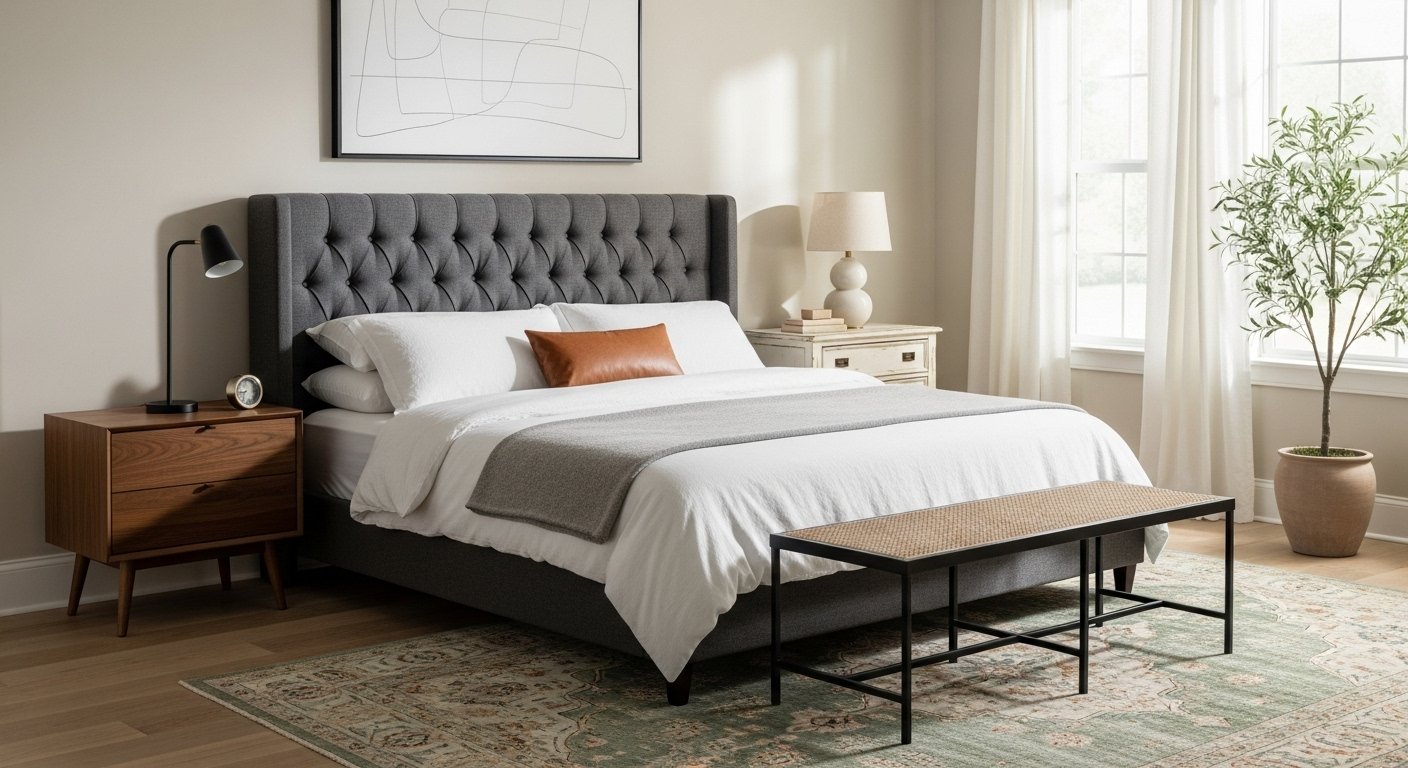
Ready to ditch those boring matching sets? Most folks think buying a whole bedroom set is the easy way out. Honestly, it makes your room look like a page from a dusty 1990s catalog. You deserve a space that actually looks like you live there. Learning how to mix and match bedroom furniture is the secret sauce to a cool home. It gives your room a curated vibe that feels high-end and super cozy. Don’t worry about it being too hard or messy. We are going to break it down so simple a 5th grader could do it. You just need to follow a few easy steps to keep things balanced. Let’s turn that sleeping spot into a masterpiece that shows off your killer style.
Introduction to the Art of Mix and Match Bedroom Furniture
Mixing your gear is all about breaking free from the “bygone era” of matching sets. Back in the day, people just bought a big box of furniture that all looked the same. It was easy, but it had zero soul and zero character. Modern design is moving toward a more collected and gathered look. This means your room looks like it grew over time instead of arriving in one truck. You get to keep that old chair you love and pair it with a brand new bed. The benefits of this approach are huge for your home’s overall feel. It makes the space feel unique and special to your life. Plus, it is way easier on your wallet since you can shop around for deals.
The core philosophy here is all about balance and variety. You want to find pieces that talk to each other without being twins. Imagine a party where everyone is wearing the exact same outfit. That would be super weird and pretty boring, right? Your furniture is the same way; it needs different personalities. By mixing diverse elements, you reflect your personal style in every corner. It keeps the eyeballs from getting bored when you walk inside. We want to create visual interest that pulls people into the room. This guide will show you exactly how to do that like a pro.
Understanding the Four Core Furniture Categories
Before you start shopping, you need to know what you are working with. Most bedroom pieces fit into four main buckets of materials. Knowing these groups helps you mix and match bedroom furniture without getting overwhelmed. Each category brings a different energy and texture to your bedroom. You don’t need a piece from every single bucket, but mixing at least two is smart.
Wood and Cane
Wood is the most common material you will see in a bedroom. It comes in a massive spectrum of tones and different textures.
- Natural Wood Tones can range from very light oak to dark, moody walnut.
- Cane and Woven Details add a light, airy feeling to headboards or nightstands.
- Wood Grain adds a natural pattern that makes a room feel earthy and grounded.
Painted Wood
Painted pieces are a total game-changer for adding a pop of color. They help break up a room that has too much brown wood.
- Color Personality allows you to bring in blues, greens, or even crisp whites.
- Wall Coordination is key because the paint color needs to vibe with your wall paint.
- Visual Breaks are created when a painted dresser sits against a neutral wall.
Metal Finishes
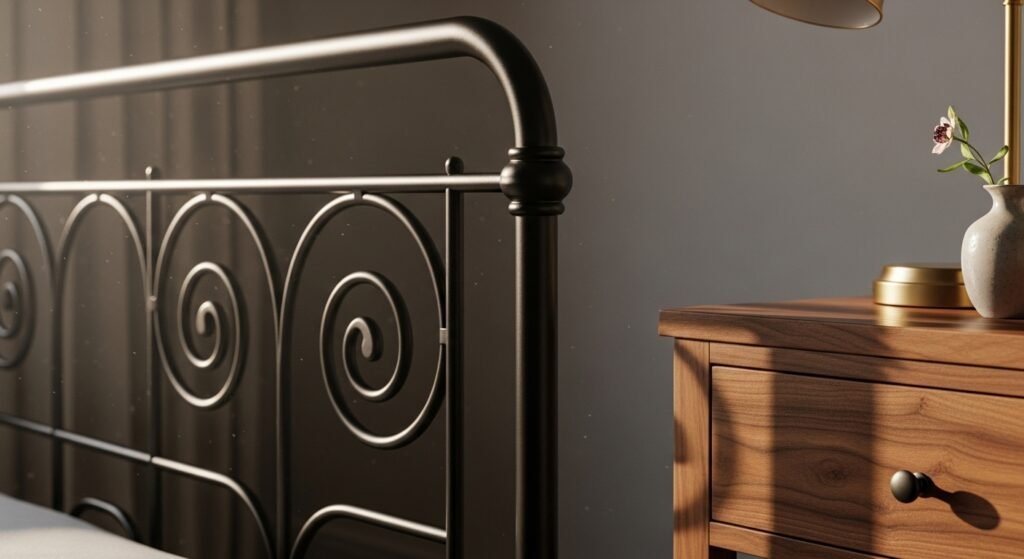
Metal adds a sleek or vintage touch depending on the finish you pick. It is usually found in bed frames or small accent tables.
- Iron and Steel give off a cool farmhouse or industrial vibe.
- Brass and Gold offer a touch of luxury and warmth to the space.
- Hardware Consistency helps tie different pieces together through matching handles.
Upholstered Pieces
Upholstery is all about that soft, cozy feeling we all want when we sleep. It brings in fabric, which instantly makes a room feel more expensive.
- Fabric Beds serve as a big, soft focal point in the center of the room.
- Accent Chairs provide a spot to use fun patterns or velvet textures.
- Softness helps balance out all the hard edges of wooden dressers.
Identifying Your Personal Design Framework
You need a plan before you start moving heavy dressers around. Defining your personal style acts as a roadmap for your choices. This helps you pick pieces that actually look good together. Without a framework, you might end up with a room that just looks messy. Think about what makes you feel relaxed and happy.
The Style Quiz Approach
Are you more of a modern fan or do you like old-school vibes? Some people love the clean lines of a contemporary look. Others want the cozy, messy-on-purpose feel of a bohemian room. You might even like a mix of farmhouse and industrial. Figure out your “vibe” so you know which furniture styles to look for.
- Modern Style usually involves straight lines and very little extra detail.
- Traditional Style has more curves and classic wood finishes.
- Rustic Style focuses on raw materials and a lived-in feeling.
Blending Old and New
The coolest rooms mix brand new items with vintage finds. This is where your personal history comes into play. You might have a dresser from your grandma that looks great with a new bed. This mix makes the room feel like it has a real story. It also keeps your room from looking like a boring showroom.
- Heirlooms add a sense of soul and history to the bedroom.
- Modern Purchases keep the space feeling fresh and up-to-date.
- Character comes from the contrast between different eras of furniture.
Establishing the Foundation: Balance and Harmony
Balance is the secret to making mix and match bedroom furniture work. You don’t want the room to feel “tippy” or lopsided. Harmony means all the different parts feel like they belong in the same family. It takes a little practice to get the visual weight right. But once you do, the room will feel professional and calm.
Visual Weight and Distribution
Visual weight is how “heavy” a piece looks to your eyes. A huge dark wood dresser looks much heavier than a thin metal nightstand.
- Heavy Pieces like solid wood beds should be balanced by something on the other side.
- Light Pieces like glass or metal tables help keep a small room from feeling cramped.
- Even Distribution prevents one corner of the room from feeling too cluttered.
Visual Rhythm and Height
If everything in your room is the same height, it looks flat and boring. You want to create a “rhythm” that keeps your eyes moving up and down.
- Varying Heights of dressers, headboards, and mirrors creates a fun flow.
- Tall Elements like floor mirrors or high headboards draw the eye upward.
- Short Elements like benches or low nightstands ground the design.
Intentional Spacing and White Space
Don’t cram every inch of your room with furniture. “White space” is the empty area that lets your furniture breathe.
- Proper Placement ensures you can actually walk around the bed easily.
- Expensive Feel comes from giving each piece enough room to be a star.
- Traffic Paths must stay clear so you don’t trip in the middle of the night.
Symmetry vs. Asymmetry
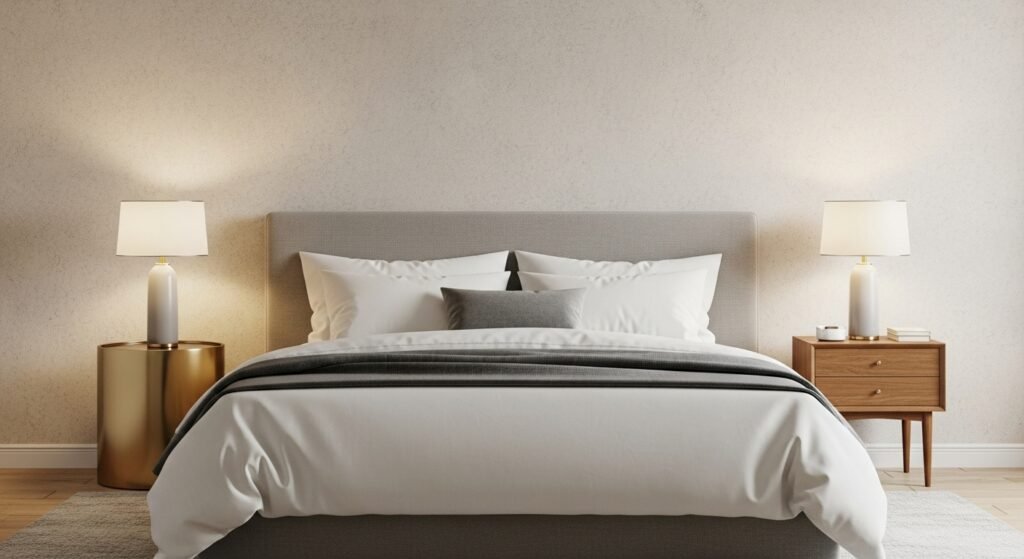
Symmetry is when things match perfectly on both sides. Asymmetry is when they don’t match, but they still feel balanced.
- Mismatched Nightstands are a great way to use asymmetry.
- Shared Scale means even if the tables are different, they should be a similar size.
- Balanced Feeling can be achieved by putting a tall lamp on a shorter table.
Mastering a Cohesive Color Palette
Color is the glue that holds your mix and match bedroom furniture together. A solid color plan makes even the wildest furniture mix look intentional. You want to pick colors that make you feel relaxed for sleep. Most designers start with a few simple rules for their palette.
The Neutral Foundation
Start with a neutral base for your big items and your walls. Neutrals are colors like white, beige, grey, or tan.
- Flexibility is higher when your main pieces don’t have a loud color.
- Calm Vibes are easier to achieve with a neutral background.
- Easy Updates are possible because you can just change the pillows to get a new look.
Choosing a Dominant Color
Pick one main color that shows up in several places around the room. This color acts as the leader for the whole design.
- Unity is created when this color appears in the rug, the bedding, and art.
- Visual Anchor helps focus the room so it doesn’t feel scattered.
- Primary Hue should be something you really love and won’t get tired of.
Complementary and Contrasting Accents
Accents are the “spice” of your room’s color scheme. They add depth and keep the neutrals from being too sleepy.
- Intentional Pops of color can be used in small chairs or throw blankets.
- Depth is added when you use different shades of the same color.
- Balance keeps the bright colors from overwhelming the space.
Matching Undertones
Undertones are the hidden colors beneath the main color. Some whites look blue (cool), while some look yellow (warm).
- Consistency is key; try to keep all your colors in the same temperature family.
- Shared Base Hues help a modern chair look right next to an old dresser.
- Visual Harmony happens when all the “hidden” colors match up.
The Science of Mixing Wood Finishes
This is the part that scares most people, but it is actually pretty simple. You can totally mix and match bedroom furniture with different wood grains. It makes the room look much more high-end and designer-made. You just need to follow a few “science” rules to get it right.
Tone vs. Undertone in Wood
Tone is how light or dark the wood finish looks. Undertone is the actual color “hidden” in the wood grain.
- Golden Hues are found in warm woods like oak or cherry.
- Grey Hues are found in cool woods like weathered pine or ash.
- Neutral Woods have very little hidden color and work with almost anything.
The 60-30-10 Rule for Woods
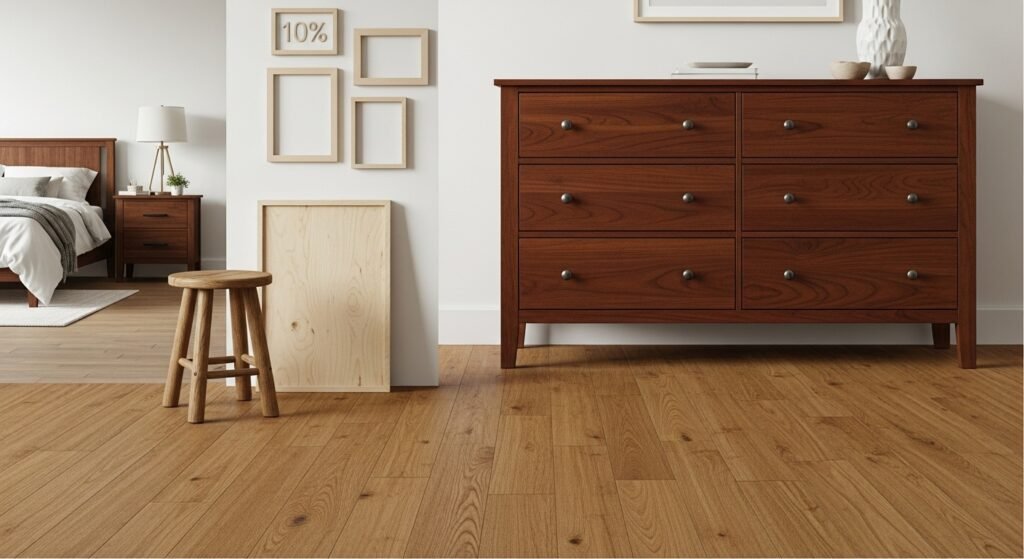
This rule helps you distribute wood tones so the room feels balanced. It prevents one wood from taking over the whole space.
- 60% Dominant Wood should be your flooring or your largest furniture piece.
- 30% Secondary Wood should contrast the first one, like a dresser or desk.
- 10% Accent Wood is for small things like picture frames or a stool.
Creating High-Contrast Pairings
Don’t be afraid to mix very light wood with very dark wood. Contrast makes the furniture stand out so it doesn’t just blend together.
- Light and Dark pairings look very intentional and stylish.
- Stand Out Pieces happen when a dark nightstand sits on a light floor.
- Visual Separation helps the eye identify each piece of furniture.
The Temperature Rule and Bridge Pieces
Try to keep your woods in the same “temperature” family. If you have warm floors, look for warm wood furniture.
- All Warm or All Cool is the safest way to mix woods without clashing.
- Bridge Pieces are items that have multiple wood colors in them.
- Linking the Room happens when a bridge piece sits between two different woods.
Balancing Proportions and Scale
Proportion is how big a piece is compared to the room. Scale is how big the pieces are compared to each other. Getting this right makes the room feel comfortable and “just right”. If things are too big, the room feels cramped. If they are too small, the room feels empty and weird.
Relating Furniture to Room Size
Measure your room before you buy anything new. You need to make sure the furniture actually fits without blocking doors.
- Massive Pieces can swallow up a small bedroom and make it feel tiny.
- Small Pieces in a huge room can look like dollhouse furniture.
- Floor Plan Flow is the most important thing for your daily comfort.
Maintaining Similar Scales
Even if your nightstands don’t match, they should be roughly the same height. This keeps the bed looking balanced in the center.
- Matching Mass means the weight of the objects should feel similar.
- Visual Stability comes from having pieces that “make sense” together.
- Harmonious Sizing prevents one piece from looking like an accident.
Avoiding the “Too Fast” Error
The biggest mistake is trying to furnish the whole room in one weekend. Take your time to find pieces that truly work together.
- Complimentary Selection happens when you live in the space for a bit.
- Patience leads to a room that looks collected, not rushed.
- Better Choices are made when you aren’t under pressure to finish.
Matching Styles Without Clashing
You can mix and match bedroom furniture styles if they share something in common. This is called “finding a thread” between pieces. It could be a similar leg shape or a shared material. This keeps the room from looking like a furniture graveyard.
Finding Common Ground
Look for shared silhouettes or shapes in your furniture. Maybe two pieces both have rounded corners or clean, straight edges.
- Shared Silhouettes act as a secret link between different eras.
- Shape Consistency helps the eye see a pattern in the room.
- Cohesion is built through these small, shared details.
The Importance of Furniture Legs
Legs are a huge giveaway for furniture style. If one piece has fancy curved legs and another has skinny metal ones, they might clash.
- Leg Shapes should be somewhat similar to look intentional.
- Traditional vs. Modern legs can be tricky to mix, so proceed with caution.
- Unified Base makes the furniture feel like it belongs in the same set.
Transitional Pieces as Bridges
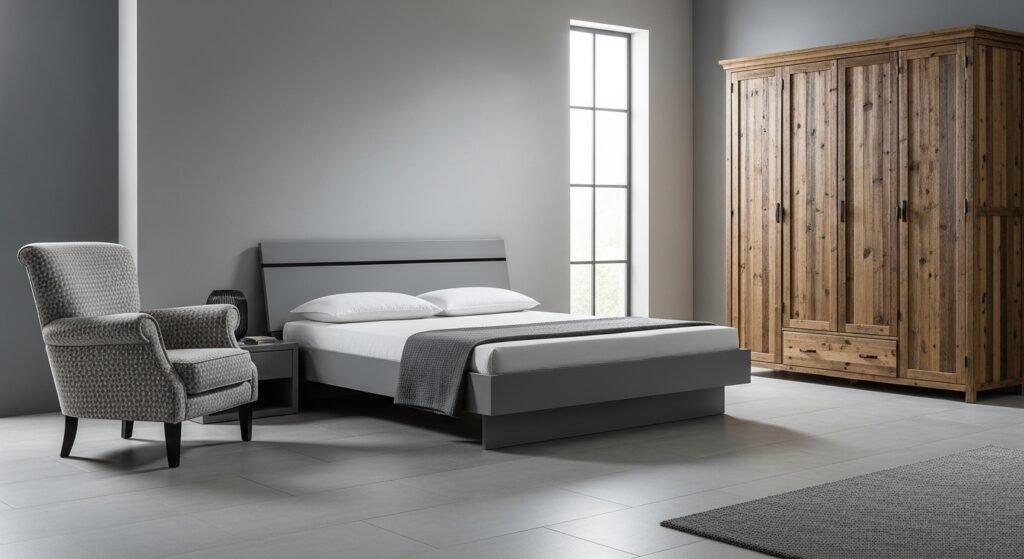
Transitional furniture is a style that fits right between old and new. It is often simple and works with almost anything.
- Versatile Designs like rustic or simple traditional pieces bridge the gap.
- Style Bridges allow you to have a modern bed and a vintage dresser.
- Flexible Look is easier to maintain when you have these “safe” pieces.
| Furniture Element | Mix Tip | Why it Works |
| Nightstands | Different styles, same height | Keeps the bed balanced but adds interest |
| Wood Tones | Mix light and dark | Adds depth and prevents a boring look |
| Metals | Match all your hardware | Ties different furniture styles together |
| Upholstery | Add a soft headboard | Balances out hard wood surfaces |
Repeating Materials and Textures for Cohesion
Repetition is your best friend when you mix and match bedroom furniture. If you use a material once, try to use it again somewhere else. This makes the choice look “on purpose” instead of like a random mistake. It creates a sense of visual coherence that calms the brain.
Visual Coherence and Texture
Texture is how a surface feels (or looks like it feels). Mixing textures like rough wood and smooth velvet adds a lot of style.
- Consistent Textures help tie different styles together.
- Visual Interest is created by the contrast between hard and soft.
- Cohesion comes from seeing the same materials repeated in the room.
The Power of Upholstery and Natural Bridges
Upholstery is great for softening a room that has a lot of hard wood. Natural materials like cane or linen act as bridges between styles.
- Softening Surfaces makes the bedroom feel more inviting and cozy.
- Organic Connectors like raw wood help a modern room feel warmer.
- Fabric Layers add a touch of luxury to even simple furniture.
Metal and Brass Accents
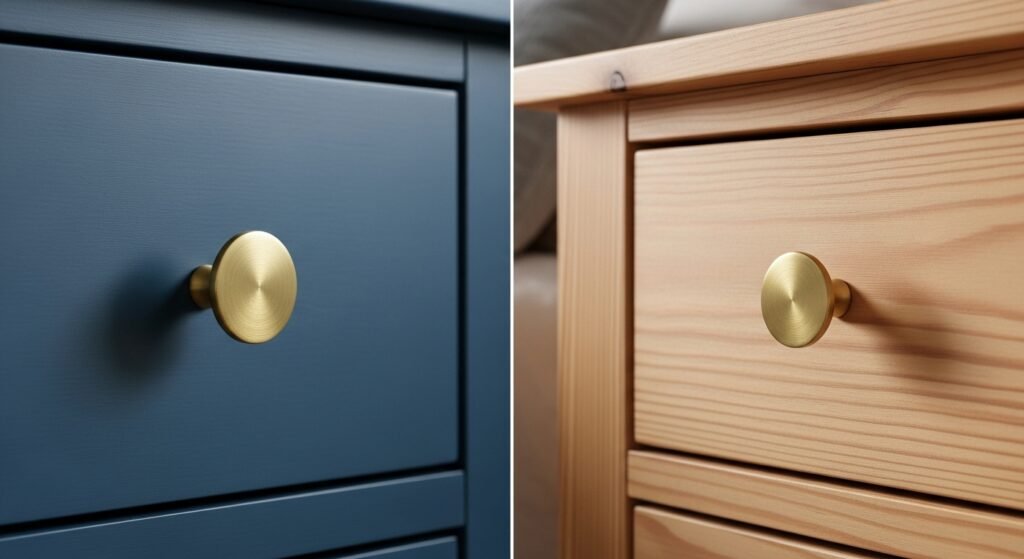
Metals can be used to create a striking contrast against dark furniture. They act as the jewelry for your bedroom.
- Striking Contrast happens when gold handles pop on a dark dresser.
- Unifying Finishes means matching your lamps to your drawer pulls.
- Hardware Connection is an easy way to make mismatched pieces match.
Layering with Accessories and Textiles
Accessories are the finishing touches that pull everything together. They are the easiest and cheapest part of the mix. Without them, a room can feel cold and unfinished. Think of them as the glue for your design.
Area Rugs as Unifiers
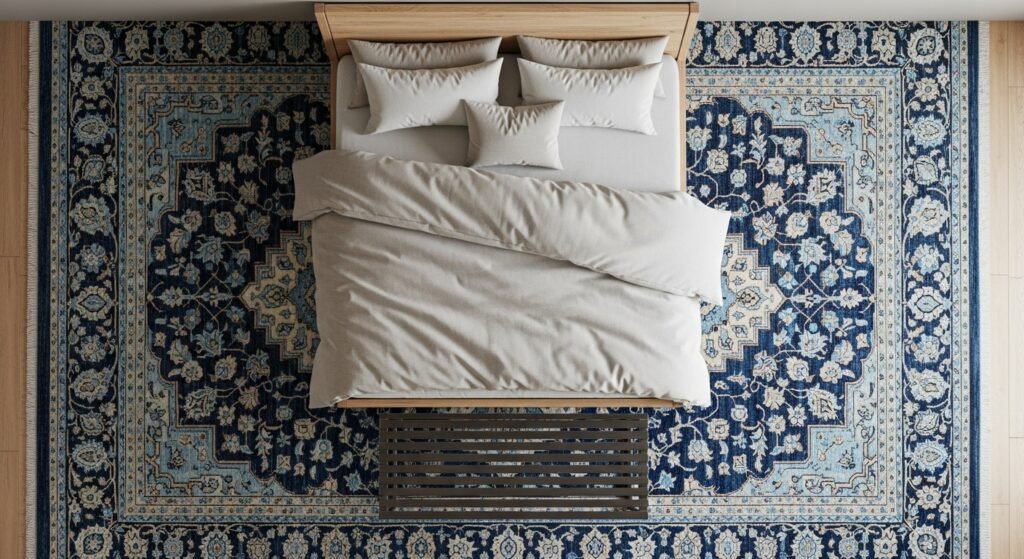
A rug is like a big hug for your furniture. It physically connects the bed to the nightstands and the chair.
- Pulling Colors from every corner into one central piece.
- Grounding the Space makes the furniture feel like it’s in a specific spot.
- Texture Addition adds warmth to hard floors like wood or tile.
Bedding and Window Treatments
Your bedding is the biggest “soft” surface in the room. It should repeat the colors and patterns found in your other furniture.
- Repeating Hues helps the eye see a consistent theme.
- Vertical Space is filled by curtains, which adds to the room’s height.
- Layered Looks make the bed feel like a cozy sanctuary.
Wall Art and Layered Lighting
Don’t forget your walls and your lights. Art reinforces the theme you’ve built with your furniture.
- Vertical Theme keeps the design going all the way to the ceiling.
- Artificial Light from lamps highlights the different wood grains.
- Atmosphere is created by using multiple light sources instead of one.
Expert Strategies for Styling a Small Bedroom with Mixed Furniture
Designing a smaller space requires a bit more strategy when you want to mix and match bedroom furniture. You do not want the room to feel like a cluttered furniture warehouse. Instead, you want to use the variety to trick the eye into thinking the room is bigger than it actually is. By picking the right pieces, you can create a cozy and open vibe that feels perfectly planned.
Prioritize Leggy Furniture for Visual Airflow
In a small room, the more floor you can see, the bigger the space feels to your brain. Avoid heavy, solid-to-the-floor pieces that act like big blocks in the corner.
- Tapered Legs on mid-century modern dressers allow light to pass underneath the furniture.
- Metal Bed Frames with open headboards prevent the bed from feeling like a giant wall in the middle of the room.
- Floating Nightstands are a great way to mix in a modern element while keeping the floor area completely clear.
Use Scale to Your Advantage
Just because the room is small does not mean you only need tiny furniture. Mixing one large “hero” piece with several smaller, lighter items is a pro design move.
- The Oversized Headboard can act as the main focal point, making the walls feel taller and more grand.
- Slimmer Side Pieces should be used for the rest of the room to keep the traffic paths open and easy to walk through.
- Low-Profile Items keep the sightlines clear so your eyes do not hit a tall dresser the moment you walk inside.
The Power of Mirrored and Metallic Surfaces
Reflective surfaces are the best friends of a small bedroom. They bounce light around and add a touch of glamour to your mixed furniture collection.
- Mirrored Nightstands can be mixed with a wood bed to add brightness without adding “visual weight.”
- Metallic Accents like silver or brass lamps help reflect the sun during the day and lamp light at night.
- Glass-Top Desks or vanities provide a workspace that almost disappears into the room, keeping things airy.
Maximizing Vertical Space for Variety
When you run out of floor space, you have to look at the walls. You can mix and match styles by using the vertical real estate for storage and decor.
- Tall, Narrow Bookshelves allow you to mix in different wood tones without taking up much square footage.
- Wall-Mounted Lighting replaces bulky bedside lamps, giving you more room for a smaller, stylish nightstand.
- High-Hung Curtains should be placed near the ceiling to draw the eye up and emphasize the room’s height.
Choosing a Tight Color Palette for Small Spaces
While you can mix styles, keeping the colors close together helps a small room feel organized. Too many high-contrast colors can make a tiny room feel fragmented and messy.
- Monochromatic Bases like using different shades of light grey keep the furniture from clashing.
- Shared Tones between your mismatched dresser and bed frame create a seamless look that flows well.
- Light-Colored Woods like birch or ash are usually better for small rooms than dark, heavy mahogany.
Smart Shopping and Evolution Strategies
You don’t need to spend a fortune to mix and match bedroom furniture. In fact, it’s often cheaper than buying a whole set. You just need to be a smart shopper and look for quality. Your room can evolve over time as you find new things you love.
Investing in Quality and Secondhand Finds
Prioritize spending your money on “anchor” pieces like the bed frame. Then, look for unique character at thrift stores or flea markets.
- Anchor Pieces should be durable and have a classic style.
- Vintage Character is found in old pieces that have real history.
- Unique Finds make your room look like no one else’s.
Budget-Friendly Mixing and Hardware Updates
You can mix expensive items with very cheap ones. A simple trick is to swap out the handles on a cheap dresser to make it look pricey.
- Investment Mixing allows you to splurge on one item and save on others.
- Simple Updates like new drawer pulls connect mismatched items.
- Instant Refresh happens when you change small details.r.
Conclusion: Creating Your Personalized Haven
At the end of the day, your bedroom is for you. Rules are great, but your happiness is the most important part. Mixing and matching bedroom furniture is a journey, not a race. Take your time and pick pieces that truly tell your story. A curated room is a cozy room that feels like home. Happy decorating!
Frequently Asked Questions
Can I mix a high-profile headboard with low-profile nightstands?
Yes, this creates a dramatic visual contrast that acts as a focal point. Just ensure the nightstands are high enough to be reachable from the mattress level so they remain functional.
Is it okay to mix different metal finishes like chrome and matte black?
Absolutely, mixing metals is a top design trend that adds a layered feel. Try to keep one metal as the dominant finish for larger items like the bed frame and use the second metal for smaller details like drawer knobs.
How do I incorporate a glass-top table into a room full of wood furniture?
Glass is a fantastic “breathing” material that makes a room feel more open. It pairs perfectly with heavy wood because its transparency prevents the space from looking too crowded or dark.
Can I use a dining room chair as a bedroom accent chair?
You certainly can if the scale matches the surrounding furniture. A sleek dining chair often works well at a bedroom desk or vanity, especially if it shares a color or material with the bed.
What should I do if my mismatched furniture has different heights for the lamps?
Use books, decorative boxes, or small trays to boost the lamp on the shorter table. This levels the light source and makes the asymmetrical furniture look more intentional and balanced.
Should my dresser and chest of drawers match if they are on the same wall?
They do not need to match, but they should share at least one common trait like hardware or a general color family. If they are too different and close together, the room might feel lopsided.
How do I mix an ultra-modern platform bed with a heavy antique armoire?
The secret is a unifying color palette on the walls or bedding. The contrast between the sleek bed and the detailed antique creates a sophisticated “collected over time” aesthetic.
Can I mix different types of upholstery like velvet and linen?
Mixing fabrics adds rich texture to the room and is highly recommended. Velvet brings a touch of luxury while linen keeps things grounded and organic, creating a perfect balance.
Is it possible to have too many different furniture styles in one bedroom?
Yes, sticking to a maximum of three distinct styles is usually best. If you go beyond that, the room starts to look like a warehouse rather than a curated home.
How do I handle furniture legs that are completely different shapes?
Try to find a middle ground by ensuring the colors of the legs match even if the shapes don’t. You can also use a long bedspread or “dust ruffle” to hide the bed legs if they clash too much.
Can I put a painted nightstand next to a natural wood bed frame?
This is one of the easiest ways to start mixing. A pop of navy or forest green on a nightstand can make a light oak or walnut bed frame look much more modern.
Does the flooring need to match the wood furniture?
No, it is actually better if they provide a bit of contrast. If you have dark wood floors, try using lighter wood furniture or a large area rug to separate the two wood tones.
How can I make a plastic or acrylic chair fit into a traditional bedroom?
Acrylic furniture is “invisible,” so it fits into almost any style. It adds a modern edge to a traditional room without taking up any visual space or clashing with wood grains.
Should my curtain rods match the hardware on my furniture?
While it is a nice touch, it is not a strict requirement. As long as the metals are in the same temperature family, such as gold and brass, they will look great together.
Can I use a trunk at the foot of the bed if it doesn’t match the bed frame?
A trunk is a classic accent piece that looks great when it stands out. Using a leather or wicker trunk against a wood or metal bed adds a nice layer of texture.
What if I have a bedroom set but want to start mixing it up?
Start by replacing just the nightstands or adding a unique accent chair. You don’t have to get rid of the whole set at once; small changes make a big impact.
How do I mix mid-century modern furniture with industrial pieces?
Both styles often use clean lines and raw materials like wood and metal. Focus on shared black metal accents to tie the two styles together seamlessly.
Is it okay to have a mismatched vanity and dresser?
Yes, a vanity is often seen as a standalone “special” piece of furniture. Giving it a unique color or style makes it feel like a personal sanctuary within the room.
Can I mix wicker furniture into a formal bedroom design?
Wicker adds a relaxed, coastal vibe that can soften a formal room. Use a wicker bench or a small side chair to bring in a natural, organic texture.
How do I make mismatched drawer pulls look intentional?
If the pulls are different shapes, try to make sure they are the same metal or color. This consistency allows you to have variety in style while maintaining a sense of order.
