


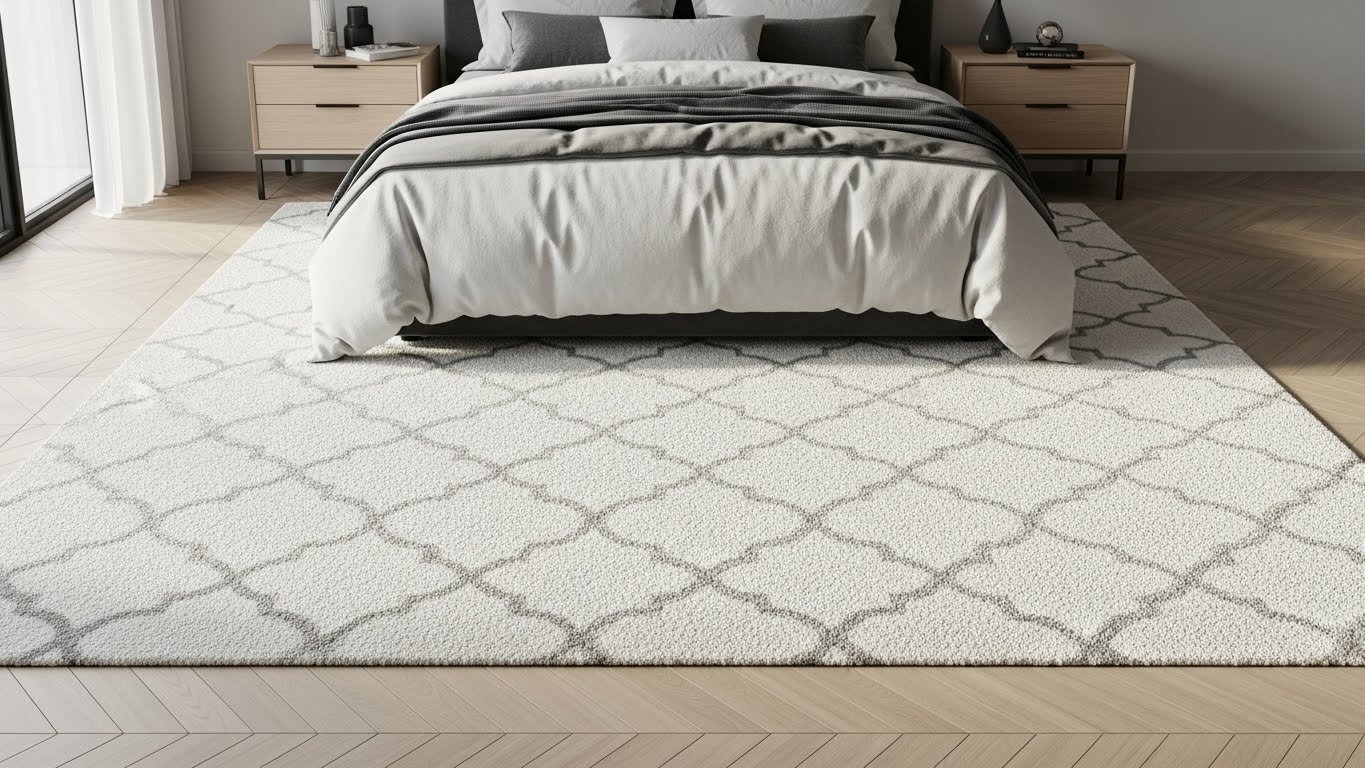
Choosing a rug for your bedroom can feel like a big chore. You want that soft feeling under your feet every morning. A rug makes a room feel finished and cozy. It brings order to your space and shows off your style. Some designers say a room without a rug looks naked. Finding the right spot for your rug can be tricky since every room is unique. You have to think about the bed size and the floor space. There is no single right answer because every home is different. This guide will help you pick the best rug for your master bedroom. We will focus on the king bed and how to make it look great.
Introduction to Bedroom Rug Styling
An area rug does more than just look pretty. It helps optimize your space and makes everything look balanced. Rugs add warmth and a sense of peace to where you sleep. They create a focal point that anchors your heavy furniture. You can use them to define different areas in a large master suite. A good rug choice makes the room feel high-end and inviting. It also protects your hardwood floors from scratches. You should think about your room theme before you start shopping. The right scale and texture will change the whole vibe of your home.
Understanding Bed Dimensions: Standard King vs. California King
Before you buy, you must know your bed size. A standard king bed is 76 inches wide and 80 inches long. A California king is narrower but longer at 72 inches by 84 inches. These small differences change how much rug sticks out on the sides. You want enough rug to land on when you get out of bed. Knowing these numbers helps you choose the right proportions. Measure your bed frame carefully before looking at rug sizes. This prevents you from buying something too small for your space.
- Standard King beds need more width to look balanced in the room.
- California King beds require more length at the foot of the bed.
- Bed frames with extra padding might take up more room than the mattress.
- Headboards can also shift how the bed sits on the floor.
General Rules for Rug Sizing and Proportions
When asking what size rug under king bed is best, think about the extension. You want the rug to stick out 18 to 24 inches on the sides. This gives you a soft walkway and looks visually pleasing. If the rug is too small, the bed will look like it is floating. You can use tape on the floor to see the size before you buy. This helps you visualize the furniture layout. Leave about 8 to 12 inches of bare floor near the walls. This keeps the room from looking like it has wall-to-wall carpet. Good proportions make the room feel professional and designed.
What Size Rug Under King Bed? A Detailed Breakdown
5’x8’ or 6’x9’ Rugs (The Minimalist Approach)
These smaller rugs are great for a clean-cut look. They usually go only under the foot of the bed. This works well if you have a bench or an ottoman at the end. It adds a bit of comfort without covering the whole floor. This size is perfect for families with pets who need a soft spot. It is also a good choice for smaller master bedrooms. You get some texture without overwhelming the room. It creates a nice visual divider in the space.
8’x10’ Rugs (The Simple and Clean-Cut Choice)
The 8×10 rug is a very popular and simple approach. It is best for king frames that do not have nightstands on the rug. You should position it so it just touches the base of your nightstands. This keeps the look balanced and leaves space for other decor. It is a smart choice for rooms with limited square feet. You still get plenty of cushion underfoot at the end. It provides a soft landing without taking over the whole floor.
9’x12’ Rugs (The Universal Standard)
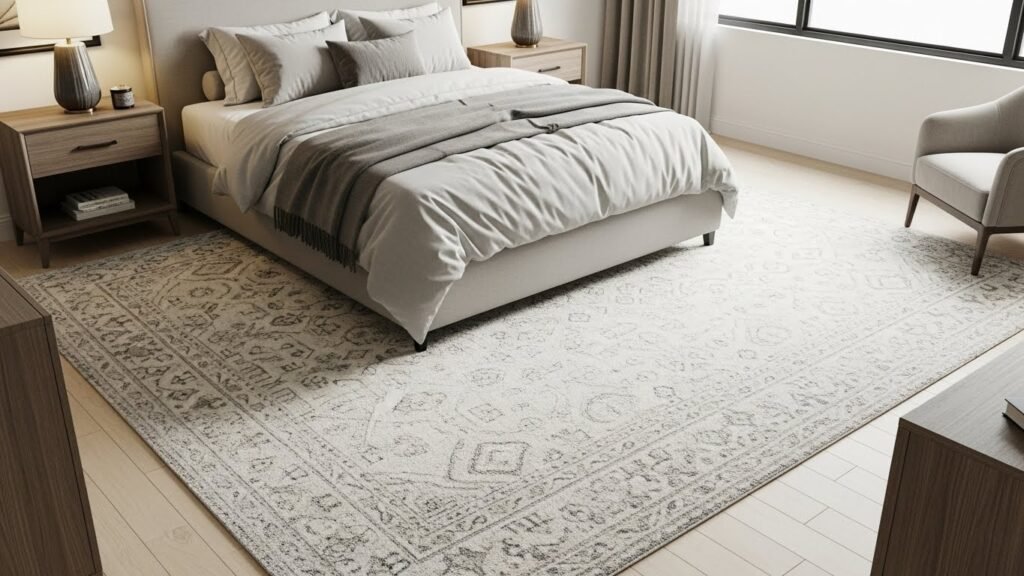
A 9×12 rug is the ideal size for most king beds. It covers enough space to bring the whole room together. This size allows the rug to extend past the bed and nightstands. You get a continuous border of fabric around the bed. It makes the design of the rug more visible in the room. This is a great choice for standard king beds. It anchors the bed as the main centerpiece. You will feel like you are walking on clouds with this coverage.
12’x15’ Rugs (The Grand Master Suite)
If you have a huge room, go with a 12×15 rug. This size adds a lot of depth and luxury. It works perfectly with two nightstands sitting fully on the rug. It is also great for longer California king beds. This large scale allows you to use bold colors and patterns. It makes a big room feel cozy and very inviting. You can fit a lot of furniture on this much fabric. It covers most of the floor for a high-end look.
Custom 13’x13’ and Oversized Rugs
Sometimes a standard size just won’t work for you. A 13×13 rug is usually a custom order for unique spaces. You need a lot of room so it doesn’t look cramped. Custom rugs let you pick the exact material and color. Artisanal teams can create hand-tufted designs just for you. This is how you get a truly bespoke rug for your home. It ensures the rug fits your specific room dimensions perfectly. Customization is the best way to get exactly what you want.
Strategic Placement and Positioning Techniques
Full Rug Coverage (All Legs On)
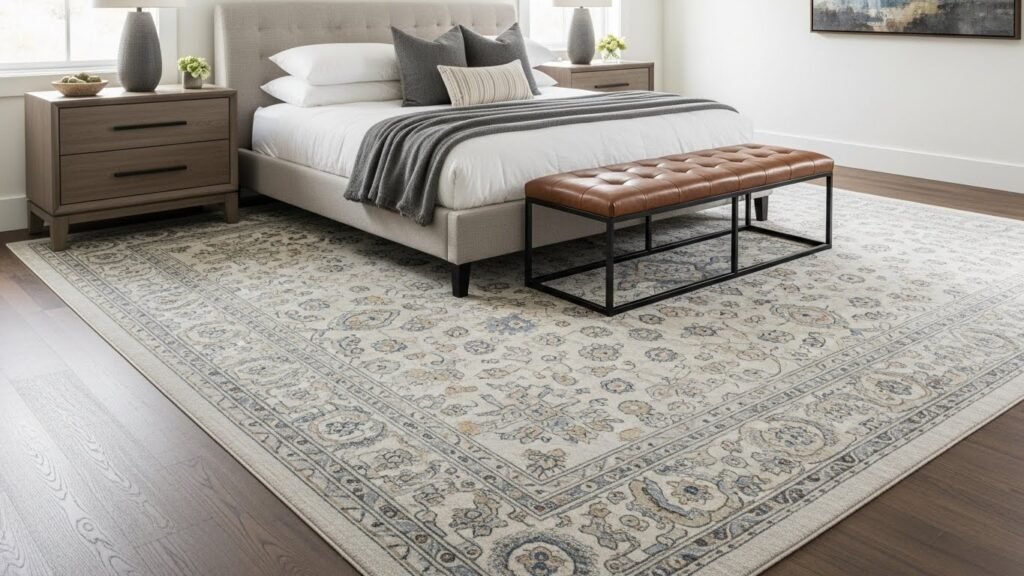
This layout is for a very luxurious and seamless feel. All four legs of the bed and the nightstands sit on the rug. Even an ottoman at the foot should stay on the fabric. This creates a strong anchor for the whole room. It works best in spacious master bedrooms with plenty of floor space. You get a soft landing everywhere you step. It makes the sleeping area feel like its own special zone. Be sure to leave a border of bare floor near the walls.
Partial Rug Placement (Front Legs On)
In smaller rooms, you might only put the bottom half on the rug. The nightstands usually stay off the rug in this setup. This opens up more floor space and looks more casual. It still gives you that warmth when you get out of bed. Make sure you don’t just put the front legs of furniture on the rug. This can make the furniture feel shaky or unbalanced. It is a popular way to save money on a smaller rug size. You still get the texture and comfort where it matters most.
The “Foot of the Bed” Placement
Placing a rug only at the foot is a minimalistic move. This style works if you have a beautiful wooden floor you want to show. It serves as a visual divider for the room. This is common in rooms with extra furniture like a stool or bench. Ensure the rug doesn’t look too small or clutter the space. It adds a touch of personality without a huge commitment. It is a chic way to update your bedroom decor.
Alternative Rug Configurations
Utilizing Bedroom Runners
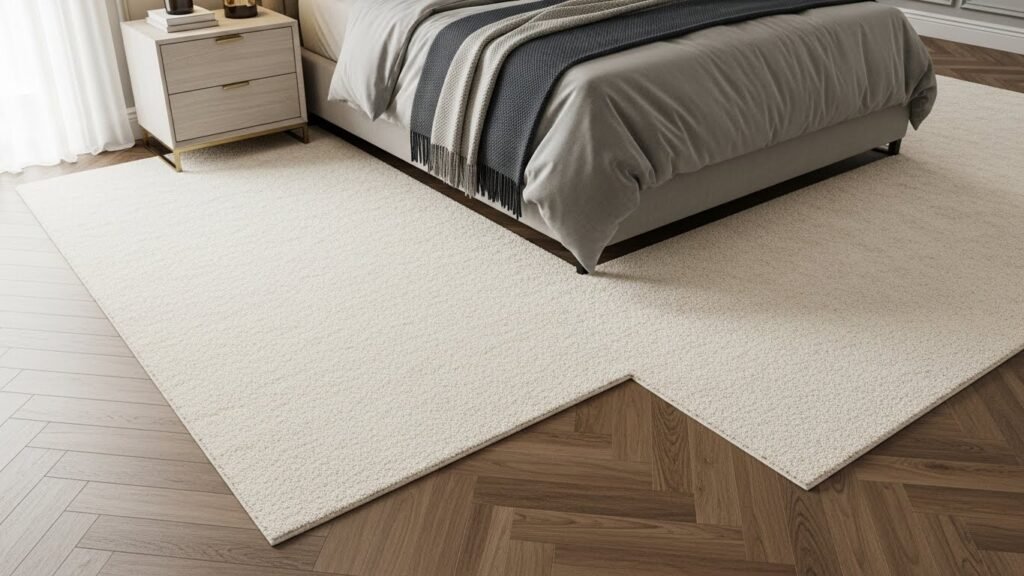
Runners are a great way to accent your bed. You can put one on each side and one at the foot. This covers the walking space without hiding your whole floor. For a king bed, the right size for a runner is about 4.5×5.5 feet. They also work well in rooms with two single beds. You can even layer them on top of wall-to-wall carpet. It is a smart way to get comfort for a lower price. Runners offer a lot of versatility for different room layouts.
- Side runners provide a soft spot for your feet every morning.
- Foot runners help define the end of the bed area.
- Layering runners adds extra cushion over existing flooring.
- Symmetry is easy to achieve with a set of matching runners.
Exploring Unique Rug Shapes
Most people go for a rectangle, but other shapes are cool too. A circle rug can frame the bottom of the bed nicely. Half-moon shapes look great right at the foot. You can even find oblong or arch shapes for a custom look. These shapes add visual interest and break up straight lines. They are perfect for a mid-century or modern room theme. Different shapes can help a small room feel less crowded. It is an easy way to show off your unique style.
Design and Aesthetic Considerations
Lifestyle and Functionality
Think about how you live before picking your rug fabric. Do you have pets that shed a lot of fur? Do you like to wear shoes inside your bedroom? High-traffic areas need a more durable and resilient rug. A guest room might only need something simple and plush. Your lifestyle will guide you toward the right rug maintenance level. Some materials are much easier to clean than others. Transparency about your needs will help you choose wisely.
Color and Pattern Selection
You have to decide between bold patterns or solid colors. Solid designs are elegant and feel very calm. Bold patterns can add energy and movement to a space. Large rugs are great for showing off intricate details. Make sure the colors match the rest of your room decor. Darker colors might be better for high-traffic spots. Lighter colors can make a small master bedroom feel bigger. Your rug is a huge part of the room’s personality.
Material and Texture
Wool is one of the best materials for a bedroom rug. It is soft, warm, and very stain-resistant. High-ply materials make you feel like you are walking on clouds. Textures can help separate different parts of the room. Flatweave rugs are simpler and often easier to move. Hand-knotted rugs are very durable and last a long time. Choosing the right yarn affects the longevity of your purchase. Texture adds a lot of visual interest to your decorative flooring.
| Rug Size | Bed Type | Best Placement |
| 5’x8′ | King | Foot of bed only |
| 8’x10′ | King | Under 2/3 of bed |
| 9’x12′ | King | Under bed & nightstands |
| 12’x15′ | Cal King | Full coverage |
Room-Specific Architecture and Rug Integration
Dealing with Floor Vents and Radiators
- Safety and Airflow: Large rugs under king beds often overlap floor vents. Explain the importance of using vent extenders or choosing breathable weaves like flatweaves to prevent heat trapped under the rug from damaging the floor or the rug backing.
- Radiator Clearance: In older homes, king beds are often placed near radiators. Detail the necessary clearance (usually 6–12 inches) to prevent natural fibers like wool from drying out and becoming brittle.
Sloped Ceilings and Attic Master Suites
- Vertical Volume: In rooms with low or sloped ceilings, a dark or busy rug can make the room feel “squashed.” Suggest light-colored, low-pile rugs to create an airy feel.
- Placement Logic: How to align the rug when the bed is tucked under an eave, focusing on creating a symmetrical “grounding” effect even when the ceiling is asymmetrical.
Advanced Design Theories for Large Spaces
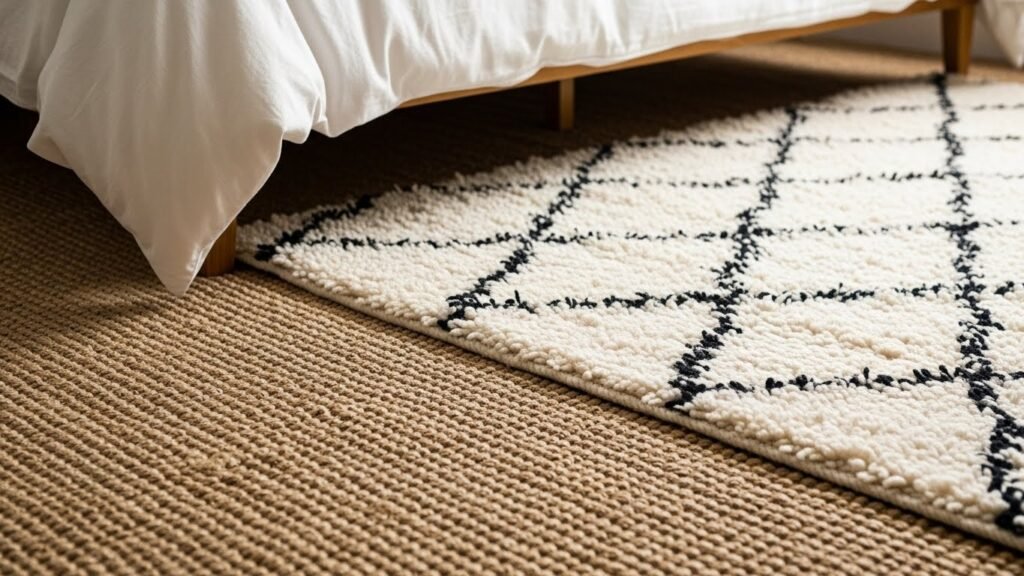
The Psychology of Rug Texture under a King Bed
- Sensory Grounding: Discuss how the first touch of a specific texture (shag vs. silk) affects the transition from sleep to wakefulness.
- Visual Weight: Explain how a high-contrast rug can make a massive king bed look smaller and more manageable, while a low-contrast rug makes the bed feel like a grand, expansive island.
Seasonal Rug Swapping Strategies
- The Winter Foundation: Recommendations for high-pile wool or faux fur layering during colder months for heat retention.
- The Summer Refresh: Transitioning to breathable jute, seagrass, or thin cotton flatweaves to keep the bedroom feeling cool and crisp.
- Storage Tips: How to properly clean, roll, and store an oversized 9×12 or 10×14 rug during the off-season to prevent moth damage and permanent creasing.
Professional Installation and Furniture Safety
Anchoring the Heavy King Frame
- Caster Cups and Protectors: Using furniture cups under the heavy legs of a king bed frame to prevent permanent “crushing” of the rug pile.
- Weight Distribution: Discussing how the weight of a solid wood or iron king frame helps prevent the rug from “creeping” but requires a denser rug pad for protection.
Rug Trimming and Custom Modifications
- On-Site Alterations: When a standard 9×12 is slightly too wide for a specific alcove, explain the process of “binding and serging” to custom-fit the rug around floor-mounted outlets or architectural columns.
- Corner Weights: Using rug anchors or heavy-duty corner weights on the exposed edges of the rug to prevent curling in high-traffic master bedroom entrances.
Color Theory and Light Interaction
Reflective vs. Absorptive Fibers
- Silk and Viscose: How these fibers reflect light from bedside lamps, creating a luxurious glow around the king bed.
- Matte Natural Fibers: How wool and cotton absorb light, making them better for bright, sun-drenched master bedrooms where glare might be an issue.
Coordinating with Nightstand Hardware and Bedding
- Metallic Accents: Matching the undertones of a rug (cool vs. warm) to the hardware of nightstands (brass, chrome, or matte black).
- The Rule of Three: How to coordinate the rug pattern with the duvet cover and the decorative shams without making the room look cluttered.
Longevity and Environmental Impact
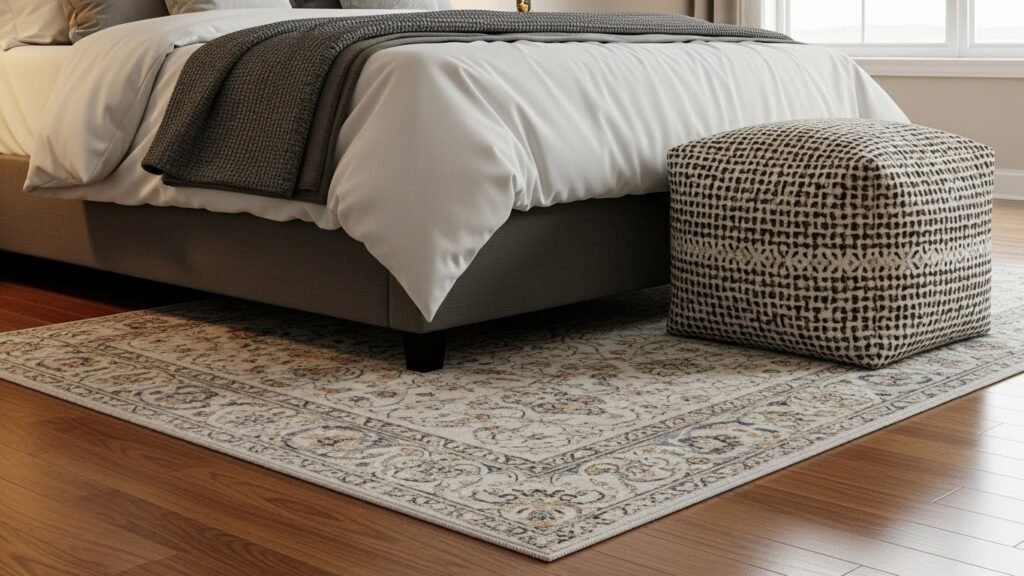
Sustainable and Non-Toxic Materials
- VOCs and Off-Gassing: Information on choosing rugs with “Green Label Plus” certification to ensure the air quality in the sleeping area remains healthy.
- Organic Backings: The benefits of natural latex or jute backings over synthetic glues which can crumble and damage floors over time.
Rug Aging and Sun Fading
- UV Protection: Strategies for rugs placed in rooms with large south-facing windows, including the use of UV-filtering window films to prevent one side of the rug from fading faster than the side under the bed.
- Fiber Resilience: Why certain dyes (like vegetable dyes) age more gracefully than synthetic dyes under a king bed.
Maintenance and Longevity
Every rug needs a different level of care and maintenance. Loud and texturized designs might need more frequent cleaning. Solid rugs can be easier to vacuum on a regular basis. Wool rugs are great because they naturally resist stains. Regularly rotating your rug helps it wear more evenly. Proper care ensures the longevity of your investment. Follow the care guide that comes with your bespoke rug. Good maintenance keeps your room looking fresh and clean.
Final Thoughts on Bedroom Design
Designing your bedroom should be a fun and easy task. Remember to keep your rug extended for the best visual balance. Whether you want a custom rug or a standard size, focus on comfort. Use the tools available to find the right proportions for your space. A good rug will help you rest better every single night. It adds the final touch of warmth and personality to your home. Shop with confidence now that you know the best tips. Your dream bedroom is just one rug away.
Frequently Asked Questions
Can I use a round rug under a king bed?
Yes, a round rug can create a soft, organic look in a room full of sharp corners. To work with a king bed, the round rug usually needs to be at least 10 to 12 feet in diameter. You should place it offset to one side or under the bottom third of the bed to ensure it doesn’t look like a small “island” under the heavy furniture.
Is it okay to put a rug over wall-to-wall carpet?
Putting an area rug over existing carpet is a great way to add color and define the sleeping area. This is often called “layering.” To prevent the top rug from bunching or rippling, use a specialized rug-to-carpet pad. This keeps the area rug flat and prevents it from “creeping” across the room when you walk on it.
How do I stop my king size rug from sliding on hardwood?
Safety is very important when placing a large rug under a heavy bed. Even though the weight of a king bed helps hold the rug down, the edges can still slip or curl. You should always use a non-slip rug pad made of felt or rubber. This protects your floor finish and keeps the rug perfectly in place.
Should I choose a low pile or high pile rug for under a bed?
Low pile rugs are much easier to clean and allow furniture like nightstands to sit more level. High pile or “shaggy” rugs offer a lot of luxury and warmth but can be harder to vacuum under the bed. Most designers recommend a medium pile for the best balance of comfort and easy maintenance.
What should I do if my rug is slightly too small for my king bed?
If you already have a rug that feels a bit small, like an 8×10, try the “two-thirds” rule. Pull the rug further toward the foot of the bed so it extends more into the room. This leaves the floor under the headboard and nightstands bare. It makes the rug look intentional rather than like a mistake.
Does the rug color need to match my bed frame?
The rug doesn’t need to match exactly, but it should complement the tones of your bed. If you have a dark wood frame, a lighter rug can provide a nice contrast. If you have an upholstered bed, try to find a rug that picks up a secondary color in the fabric or a similar texture.
How do I remove indentations from a rug caused by a heavy king bed?
Moving your bed can leave deep marks in the rug fibers. To fix this, place an ice cube on the indentation and let it melt. Once the fibers are damp, gently fluff them back up with a spoon or a coin. You can also use a steam iron held a few inches above the spot to reactivate the pile.
Can I use a jute rug under a king bed?
Jute and sisal rugs are very durable and add a natural, earthy texture to a bedroom. However, they can be a bit scratchy on bare feet in the morning. Many people choose a jute rug as a large base layer and then place a smaller, softer wool rug on top where their feet actually land.
Is a synthetic rug a good choice for the master bedroom?
Synthetic rugs, like those made of polyester or polypropylene, are very affordable and stain-resistant. They are great for high-traffic rooms or homes with young kids and pets. While they don’t last as long as wool, they offer a wide range of colors and are very easy to replace if your style changes.
How far should a rug extend past a bench at the foot of the bed?
If you have a bench, the rug should extend at least 12 inches beyond the bench’s outer edge. This ensures that when you sit on the bench to put on shoes, your feet are still resting on the rug. It also prevents the room from looking “chopped off” at the end of the bed.
Should the rug be centered with the bed or the room?
In most cases, you should center the rug with the bed itself. The bed is the focal point of the bedroom, and the rug is meant to anchor it. If the room is very asymmetrical, you might have to adjust the placement slightly to keep the walking paths clear, but the bed-to-rug relationship is the priority.
What is the best rug material for allergy sufferers?
Wool is actually a great choice because it traps dust and allergens in its fibers until you vacuum them away. Low-pile synthetic rugs are also good because they don’t shed as much as some natural fibers. Avoid very shaggy rugs, as they can hold onto more dust and dander over time.
Can I use a cowhide rug under a king bed?
Cowhide rugs are usually too small to go under a king bed on their own. However, they look fantastic when layered at an angle over a larger 9×12 or 10×14 natural fiber rug. This adds a modern, rustic touch to the room without losing the comfort of a larger rug area.
How do I clean the part of the rug that is directly under the bed?
Cleaning under a king bed is difficult because the furniture is so heavy. Use a vacuum with a long attachment or a slim robotic vacuum that can fit under the frame. It is a good idea to deep clean the entire rug once a year, which may require moving the mattress and frame temporarily.
Is it okay to have a rug that touches the baseboards?
It is generally better to leave a gap of at least 6 to 12 inches between the rug and the baseboards. This “breathing room” shows off your flooring and makes the room feel more spacious. If the rug touches the wall, it can start to look like poorly installed wall-to-wall carpeting.
Does a king rug help with soundproofing?
Yes, a large rug under a king bed is excellent for sound absorption. It helps muffle the sound of footsteps and prevents echoes in rooms with high ceilings. If you want even more soundproofing, choose a thick felt rug pad to go underneath the area rug.
Can I put a heated rug pad under my bedroom rug?
Heated rug pads are a great luxury for cold climates. Most are safe to use under a king bed as long as the rug is not too thick to let the heat through. Always check the manufacturer’s guidelines to ensure the weight of the heavy bed frame won’t damage the heating elements.
How do I choose a rug for a king bed in a very narrow room?
In a narrow room, you might not have space for a 9×12 rug. In this case, use two long runners on the sides of the bed. This provides the comfort you need without making the room feel cramped or covering up too much of the floor.
Should my rug be lighter or darker than my bedroom walls?
There is no strict rule, but contrast usually looks best. If your walls are a dark, moody color, a lighter rug can brighten the space. If you have white or beige walls, a rug with deeper colors or a bold pattern can prevent the room from looking washed out.
What happens if my nightstands are different sizes?
If your nightstands are uneven, a large 9×12 or 10×14 rug can actually help hide the imbalance. By placing both nightstands on the same rug, you create a unified visual field. The rug acts as a “stage” that makes the furniture look like it belongs together, regardless of size.
