 Skip to content
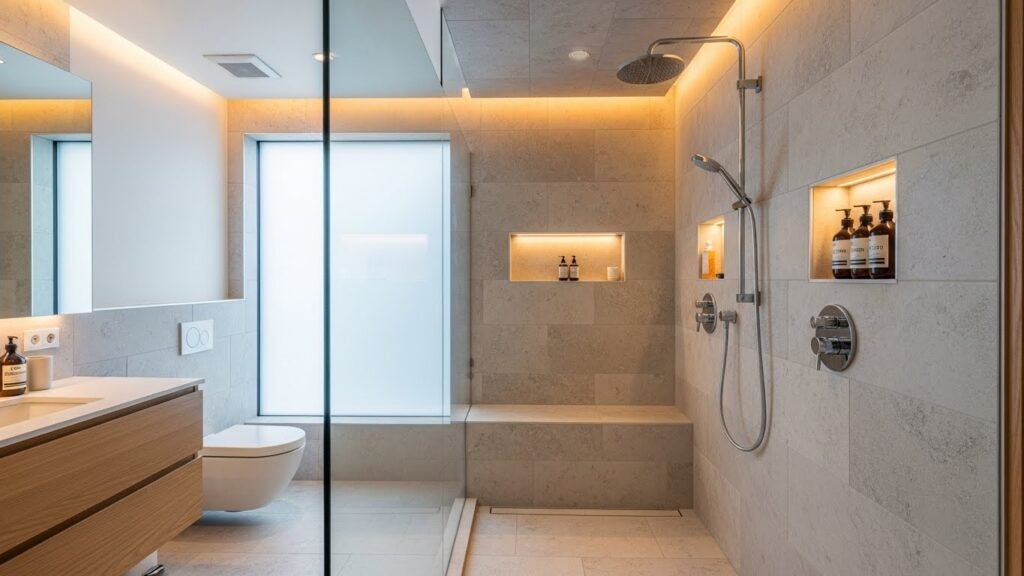
Planning a bathroom remodel is a huge deal for any homeowner. You want a space that looks cool but also works right. One of the most important things to get right is the standard shower size. This choice affects your comfort every single day. It also changes how your bathroom layout feels.
Picking the right dimensions makes your routine much smoother. You do not want to feel like you are in a tiny box. You also do not want a shower that eats up all your floor space. Finding that sweet spot is the secret to a great design. Let’s dive into everything you need to know about shower measurements.
Understanding Standard Shower Sizes and Dimensions
The history of the American bathroom has changed a lot over the years. Back in the day, showers were mostly for quick rinses. Most homes just had a simple tub with a curtain. After indoor plumbing became the norm, small 32-by-32-inch stalls became popular.
Today, people want a more luxurious experience at home. We are seeing a big shift toward larger primary suite bathrooms. Homeowners now often look for a spa-like experience. This means the standard shower size has grown significantly over the last few decades.
The Evolution of the American Shower
Showers used to be very basic in older starter homes. They were often just small metal or fiberglass enclosures. Now, they are the focal point of a modern master bathroom. People are ditching tubs to make room for huge walk-in showers.
This change happened as we focused more on personal comfort. Large glass doors and custom tile are now very common. Even in smaller homes, folks are upgrading their shower measurements. They want their bathroom renovation to feel like a high-end retreat.
Why Size Matters for Your Layout
Choosing the right size is all about balance and flow. If the shower is too big, you lose room for your vanity. If it is too small, you will bump your elbows every time you wash. You have to think about who is using the space every day.
A good bathroom designer looks at the clear floor space first. You need room to move around outside the shower area too. Proper clearance ensures that your bathroom does not feel cramped. It also makes sure you can get in and out safely.
Current Trends in Modern Bathroom Builds
Right now, homeowners are leaning toward very open designs. Many people are expanding their bathrooms to exceed 100 square feet. They want enough room for dual showerheads and built-in seating. This trend is all about maximizing your personal enjoyment.
Other popular trends include:
- Curbless entry designs that look seamless and modern.
- Rainfall showerhead installations for a relaxing water flow.
- Natural stone or custom-tiled walls for a unique look.
- Built-in cubbies to keep all your toiletries organized and tidy.
Standard Size Categories: Small, Medium, and Large
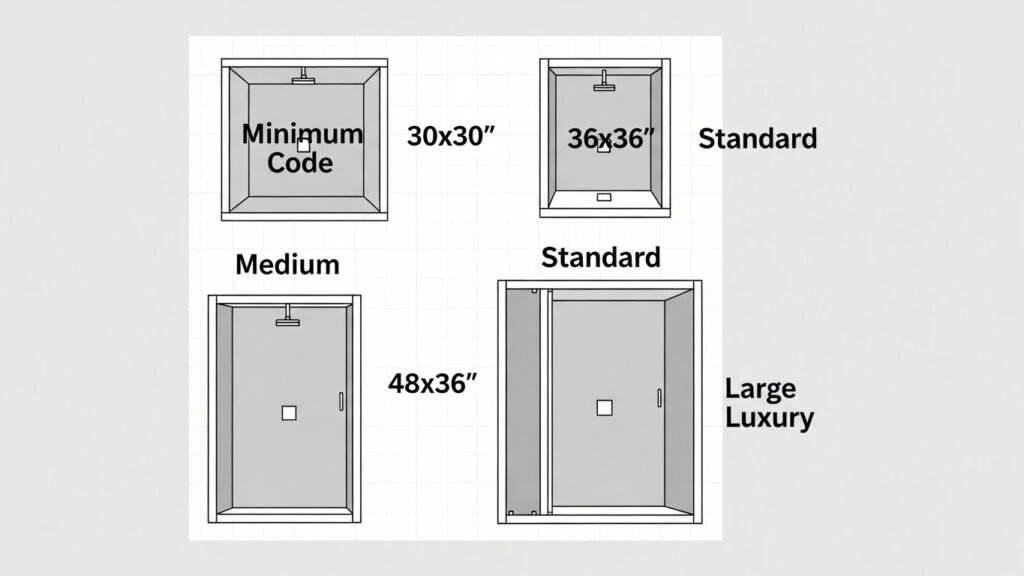
There are three main categories when looking at a standard shower size. Small sizes are great for tight guest bathrooms or powder rooms. Medium sizes are the most common choice for many families. Large sizes offer the ultimate luxury and plenty of room to move.
Small Shower Stalls (The Space-Savers)
Small showers are perfect for a tiny footprint. They are often found in basements or small apartments. While they save space, they can feel a bit snug for some. These are often pre-fab showers that are quick to install.
Common small dimensions include:
- 30-by-30-inch stalls, which are the absolute minimum building code size.
- 32-by-32 inches, which is a very common square stall for tiny homes.
- 31-by-31 inches, often used in European-style corner installations.
- 35-by-35 inches, giving you just a bit more elbow room.
Medium Sized Shower Enclosure (The Sweet Spot)
The medium category is where most homeowners find their perfect fit. These sizes give you enough room to move without taking over the room. They are great for primary bathrooms in standard homes. You can often fit a small corner shelf in these.
Standard medium sizes are:
- 36-by-36 inches, widely considered the standard shower size for comfort.
- 48-by-36 inches, which is a popular rectangular stall for many.
- 32-by-48 inches, providing a deeper space for a more relaxed feel.
- 36-by-48 inches, a very reliable medium size for a modern look.
Large and Luxury Showers
If you have the space, a large shower is a game changer. These units are perfect for adding a built-in bench. They often feature custom glass enclosures that show off beautiful tile patterns. You will never feel cramped in one of these.
Popular luxury dimensions include:
- 60-by-36 inches, which is a very spacious and common luxury size.
- 72-by-36 inches, offering tons of room for a spa-like experience.
- 42-by-60 inches, providing a wide area for caregiver assistance if needed.
- 48-by-48 inches, a huge square stall that makes a bold statement.
Specialized Shower Configurations and Styles
Not all showers are simple squares or rectangles. There are many different shower configurations to fit your unique bathroom design. Some are made to save space in corners. Others are built for complete accessibility.
Alcove Showers
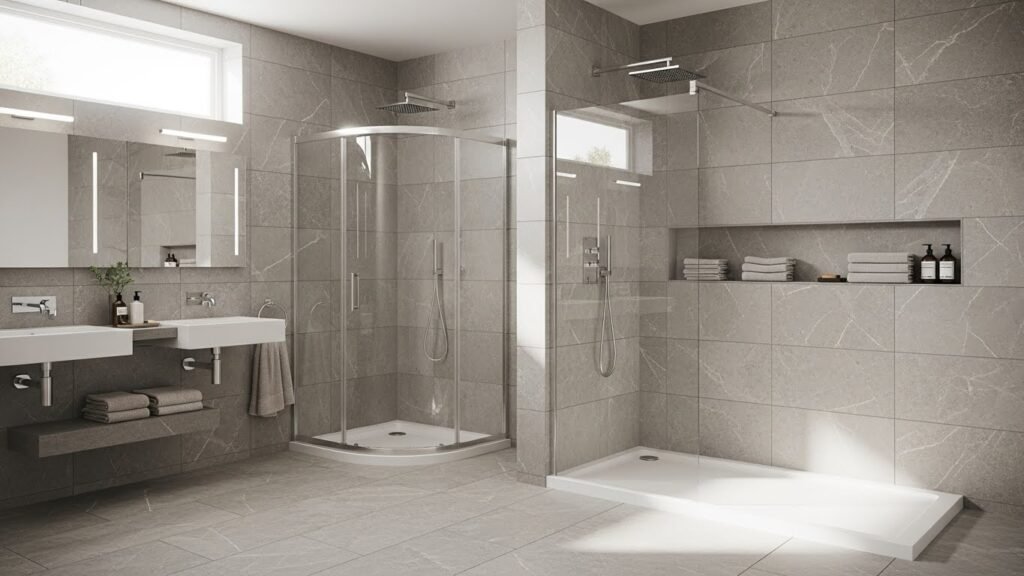
Alcove showers are very popular in starter homes and apartments. They are designed to fit into a three-walled alcove space. This setup is very space-efficient because it uses existing walls. You usually only need one glass door or a curtain.
The common sizes for these are:
- 60-by-30 inches, which is the same size as a standard tub.
- 60-by-32 inches, a slightly wider version for more comfort.
- 48-by-36 inches, a compact version often used in smaller alcoves.
Corner and Quadrant Showers
If you have a very small bathroom, a corner shower is your best friend. These units use just two existing walls to save floor space. They often have curved edges or angled fronts to look cool. Quadrant showers are a special type with a quarter-circle shape.
Corner dimensions usually look like this:
- 36-by-36 inches, the most common size for corner installations.
- 39-by-39 inches, a medium-sized corner stall with extra room.
- 42-by-42 inches, a comfort size that feels much bigger than it looks.
- 47-by-47 inches, a large luxury corner option for bigger bathrooms.
Walk-In Showers
Walk-in showers are the top choice for modern home renovations. They usually do not have a curb or a high step. This makes them look very sleek and open. They are perfect for people with mobility challenges. You can just stroll right in without any fuss.
A standard walk-in shower size usually starts around:
- 60-by-36 inches, which provides plenty of room to stay dry.
- 48-by-36 inches, a great minimum dimensions for a walk-in setup.
- 42-by-72 inches, a very long walk-in that doesn’t even need a door.
Shower-Bathtub Combo Units
For families with small kids, a shower-tub combo is essential. These units give you the best of both worlds. You can take a quick shower or a long bath. They are very cost-effective and fit in standard spaces.
Standard combo dimensions include:
- 54-by-30-by-15 inches, which is a compact tub for small bathrooms.
- 60-by-32-by-17 inches, the average size for most family bathrooms.
- 72-by-36-by-19 inches, a large combo unit for deep soaking.
Wet Rooms
A wet room is the ultimate open design for a bathroom. In this setup, the whole room is waterproofed like a shower. There are no curtains or glass panels to worry about. It makes even tiny bathrooms feel very palatial and grand.
Wet room requirements usually focus on:
- Drainage slope, which must lead water away from the door.
- Moisture barriers, to keep the rest of the house dry.
- Slip-resistant surfaces, to keep everyone safe on wet floors.
Steam Showers
Steam showers add steam functionality to your daily routine. They turn your bathroom into a luxury retreat or spa. These need a fully enclosed space to trap the steam inside. They are great for relaxation and skin health.
Steam shower dimensions are often:
- 36-by-36 inches at a minimum for a single person.
- 48-by-60 inches, which is better if you want a built-in bench.
- 60-by-60 inches, a massive square unit for ultimate comfort.
Building Codes, Safety, and ADA Requirements
When you plan a shower, you have to follow local building codes. These rules are there to keep you safe and dry. They set the minimum interior size for any new build. If you ignore them, you might fail your home inspection.
International Residential Code (IRC) Standards
The IRC has very specific rules for shower design. One of the biggest rules is about the total floor area. Your shower must have at least 900 square inches of space. This ensures you have enough room to move and breathe.
Other IRC rules include:
- 80-inch height minimum from the floor to the ceiling.
- 24 inches of clearance in front of the shower entrance.
- 22 inches of width for the actual shower door opening.
Accessibility and ADA Compliance
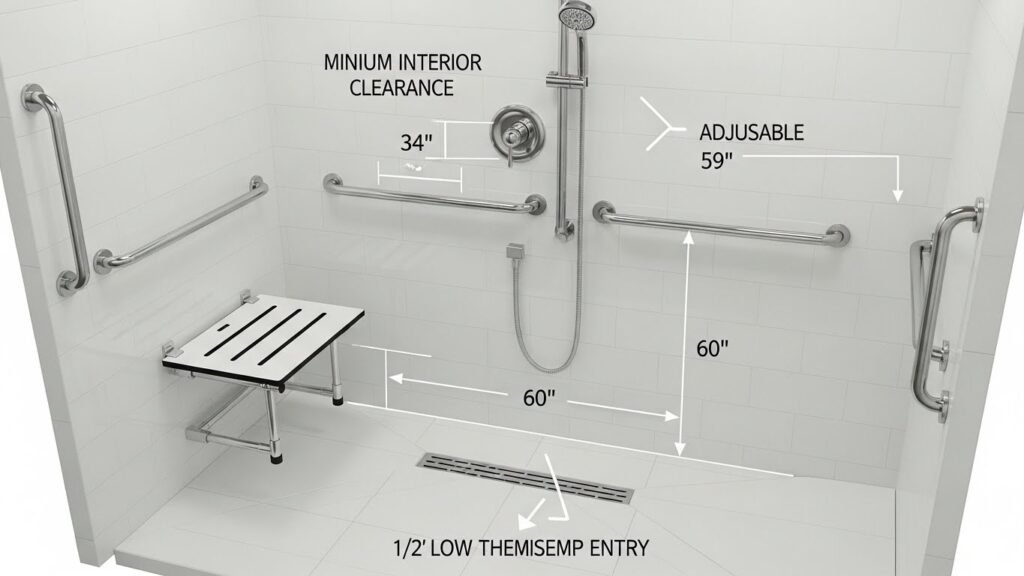
The Americans with Disabilities Act (ADA) has special guidelines for showers. These are vital for folks with mobility needs or those aging-in-place. An ADA-compliant shower is designed for safety and ease of use.
ADA requirements usually include:
- Transfer shower sizes of exactly 36-by-36 inches.
- Roll-in shower access with a minimum of 30-by-60 inches.
- Horizontal grab bars that are easy to reach and hold.
- Low threshold entries that are no more than 1/2 inch high.
How to Choose the Best Shower Size for Your Home
Picking the best standard shower size is a personal journey. You have to look at your budget and your lifestyle. You also have to consider the actual available space in your bathroom. Take your time to get it right.
Evaluating Bathroom Space and Layout
The first thing you should do is measure your floor area. You need to know how much room you have for the shower base. Don’t forget to account for the vanity and the toilet. A cramped bathroom is never fun to use.
When looking at your layout, think about:
- Door swing paths so they don’t hit other fixtures.
- Window locations that might interfere with shower walls.
- Electrical safety and where your lights and outlets are.
Lifestyle and User Needs
Think about who will be using this shower every single day. If you have big dogs, you might want a handheld shower. If you have kids, a tub combo is likely a better choice. Your lifestyle needs should drive your final decision.
Ask yourself these questions:
- Do you need a built-in bench for shaving or resting?
- Are you worried about caregiver assistance in the future?
- Do you prefer a rainfall showerhead or body spray systems?
Budget: Prefab vs. Custom Tile
Your budget constraints will play a big role in your choice. Pre-fab showers are usually much cheaper and faster to install. They are often made of acrylic or fiberglass. They come in standard dimensions and are very easy to clean.
Custom-tiled showers are more expensive but look amazing. You can choose your own tile patterns and colors. This allows for total customization of your space. However, they require expert waterproofing to prevent mold issues.
Critical Planning and Measuring Factors
Getting the measurements right is the most important part of the job. Even a small mistake can lead to big problems later. You should double-check everything before you order any parts. Don’t just guess on the sizes.
Accounting for Finished Dimensions
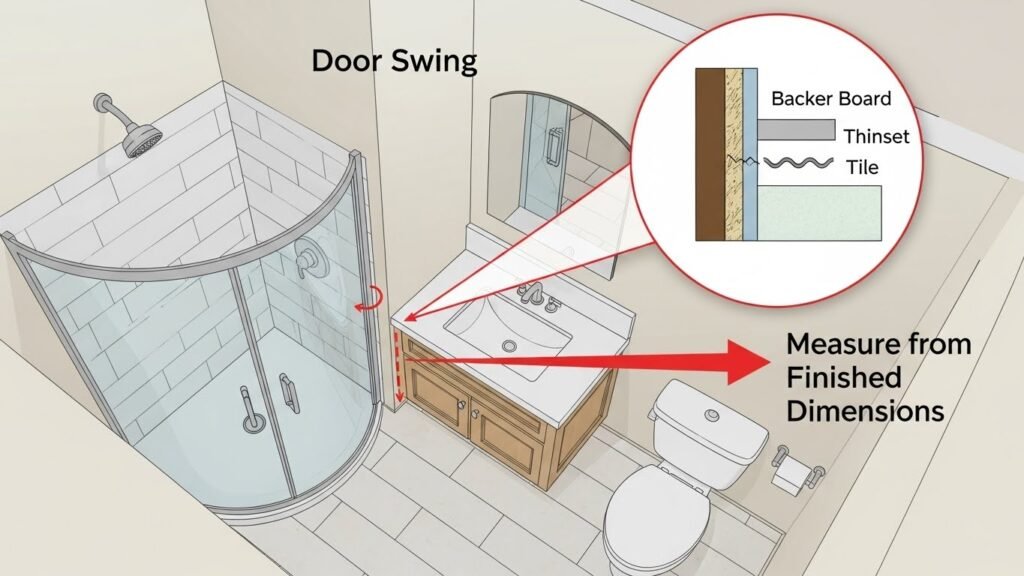
One of the biggest mistakes is measuring the rough framing. You have to account for the thickness of the tile and the wall board. These materials can eat up several inches of space. Always measure from the finished dimensions.
Remember to include:
- Shower walls thickness including thinset and tile.
- Glass panels that might sit on top of a curb.
- Trim and fixtures that stick out into the shower area.
The Role of Slope and Leveling
Your shower floor needs a slight drainage slope to work right. Water must flow easily toward the drain to prevent puddles. This slope is usually about 1/4 inch per foot. If it is off, you might have standing water and mold.
You also need to check if your corners are square. Most bathrooms have some irregular shaped nooks. If the walls aren’t straight, your custom glass might not fit. Using a level is a must for any shower project.
Height Miscalculations
Don’t forget to measure your ceiling height correctly. Standard showers usually need at least an 80-inch height. If you have sloped ceilings, this can get tricky. You might need to adjust your showerhead location.
Check for these height issues:
- Dropped ceilings or soffits that reduce your space.
- Overhead fixtures like fans or lights.
- Venting requirements that might need extra room.
Avoid These 5 Common Measuring Mistakes
Measuring for a shower is harder than it looks. Many homeowners make simple errors that cost a lot to fix. Knowing these mistakes can save you a ton of stress. Be careful and take your time with the tape measure.
1. Forgetting Door Swing and Handle Overlap
People often forget how much room a shower door needs to open. If it hits the vanity or the toilet, it might shatter. You need to map out the full arc of the door swing. Sliding doors are a great way to save space in small bathrooms.
2. Ignoring Trim and Fixture Protrusion
Your shower handles and showerhead take up physical space. If you have a small stall, these can feel very close to you. Make sure you have enough elbow room around all your fixtures. This ensures you can shower comfortably without bumping into things.
3. Neglecting the Floor Slope
A flat shower floor is a recipe for disaster. You need that 1/4 inch slope to keep the water moving. If you forget this, the water will leak out onto your bathroom floor. This can lead to serious water damage over time.
4. Mismeasuring Height from Rough Framing
If you measure from the wood studs, your shower will be too small. You have to wait until the walls are finished to get an accurate number. Or, you can add the estimated thickness of the tile to your plan. This prevents your shower door from being the wrong size.
5. Assuming Perfectly Square Corners
Walls are rarely perfectly straight or square. If you assume they are, your glass panels will have huge gaps. Always measure diagonally to check the squareness of the space. If things are off, you may need a custom glass solution.
Custom Options and Expert Advice
If a standard shower size doesn’t work, you can go custom. Custom showers offer the ultimate in design preferences. You can build a shower that is exactly the size and shape you want. It is a great way to show off your personal style.
Luxury Upgrades for Your Shower
Adding some luxury features can make your morning routine feel like a spa visit. You can add multiple showerheads for full water coverage. Or, you can install a steam system for relaxation. These upgrades add a lot of value to your home.
Consider adding these luxury items:
- Built-in seating for a comfortable and safe experience.
- Storage niches for all your soap and shampoo.
- Rainfall showerheads that mimic a gentle spring rain.
- Body spray systems for a full-body massage feel.
The Importance of Professional Installation
For complex layouts, it is best to hire a professional. Kitchen and bath contractors have the tools to do the job right. They understand structural considerations and local building codes. They can also help with electrical safety and plumbing.
A professional can help you with:
- Waterproofing the space so it never leaks.
- Water pressure issues for multi-head systems.
- Venting requirements to keep your bathroom dry and mold-free.
Final Checklist for Your Shower Project
Before you start tearing out walls, make a plan. Check your budget and your measurements one last time. Make sure you have all your permits from the city. A little bit of planning goes a long way in home improvement.
Use this final checklist:
- Double-check the standard shower size you picked.
- Confirm that you have enough clear floor space.
- Verify your plumbing rough-in locations.
- Order your materials like tile and fixtures early.
Choosing the right standard shower size is a big part of your bathroom remodel. It takes some thought and careful measuring. But once it is done, you will have a space you love for years to come. Good luck with your project!
Frequently Asked Questions About Standard Shower Sizes
What is the standard height for a shower grab bar?
To meet safety standards and ADA compliance, horizontal grab bars should be installed between 33 and 36 inches from the shower floor.
How much weight can a standard shower floor support?
Standard shower floors are built to handle the weight of the water, the user, and the materials, but custom-built showers with heavy natural stone may require structural considerations to reinforce the subfloor.
What is the recommended size for a shower niche?
While there is no single standard shower size for a niche, most builders create them to fit between wall studs, typically measuring 12 inches wide and 12 to 24 inches tall.
Does a shower-tub combo increase home resale value more than a walk-in shower?
In family bathrooms, having at least one tub is often a smart choice for resale value, though a luxurious walk-in shower is highly preferred in a primary suite.
What is the ideal distance between a shower and a vanity?
According to the National Kitchen and Bath Association (NKBA), you should maintain at least 15 to 18 inches of clearance between the center of the toilet or vanity and the shower wall.
How wide should a shower bench be?
A built-in bench should be at least 12 inches deep and 14 inches wide to ensure user comfort and safety.
What is the standard thickness for glass shower doors?
Standard glass enclosure panels typically come in thicknesses of 3/8 inch or 1/2 inch to provide durability and a modern look.
Can I install a steam shower in a small 32-by-32-inch space?
While 36-by-36 inches is the typical minimum, you can install steam functionality in smaller units as long as the enclosure is vapor-tight and includes proper ventilation.
What is the best tile size for a small shower floor?
For safety, it is best to use smaller tiles (2-by-2 inches or smaller) on the shower base because the extra grout lines create a more nonslip surface.
How do I measure a corner shower with a neo-angle front?
You should measure the two back walls that touch the corner and then measure each of the three front sections to ensure your custom glass fits the diagonal measurement.
What is the standard size for a dual shower setup?
A shower designed for two people typically requires a larger rectangular stall, such as 60-by-42 inches or 72-by-36 inches, to allow enough elbow room for both users.
Does a curbless entry shower require a larger drain?
A curbless entry or roll-in shower often uses a linear drain to handle the water flow and ensure the drainage slope stays within the shower area.
What is the standard height for a showerhead?
The standard showerhead height is usually 80 inches from the floor, but it can be adjusted to 84 inches for taller users or new construction.
How much space is needed for a sliding shower door?
Sliding doors are perfect for cramped quarters because they do not need door clearance for a swing; they simply require enough width for the panels to overlap, usually starting at 48 to 60 inches.
What is the difference between a prefabricated base and a custom-built pan?
A prefab shower base is made of acrylic or fiberglass off-site, while a custom pan is custom-tiled on-site to fit irregular shaped nooks.
How high should a shower curtain rod be installed?
A standard shower curtain rod is typically installed at 70 to 72 inches high to prevent the curtain from dragging on the floor or leaving gaps.
What are the ventilation requirements for a large luxury shower?
Large showers with multiple showerheads create high humidity, so you must install a fan with a high CFM (cubic feet per minute) rating to prevent mold issues.
Can I use quartz countertops for shower thresholds?
Yes, quartz countertops are often used for shower curbs and storage niches because they are water-resistant materials and provide a seamless look.
What is the standard hose length for a handheld shower?
According to ADA standards, a handheld shower should have a hose that is at least 59 inches long to provide caregiver assistance and flexibility.
How do I choose between a 30-inch and a 32-inch deep tub?
Personal preference dictates this; a 30-inch deep tub saves floor space in small bathrooms, while a 32-inch deep tub offers more room for a personalized bathing experience.