



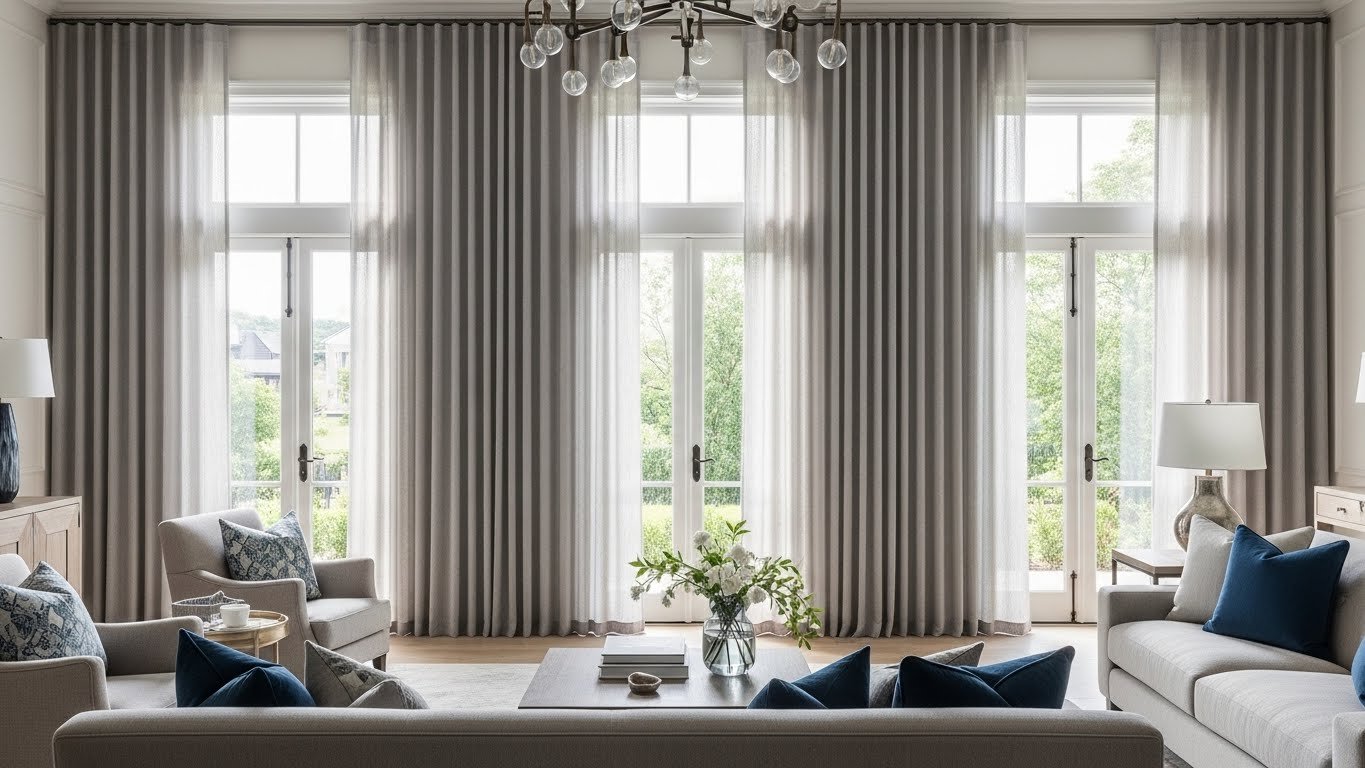
When you start thinking about how to choose curtains for living room spaces, you might feel a bit overwhelmed. It is not just about picking a color you like at the store. Curtains are key players in setting the whole vibe of your home. They help you manage the natural light that hits your furniture every day. They also give you the privacy you need when the sun goes down. This guide will help you pick the best drapes like a pro. We will cover fabrics, sizes, and colors to make your space look polished.
Introduction to Window Treatments and Interior Design
Window curtain panels add a serious presence to any room in your house. They take up a lot of visual space on your walls. This makes them a big part of your overall interior design. Good drapery can make a room feel cozy or very fancy. It all depends on the style and fabric you choose. You want your window treatments to work with your room layout.
Curtains do more than just look pretty on your windows. They help manage the light filtration in your living area. You can use them to block the heat during hot summer days. They also provide insulation during the cold winter months. This helps with the energy efficiency of your entire home. A good set of curtains is a smart investment for any homeowner.
Choosing the right window coverings changes the room vibe instantly. You can go for a coastal aesthetic with light fabrics. Or you can choose a bold look with heavy velvet drapes. The goal is to create an ambiance that makes you feel good. Your curtains should reflect your personal taste and style. Let’s dive into the details of making the best choice.
Fundamental Principles of Curtain and Wall Color Coordination

Mixing colors correctly is the secret sauce of interior design. You want your curtains to play nice with your wall color. It helps to understand some basic rules before you start shopping. These rules keep your room from looking messy or cluttered. They help you create a visual flow that feels natural. Following these tips will give your room a professional touch.
The Rule of Three (60-30-10)
The Rule of Three is a classic trick used by designers. It helps you balance the colors in your living room. You should divide your colors into three specific parts.
- Wall color should make up about 60% of the room.
- Bold curtains or large furniture should take up 30%.
- Accessories like pillows or art should be the final 10%.
Color Wheel Theory
Using a color wheel helps you find pairings that look great. You can choose colors based on how they sit on the wheel. This ensures your room has a lively contrast or a soft feel.
- Complementary colors are opposite each other on the color wheel and provide a lively contrast.
- Analogous colors sit right next to each other on the wheel to achieve a harmonious flow.
- Monochrome looks use different shades of just one single color for a serene effect.
Visual Space Optimization
The colors you pick can change how big your room feels. Light colors reflect natural light and make spaces feel open. Dark colors absorb light and make a large room feel cozy. You can use these tricks to fix a room’s layout. Lighter curtains are perfect for small apartments or dark corners. Darker drapes work wonders in huge rooms with high ceilings.
Palette Harmony
Your curtains need to match the existing color palette of your home. Look at your rugs, sofas, and even your wall art. You want everything to feel like it belongs together. Avoid picking a color that clashes with your main furniture. If your room has many patterns, go with a solid color. This keeps the space from feeling too busy for the eye.
Choosing the Best Curtain Fabrics

The fabric type is the most important part of your curtain. It dictates how the curtain hangs and how long it lasts. Different fabrics provide different levels of light management and privacy. You should pick a fabric that fits your daily lifestyle. Some materials are easy to clean, while others need special care. Consider the texture and weight of the textile before buying.
Silk Curtains
Silk curtains are the ultimate choice for a formal look. They have a beautiful sheen that reflects light around the room.
- Formality is easy to achieve with the elegant drape of silk.
- Pleated styles look especially luxe and traditional in a living room.
- Puddled bottoms on the floor add a romantic and high-end feel.
- Lining is important for silk and silk sheer curtains because they are somewhat transparent.
Cotton Curtains
Cotton curtains are very popular because they are so versatile. They work in both casual and formal living room settings.
- Easy to clean window treatments like cotton are great for busy homes.
- Stiff drapes are a characteristic of cotton compared to other fabric drapery.
- Opaque construction offers excellent privacy for your family and guests.
- Cotton linen blends offer a relaxed look with extra durability.
Linen Curtains
Linen curtains provide a breezy and lightweight construction for your windows. They are perfect for a modern or coastal home style.
- Breeziness is the main feature of thin linen window treatments.
- European Flax certified linen can serve as the best blackout curtains due to its thick fabric.
- Natural light still filters through standard linen even when the curtains are shut.
- Blackout curtains made of thick linen can block unwanted illumination completely.
Velvet Curtains
Velvet curtains are an opulent choice for any living room space. They are a heavyweight fabric that feels very soft to touch.
- Luxury is the immediate vibe when you hang velvet drapes.
- Rich texture adds a modern twist to a traditional room design.
- Insulation and light blocking are significant benefits of the thick velvet material.
- Cotton velvet is a durable option that provides a rich texture for years.
Sheer Curtains
Sheer curtains are thin and let in a lot of light. They are often used as silk sheer or thin cotton liners.
- Light filtration is at its best with these thin, lightweight fabrics.
- Layering sheers with heavier drapes gives you much more light control.
- Privacy is limited, so they are best used with other curtains.
Textural Contrast
Using different textures adds depth and interest to your room. You can mix a matte wall with a shiny silk curtain. This creates a cool interplay of light reflection in the space.
- Dimension and interest are created when you mix different material finishes.
- Visual weight of the curtains should match the rest of the room’s decor.
- Depth is maintained in monochromatic schemes by varying the textures used.
Selecting Curtain Colors Based on Wall Tones
Matching your curtains to your walls is a major design move. You want to find the perfect pairings for every wall color. This helps the room feel unified and well-planned by you. Your choice can either blend in or stand out boldly. Here is how to choose curtains for living room colors that pop. Use these designer tips to pick the right shades today.
White and Ivory Walls
White walls are like a blank canvas for your windows. You can go in almost any direction with your curtains.
- Light grey curtains keep the room looking fresh and airy.
- Pastel shades like soft blue or pink can inject subtle vibrancy.
- Navy or charcoal drapes provide a striking and bold contrast.
Beige and Cream Walls
Beige walls are warm and work with many neutral tones. They make a room feel very inviting and comfortable.
- Earthy tones like rust, olive green, or dusty rose complement beige perfectly.
- Deep blues or purples can offer a sophisticated and regal touch.
- Whites or matching creams keep cream-walled spaces bright and airy.
Grey Walls
Grey walls are a contemporary choice that supports many different colors. You can choose to go warm or cool here.
- Silver or black curtains create a sleek and modern vibe.
- Powder blue or blush pink introduces a soft splash of color to the room.
- Milk coffee or light brown can soften the space without overwhelming it.
Blue and Green Walls
With blue or green walls, you are usually aiming for tranquility. These colors are very soothing for a living space.
- Monochromatic blue moments use different shades of blue for a serene look.
- Mustard or soft orange provide a pleasant and warm contrast to blue walls.
- Burgundy or plum provide a luxurious contrast to green walls.
Yellow Walls
Yellow walls bring a lot of energy and cheer to a home. You want curtains that complement this buttery warmth well.
- Sunset yellow curtains can create a cozy and elegant atmosphere.
- Aubergine or deep reds provide a rich and artsy contrast.
- Brown or tan curtains keep the energy grounded and earthy.
Pairing Dark Curtains with Dark Walls
Matching dark curtains with dark walls is a very bold move. It creates an intimate space that feels like a retreat.
- Different finishes like shimmery fabric can capture light to add dimension.
- Textural difference prevents the room from feeling too enclosed or flat.
- Dark grey curtains can soften a deep blue room without stark contrast.
Evaluating Patterns and Design Details
Patterns can add a lot of personality to your living room. They help you break up large areas of solid color. However, you must be careful not to overdo it at home. Small details in the design can make a big difference. Consider how the patterns look from across the entire room. Let’s look at the specific details of curtain design here.
Solid Curtains
Solid curtains are a safe and stylish bet for most homes. They are very versatile and work with almost any decor.
- Layering is much easier when you use a solid curtain with patterned decor.
- Versatility is a key benefit, as they easily blend with existing home items.
- Focus remains on patterned furniture or wallpaper when solid curtains are used.
Printed and Striped Curtains
Printed drapes turn your windows into a major design element. They can range from subtle lines to huge floral prints.
- Striped curtains can turn windows into a standout design feature.
- Bold designs like ombré or zig-zags work well in rooms with whimsical accents.
- Vibrancy is easily added to a neutral room with a fun printed panel.
Pattern Scale
The scale of the pattern should match the size of your room. This keeps the design from overwhelming the living space.
- Large patterns are best suited for spacious areas.
- Small patterns add detail without overwhelming smaller rooms.
- Cohesiveness is maintained when the pattern scale fits the overall room theme.
Panel Types
You can buy curtains as single panels or in panel pairs. This depends on how wide your windows actually are.
- Single panels might be chosen for specific window sizes.
- Panel pairs are a common standard for living room windows.
- Fabric volume should be doubled to ensure a full look even when open.
Header Types
The header is how the curtain attaches to the rod. It changes how the fabric folds and hangs down.
- Pinch pleats offer a more formal and traditional look.
- Grommets provide a modern aesthetic and are easy to slide.
- Rod pockets are a common header type that creates a gathered look.
How to Choose Curtains by Room Function

Every room in your house has a different job to do. Your curtains should help the room do that job better. A living room needs different light than a bedroom does. You should think about privacy and light for each specific area. This ensures you get the most out of your window treatments. Here is how function dictates your final curtain choice.
Living Room Curtains
The living room is often the heart of the home. It is where you entertain guests and relax with family.
- Privacy and function are the top considerations for this space.
- Light control is necessary to manage how much light pours into the room.
- Style should reflect your entertaining style and the overall room vibe.
Bedroom Curtains
The main goal for bedroom curtains is a good night’s sleep. You want to block out all the outside world’s light.
- Blackout curtains are a smart pick for privacy and napping.
- Heavyweight fabrics like velvet or silk help create a dark, quiet environment.
- Luxe vibe is easily achieved in the bedroom with heavier, high-end materials.
Dining Room Curtains
Dining room curtains can be a bit more decorative and fun. They set the mood for your dinner parties and meals.
- Fun prints add personality to your formal or casual dining space.
- Cotton linen blends offer a neutral but stylish look.
- Style match ensures the curtains reflect your specific entertaining vibe.
Measuring and Sizing for the Perfect Fit
Getting the right size is crucial for a polished look. If curtains are too small, they look like an afterthought. If they are too long, they might get dirty fast. You must measure your windows carefully before you buy anything. Think about the aesthetic you want to achieve for your home. Proper sizing makes your windows look like a custom job.
Choosing the Right Curtain Length
Curtain length changes the whole feel of your living room. There are a few standard lengths you can choose from.
- Standard lengths typically include 63″, 84″, 96″, 108″, and 120″ panels.
- Crisp aesthetic is achieved when drapes hover about ½ inch off the ground.
- Casual look is created when the fabric floats 2 to 3 inches above the floor.
- Puddling effect requires adding 4 to 6 inches for a romantic, formal touch.
Determining Width and Fullness

Your curtains should never look skimpy or thin when closed. You need enough fabric to create beautiful folds.
- Total width should be about 2 to 2.5 times the window width for full coverage.
- Panel calculation involves dividing your total required width by the width of a single panel.
- Full appearance is maintained even when panels are pulled open if you use enough fabric.
Curtain Hardware and Installation Guide
Your curtain hardware is just as important as the fabric. It needs to be strong enough to hold the weight. It also needs to match the style of your new drapes. Poor installation can ruin the look of expensive curtains. You want everything to look level and professional on your wall. Here is how to handle the hardware and hanging process.
Selecting Curtain Rods and Accessories
Curtain rods come in many different finishes and styles today. You should pick one that complements your curtain color.
- Finish coordination ensures the hardware matches the curtain’s visual tone.
- Matte finishes pair particularly well with curtains in warmer hues.
- Rod extension should be 3 to 6 inches beyond the window frame on each side.
How to Hang Curtains for Visual Impact

The way you hang your curtains can trick the eye. It can change the perceived size of your entire room.
- Ceiling height appears taller if you hang panels higher up on the wall.
- Larger windows are simulated by extending the rod wider than the actual frame.
- Double curtain rods allow you to layer semi-sheer panels over liners for more light control.
| Feature | Description | Best For |
| Pinch Pleat | Permanent folds sewn into the top. | Formal living rooms. |
| Grommet | Metal rings punched into the fabric. | Modern, easy sliding. |
| Rod Pocket | A sewn channel for the rod to slide in. | Casual, stationary looks. |
| Tab Top | Fabric loops at the top of the panel. | Relaxed, boho styles. |
Essential Measurement Checklist for Professional Curtain Installation

Before you finalize any purchase, use this step-by-step checklist to ensure your curtains fit perfectly. Accurate measurements are the difference between a high-end designer look and a window treatment that looks poorly planned.
Measure the Window Opening
Start by measuring the actual window to establish your baseline.
- Inner Width: Measure the horizontal distance inside the window frame from left to right.
- Inner Height: Measure the vertical distance from the top inside edge of the frame to the windowsill.
- Outer Frame Width: Measure from the outer edge of the left casing to the outer edge of the right casing.
Determine the Rod Placement
Proper rod placement creates the illusion of a larger room and taller ceilings.
- Mounting Height: For a designer look, measure 4 to 6 inches above the window frame. If you have the space, you can go even higher, up to the ceiling or crown molding.
- Rod Extension (The Stack): Measure 3 to 6 inches beyond the window frame on both the left and right sides. This ensures that when the curtains are open, they don’t block the glass.
- Total Rod Length: Add the Outer Frame Width to your total rod extensions (6 to 12 inches total) to find the minimum rod length you need.
Select Your Ideal Curtain Length
Choose a length based on the specific aesthetic you want for your living room.
- The Floor-to-Rod Measurement: Measure the vertical distance from your planned rod height down to the floor.
- For a Crisp Look (The “Kiss”): Subtract ½ inch from your Floor-to-Rod measurement so the fabric barely grazes the floor.
- For a Casual Look (The “Float”): Subtract 2 to 3 inches from your measurement so the fabric hangs clearly above the floor.
- For a Romantic Look (The “Puddle”): Add 4 to 6 inches to your measurement so the fabric pools elegantly on the floor.
- Standard Length Check: Compare your final number to industry standard sizes: 63″, 84″, 96″, 108″, or 120″. Always round up to the nearest standard size if you plan to hem them.
Calculate the Required Fullness
Curtains should never look like a flat sheet when closed; they need volume and folds.
- Minimum Fullness: Multiply your Total Rod Length by 2.
- Extra Fullness (Luxe Look): Multiply your Total Rod Length by 2.5.
- Panel Count: Check the width of the panels you are buying (usually 50 inches). Divide your Total Fullness by the panel width and round up to the nearest even number to ensure you have a balanced pair.
Final Installation Verification
Double-check these points before drilling into your walls.
- Obstruction Check: Ensure the rod height doesn’t interfere with existing crown molding or nearby furniture.
- Leveling: Use a level tool to mark your bracket points; never assume your window frame or ceiling is perfectly straight.
- Bracket Strength: Verify if the middle of your window needs a center support bracket, which is usually required for rods longer than 60 inches or for heavy velvet fabrics.
Comprehensive Shopping List for Living Room Curtains

Creating a specific shopping list before you visit the store or browse online ensures you don’t miss the small details that make a window treatment look professional. Use this list to gather your measurements and select the right materials for your living room.
Window Measurements and Panel Count
Getting the size right is the most important step for a polished look. You should have these numbers ready before looking at fabrics.
- Window width: Measure the width of the window frame from left to right.
- Total fabric width: Multiply your window width by 2 or 2.5 to ensure the curtains look full and not skimpy when closed.
- Number of panels: Divide your total fabric width by the width of a single panel (usually 50 inches for standard drapes) and round up to the nearest even number.
- Rod height: Measure from the floor to about 4 to 6 inches above the window frame where you plan to install the rod.
Hardware and Tools
The hardware supports the weight of your chosen fabric and adds to the room’s aesthetic.
- Curtain rod: Purchase a rod that is 6 to 12 inches wider than your window to allow for a 3 to 6-inch extension on each side.
- Double rod (Optional): If you plan to layer sheer curtains with heavier drapes for light control, select a double rod system.
- Brackets and anchors: Ensure you have heavy-duty wall anchors if you are hanging heavyweight fabrics like velvet.
- Measuring tape and level: These are essential for ensuring your rod is perfectly straight and panels hang evenly.
Fabric Selection and Liners
Choose your fabric based on the function of your living room and the amount of sunlight it receives.
- Primary fabric: Select from silk for formality, linen for a breezy feel, or velvet for luxury and insulation.
- Lining material: If choosing silk or thin cotton, add a standard lining to protect against sun damage and increase privacy.
- Blackout or thermal liners: Buy these as separate attachments or sewn-in options if your living room faces direct, harsh sunlight.
- Sheer liners: Pick these up if you want a layered look that allows soft light into the room during the day.
Style and Finishing Touches
These details define the final look and how the curtains will interact with your existing decor.
- Header style: Choose grommets for a modern look, pinch pleats for a traditional feel, or rod pockets for casual stationary panels.
- Tiebacks or holdbacks: These are useful for keeping heavy drapes neatly gathered to the sides during the day.
- Fabric swatches: If buying online, order swatches first to perform a “scrunch test” and check the color against your wall at different times of day.
- Steam iron: A handheld steamer is a great addition to your list to remove fold lines and wrinkles once the curtains are hung.
Expert Tips
Even with all the rules, you might have some questions. Designers have a few more tricks up their sleeves for you. Testing your ideas before you commit is always a smart move. These final tips will ensure you are happy with your choice. Don’t be afraid to try something new in your living room. A little bit of planning goes a long way for home decor.
The “Scrunch” Test
Before buying a whole set, get some fabric swatches first.
- Light testing involves holding the sample against windows at different times of day.
- Texture can be evaluated for interest and light reflection properties.
- Scrunch it to see how the fabric will look when naturally gathered on a rod.
Mixing Styles
You don’t have to use the same curtains on every window. You can mix things up to fit different needs in one room.
- Roman shades can be used on small windows while using full panels for doors.
- Consistency is often preferred for a cleaner, unified aesthetic.
- Wallpaper matching or contrasting with patterns can add unique dimension.
Conclusion: The Benefits of Proper Selection
Taking the time to learn how to choose curtains for living room areas pays off. You end up with a room that feels like a calming retreat. Good curtains optimize your visual space and manage your natural light. They show off your attention to detail and your personal taste. Your home will feel more polished and finished to everyone who visits. Enjoy the process of transforming your living space today.
FAQs
How long should curtains be?
Drapery typically follows standard lengths such as 63″, 84″, 96″, 108″, and 120″. For a crisp and clean look, they should hover about ½ inch off the ground, while a floating look of 2 to 3 inches offers a more casual aesthetic. To achieve a romantic touch, add 4 to 6 inches of length to allow the fabric to puddle on the floor.
How wide should a curtain be?
To ensure window treatments look full and functional, they should generally be 2 to 2.5 times the width of the window. To calculate the specific number of panels needed, divide the total required width by the width of a single curtain panel.
How to choose the right curtain rod length and size?
It is recommended that each end of a curtain rod extends 3 to 6 inches beyond the window frame. For smaller rooms or windows positioned close together, hanging rods less wide can help avoid a cluttered appearance.
What is the best way to layer curtains?
The most effective way to layer is by combining a sheer curtain with a heavier fabric. Using a double curtain rod allows you to hang semi-sheer panels over sheer liners, providing better control over privacy and light.
What should you consider when buying curtains for the living room?
When choosing for a living room, you must prioritize both function and privacy. Consider exactly how much light you want to pour into the room and choose materials that reflect your specific entertaining style.
What are the benefits of using linen curtains?
Linen is a lightweight, sheer material that adds a breezy touch and allows more light into a room compared to other fabrics. However, European Flax®-certified linen is a thick enough fabric to serve as an effective blackout option.
How do cotton and velvet curtains differ in function?
Cotton curtains are versatile, easy to clean, and offer an opaque construction for privacy. Velvet curtains are a heavyweight, opulent choice that creates a luxurious feel and provides excellent insulation.
What is the advantage of using white or ivory curtains?
White and ivory drapes are light and airy, making them suitable for almost any space, particularly those with a neutral color palette.
How do you choose colors for rooms with whimsical accents?
In rooms featuring colorful decorative items like pillows or wall art, consider curtain panels with fun designs such as stripes, zig-zags, or ombre to match the energy.
What is the benefit of using black curtains?
Black curtains are excellent for blocking out light and creating a cozy, dramatic interior. They are highly versatile and work well with most existing color schemes.
How do blue and grey curtains affect room ambiance?
Cool colors like blue are soothing and pair well with shades like pale pink or yellow. Grey serves as a subtle neutral that complements blues, greens, and other neutral hues.
Why is the “Rule of Three” important in curtain design?
The Rule of Three uses a 60-30-10 ratio where 60% is the wall color, 30% is the bold curtain color, and 10% is for small accessories. this creates a pleasing arrangement where hues are evenly distributed throughout the space.
How do complementary and analogous colors differ in window styling?
Complementary colors sit across from each other on the color wheel to provide a lively, striking contrast. Analogous colors sit next to each other to achieve a harmonious and serene visual flow.
How can light and dark curtain colors optimize visual space?
Lighter colors can make a small or dark room appear bigger and brighter. Conversely, dark-colored curtains add warmth and a sense of luxury, creating an intimate impression in larger spaces.
What are the best curtain choices for beige walls?
Beige walls pair well with earthy tones like rust, dusty rose, or olive green to keep a room feeling warm. For a more regal look, deep blues or purples provide a sophisticated contrast.
What curtain colors work best with green walls?
Earthy neutrals like tan or brown reinforce an organic feel, while deep green can create a monochromatic look. For luxury, deep burgundy or plum curtains offer a rich contrast.
How do you successfully pair dark curtains with dark walls?
The key is ensuring enough textural difference or contrast to prevent the room from feeling too enclosed. For example, pairing matte walls with shimmery curtains captures light and adds necessary dimension.
How should you test curtain fabric before purchasing?
Perform a “scrunch test” by bunching the fabric as it would appear in a panel and holding it against the window. This allows you to see how light at different times of the day affects the color and texture.
Can you mix different curtain styles in one room?
Yes, designers often use full-length panels for doors and Roman shades for smaller windows in the same space. However, maintaining a uniform look is often preferred for a cleaner aesthetic.
Why is curtain lining important?
Lining is essential for transparency control, especially with silk or sheer fabrics. It also helps protect the primary fabric from sun damage and can provide additional blackout or thermal benefits.

