


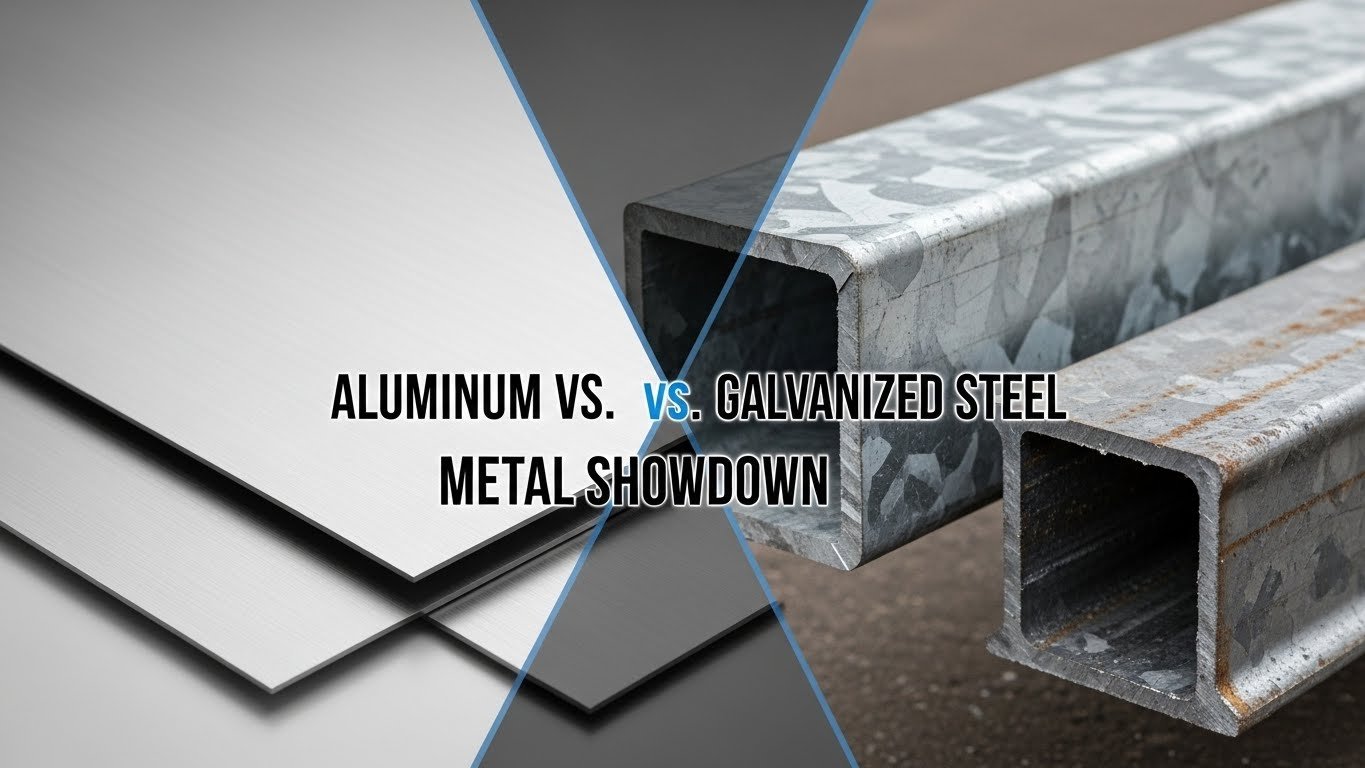
The decision between Galvanized Steel vs. Aluminum is a critical one in manufacturing, construction, and roofing. Both metals are widely used, but they offer distinct advantages and drawbacks. Selecting the right material is essential for ensuring the success, longevity, and affordability of any product or structure. This detailed guide will break down the properties, applications, and environmental impact of these two popular engineering metals. Understanding the core differences between Galvanized Steel vs. Aluminum will help you make the best choice. We’ll make sure to keep things simple and easy to understand.
Introduction to Metal Selection
Choosing a base metal is the first step in any major project. The base metal forms the primary component, from simple fasteners to large structural applications. In construction, these base metals can include steel, aluminum, copper, or zinc. Each option offers a unique combination of strength, weight, and wear and tear resistance.
Why Material Selection Matters (Performance, Cost, Durability, and Sustainability)
Material selection is more than just picking the cheapest option. It directly impacts the final quality and performance of your product.
- Performance: Different materials have unique properties like strength, weight, corrosion resistance, and heat conductivity. The chosen metal needs to meet the specific demands of the application. For instance, a car frame needs to be strong and lightweight.
- Cost: Material cost can heavily influence the overall project budget. While aluminum might be ideal for its lightweight properties, steel is often more budget-friendly upfront.
- Durability: The material must be able to withstand expected stress over its entire lifespan. For example, pipes used for plumbing should be durable and resistant to corrosion.
- Sustainability: Manufacturers are increasingly focused on the environmental impact. This includes considering the energy used for extraction, processing, and recyclability.
In-Depth Look at Galvanized and Galvalume Steel
Galvanized steel starts with regular steel or iron. To protect it from rust and corrosion, it is coated with a layer of zinc. This process is called galvanization. The result is a strong and affordable material widely used in construction, manufacturing, and infrastructure.
The Galvanization Process and Mechanism
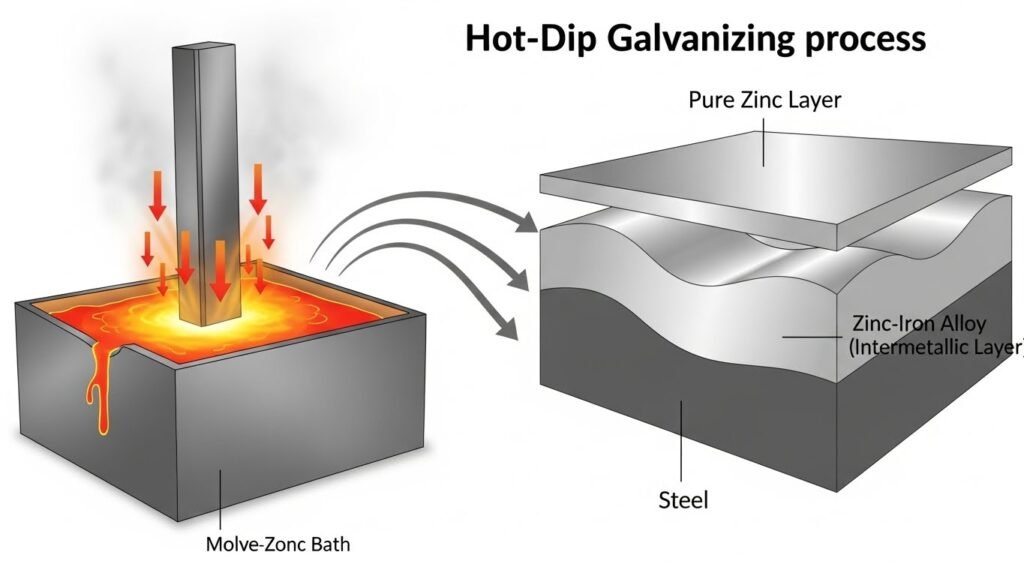
The most common way to make galvanized steel is through hot-dip galvanizing. This method creates a durable protective layer.
- Preparation: The steel is first cleaned to ensure a good bond with the zinc.
- Submerging: The steel is then submerged into a bath of molten zinc at around $450^{\circ}C$ ($840^{\circ}\text{F}$).
- Formation: The zinc reacts with the steel, forming a zinc-iron alloy layer that bonds strongly to the surface. A layer of pure zinc crystallizes on top.
- Sacrificial Protection: The zinc coating acts as a sacrificial barrier. This means the zinc corrodes first to protect the underlying steel. This mechanism is called galvanic cathodic protection.
Galvalume Steel Composition
Galvalume is a specific type of coated steel, often used in metal roofing. It uses a steel base metal, but the coating is a mix.
- Coating: Galvalume is coated with a combination of zinc and aluminum for enhanced protection against rust.
- Roofing Context: Galvalume is widely used in residential applications like Standing Seam and Metal Roofing Shingles.
Aesthetic Properties of Galvanized Steel
The appearance of galvanized steel depends on the coating method.
- Initial Appearance: When fresh, the surface often has a gloss-metallic silver-gray color. It is typically smooth and uniform when freshly hot-dip coated.
- Aging: Over time, the coating develops a dull, matte finish.
- “Spangle” Effect: The surface may also have a fine crystalline pattern. This distinctive texture is known as a “spangle”. This effect can vary in size and intensity.
- Electroplated Finish: When electroplated, the surface can show larger regions of crystallization spangle that are often more evident than in hot-dip galvanizing.
In-Depth Look at Aluminum
Aluminum is an incredibly versatile metal. It is found abundantly in the earth’s crust. It is extracted from metal salts like bauxite, which is rich in Aluminum Oxide. In its final metallic form, aluminum is lightweight.
Inherent Properties of Aluminum
Aluminum’s popularity comes from its unique combination of properties.
- Key Attributes: It is known for its low density and remarkably high strength-to-weight ratio. It also has a natural corrosion resistance.
- Conductivity: Aluminum is a good heat conductor and electricity conductor. Its electrical conductivity is about 60% of copper, and its thermal conductivity is about 50% of copper. This makes it valuable for electrical wiring and heat sinks in electronics.
- Malleability: Aluminum is highly malleable and ductile. This allows it to be easily shaped into sheets, foil, or drawn into thin wires.
- Recyclability: Aluminum is one of the most recyclable metals. It requires significantly less energy to recycle than to produce new aluminum.
- Weldability: Aluminum can be welded using various methods. However, precise control of heat input is crucial during the process.
Aluminum Alloys and Common Uses
Pure aluminum is often alloyed with elements like copper, magnesium, and silicon to enhance its strength. This creates a vast array of alloys for specific uses.
- 1xxx Series (Pure Aluminum): Highly formable and conductive. Used for foil, electrical applications, and Beverage cans.
- 2xxx Series (Copper): Known for high strength and good machinability. Used for aerospace components and fasteners.
- 5xxx Series (Magnesium): Lightweight with good weldability and corrosion resistance. Used for marine environments and storage tanks.
- 6xxx Series (Magnesium and Silicon): Offers a good balance of strength, formability, and corrosion resistance. Used for building materials and automotive parts.
- 7xxx Series (Zinc): Known for high strength and good fatigue resistance. Used for aircraft parts, sporting goods, and high-performance components.
Comparative Analysis: Key Differences and Performance
Choosing between Galvanized Steel vs. Aluminum means looking closely at how they perform side-by-side. The requirements of your specific project will determine the better material.
Strength, Weight, and Load-Bearing Capacity
The difference in density is huge.
- Aluminum: Aluminum is the clear winner for low density and high strength-to-weight ratio. It is the best choice when weight reduction is critical, such as in aerospace. Its density is about three times lower than steel. The weight variation from its protective oxide layer is negligible.
- Galvanized Steel: It retains the inherent strength of steel, making it suitable for structural applications. The zinc coating adds negligible weight compared to the steel substrate. However, it is a significantly heavier material overall.
Corrosion and Rust Resistance
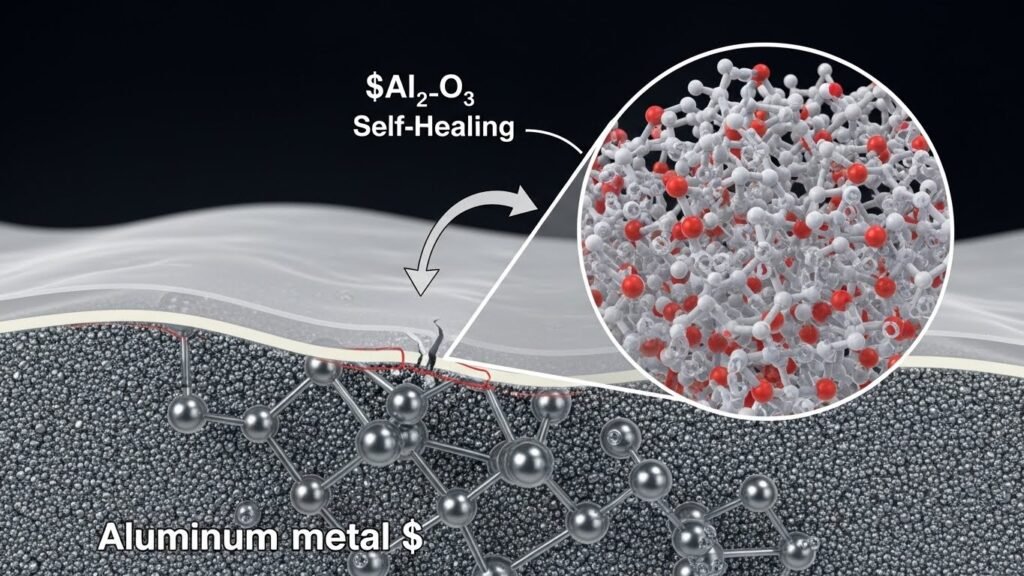
This is where the two metals protect themselves differently.
- Aluminum: It has natural corrosion resistance because it forms a thin, self-healing Oxide layer on its surface when exposed to air.
- It excels in saltwater environments (marine environments).
- Aluminum does not rust; it is rust-proof. If exposed, it only oxidizes or chalks without becoming unsightly.
- Aluminum can still corrode in certain specific environments, such as highly acidic environments or alkaline environments.
- Galvanized Steel: It offers good corrosion resistance thanks to the zinc’s sacrificial barrier.
- However, the zinc coating can wear down in harsh environments.
- Rust Risk: If the zinc coating is compromised or scratched, the exposed steel will begin a rapid oxidation process (rusting).
- Roofing Concern: When Galvalume is cut or bent during metalwork, it can expose the steel edges, leading to rust and a potential galvanic reaction.
Thermal Performance
Aluminum and galvanized steel have very different thermal properties.
- Aluminum: It has a high thermal conductivity (typically $205–220 \text{ W}/\text{m}\cdot\text{K}$). This is useful for heat sinks and cookware. This conductivity can also be a disadvantage where temperature stability or unnecessary thermal transfer is unwanted.
- Galvanized Steel: It has much lower thermal conductivity (typically $50–60 \text{ W}/\text{m}\cdot\text{K}$). This may be preferred in applications where heat transfer is not desired.
Durability, Lifespan, and Maintenance
The longevity of the two materials is affected by different factors.
- Galvanized Steel: It is generally highly durable, especially in outdoor environments. It benefits from the inherent toughness, ductility, high tensile strength, and hardness of the underlying steel. It offers excellent value because it can last a long time.
- Aluminum: It requires less maintenance due to its inherent corrosion resistance. However, it is more susceptible to mechanical damage (dents/scratches) and can be affected by fatigue failures. Aluminum may not be as strong or durable as galvanized steel in heavy-duty or high-impact applications.
Cost and Pricing Dynamics
The upfront cost is often a major factor in material selection.
- Galvanized Steel: It has a low initial cost and is generally more affordable than aluminum upfront. The cost can range from $\$0.50$ to $\$1.50$ per pound.
- Aluminum: It has a higher upfront cost because its production requires a lot of energy. Aluminum prices can range from $\$1.50$ to $\$3.00$ or more per pound. However, its low maintenance requirements can potentially lead to lower long-term expenses.
Formability and Working Complexity
Workability refers to how easily a material can be shaped.
- Aluminum: It is very malleable and ductile. This makes it the better choice for creating complex shapes and intricate designs.
- Galvanized Steel: It is also malleable and ductile to a certain extent, allowing complex parts and structures to be made. However, it is less easily formed than aluminum.
Heat Resistance and High-Temperature Limitations
The performance of the metals changes under extreme heat.
- Galvanized Steel: It retains the high heat resistance of the underlying steel.
- Aluminum: It has a low melting point compared to steel. It can become brittle and lose some of its strength when exposed to sudden or extremely high temperatures.
Applications and Industry Use Cases
Both metals are vital to modern Manufacturing. Their unique properties direct them toward different industries.
Primary Applications of Galvanized Steel
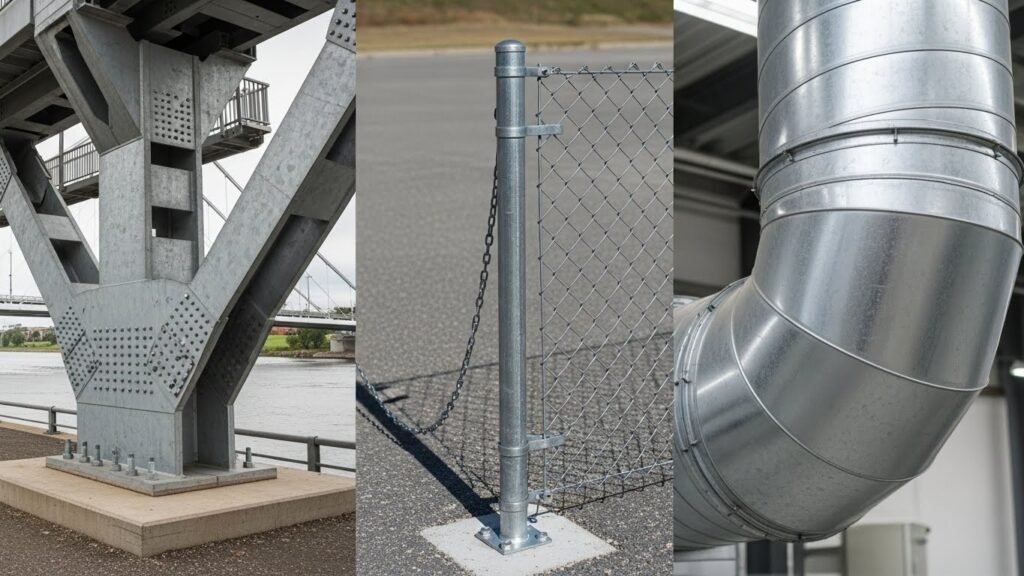
Galvanized steel is often chosen for applications where toughness and low initial cost are paramount.
- Construction: Widely used for roofing, framing, gutters, downspouts, and door frames. It is often used for structural components.
- Infrastructure: Used in utility poles, street furniture, traffic signal poles, and chain-link fencing. It adds corrosion resistance to fasteners like nuts, bolts, and washers.
- Equipment: Used for agricultural equipment (fencing, barn components, grain silos). Galvanized steel pipes are used where plastic tubing is not strong enough.
Primary Applications of Aluminum
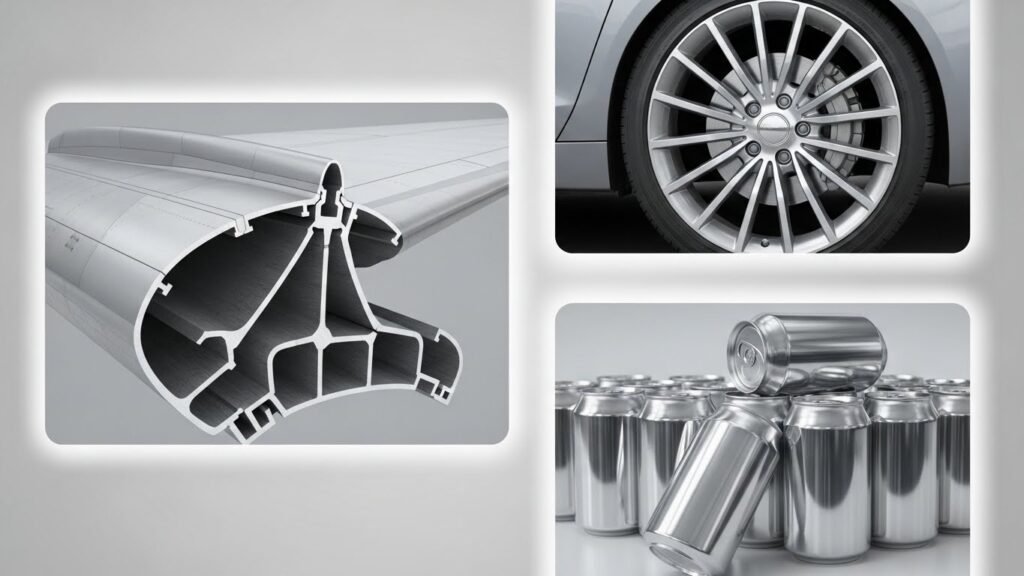
Aluminum’s light weight and corrosion resistance make it the choice for high-tech and high-mobility applications.
- Transportation/Aerospace: Its high strength-to-weight ratio is essential for aircraft construction, fuel efficiency in cars and trucks, and for ships and Railway cars. It is used for body panels and wheels.
- Construction: Used in building facades, window frames, door frames, and roofs.
- Consumer Goods & Packaging: Used extensively for Beverage cans, foil, electronics enclosures, and cookware.
- Electrical: Used for long-distance electrical conduits and power transmission lines.
Dual Applications and Trade-offs
Some products can be successfully made from either material. The choice usually comes down to cost versus weight.
- Structural Surfaces: Both metals are used for walkways and stair surfaces (treadplate).
- Air Systems: Fan blades and HVAC ducting are made from both. Galvanized steel sheets are often used for most ducting and fan enclosures because of their low cost and high processability.
Advanced Fabrication and Joining Methods
While both metals can be formed and joined, the methods used and the complexity involved differ significantly due to their distinct metallurgical properties.
Detailed Welding Comparison
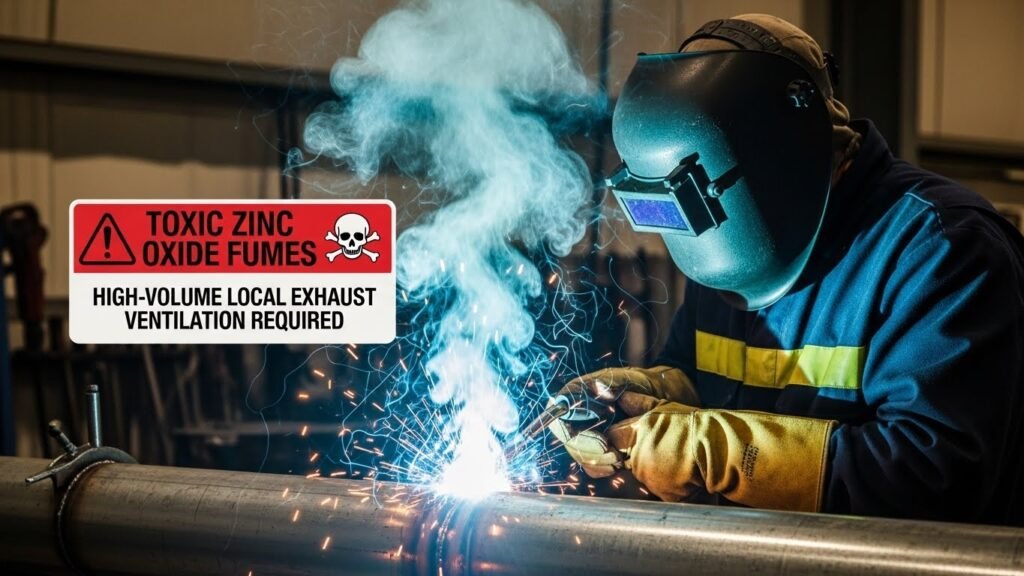
Welding is the most common method for joining metals, but it presents unique challenges for each material, particularly regarding fumes and damage to protective coatings.
- Galvanized Steel Welding Challenges:
- Zinc Fume Toxicity: When galvanized steel is welded, the protective zinc coating vaporizes into toxic zinc oxide fumes. This necessitates working in well-ventilated areas, often requiring specialized localized exhaust systems or respirators to protect workers.
- Post-Weld Restoration: The heat from welding burns off the zinc coating around the weld seam, destroying the corrosion protection. The affected area must be repaired immediately, typically by applying a cold zinc-rich paint or a specialized metallic spray to restore the sacrificial barrier.
- Weld Quality: Gaseous zinc trapped in the weld pool can lead to porosity (small bubbles or voids) in the final weld bead, which weakens the joint and reduces its quality.
- Aluminum Welding Techniques:
- Oxide Layer Management: Aluminum naturally and instantly forms a highly stable aluminum oxide layer, which has a melting point much higher than the base aluminum. This oxide must be cleaned or “broken up” during welding (often using the alternating current (AC) setting on a TIG machine) to ensure a clean, strong fusion.
- High Heat Input and Distortion: Aluminum has high thermal conductivity, meaning heat dissipates quickly, requiring faster welding speeds and higher heat input. This high heat input can lead to greater thermal expansion and contraction, making it more susceptible to heat distortion or “warping” of thin sheets.
- TIG/MIG Requirement: Aluminum is most commonly welded using specialized Tungsten Inert Gas (TIG) or Metal Inert Gas (MIG) welding processes, requiring an inert shield gas (usually pure argon) to prevent oxidation during the weld.
Alternative Joining and Fastening Requirements
For many applications, particularly metal roofing and lightweight assemblies, welding is avoided in favor of mechanical or adhesive joining.
- Mechanical Fastening: When securing panels (especially in construction), the interaction of fasteners with the base material is critical.
- Galvanized Steel: Standard steel or stainless steel fasteners are typically used. The zinc coating provides a suitable surface for threading.
- Aluminum: Aluminum requires fasteners that are compatible to prevent thread stripping or rapid corrosion. Stainless steel fasteners are often preferred, but they must be isolated from the aluminum in corrosive environments.
- Adhesive Bonding:
- Aluminum Advantage: Structural adhesives have become a powerful alternative for aluminum, particularly in the automotive industry where weight reduction and high-strength bonds are needed. Adhesives spread stress more evenly than mechanical fasteners and do not damage the protective surface layer.
- Steel Bonding: While adhesives can be used for steel, they are generally less common for structural applications than in the specialized aerospace and automotive sectors using aluminum.
Understanding Galvanic Corrosion and Design Mitigation
The greatest threat to longevity when using different metals together is galvanic corrosion (or bimetallic corrosion), a process that is often overlooked in non-expert designs.
The Electrochemical Mechanism
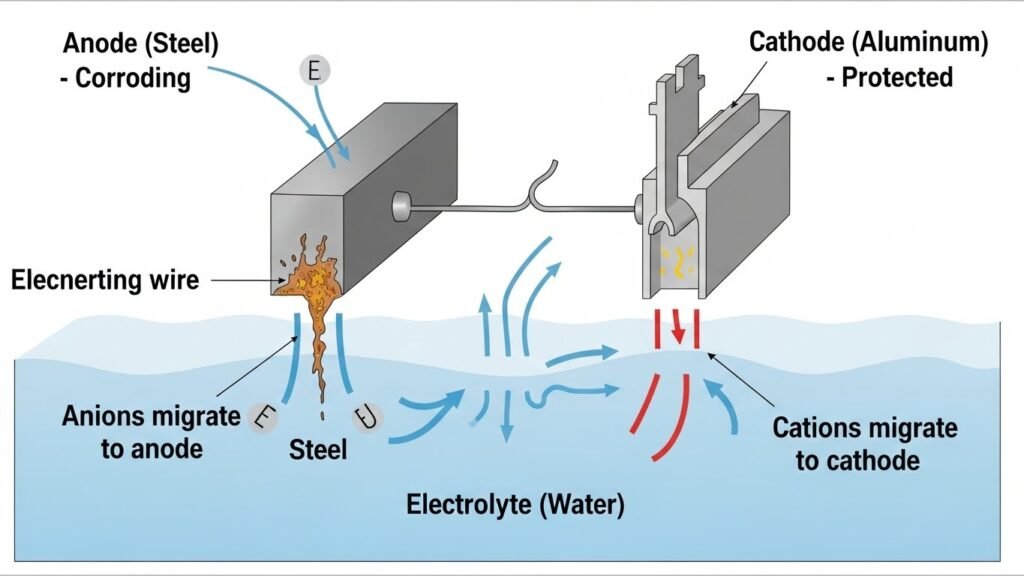
Galvanic corrosion occurs when two electrochemically dissimilar metals are placed in direct contact in the presence of an electrolyte (such as moisture, rain, or condensation).
- The Galvanic Series: Metals are ranked on a galvanic scale based on their electric potential. When two metals connect, the one that is more anodic (less noble, like zinc or steel) sacrifices itself and corrodes rapidly to protect the metal that is more cathodic (more noble, like aluminum or stainless steel).
- Aluminum’s Role: In a standard environment, aluminum is relatively noble compared to the zinc coating on galvanized steel, but less noble than stainless steel. If galvanized steel fasteners are used directly on an aluminum roof, the aluminum becomes the cathode and the zinc coating is sacrificed quickly, followed by the underlying steel.
Critical Design Mitigation Techniques
Preventing galvanic corrosion is essential for maintaining structural integrity and warranties.
- Dielectric Barriers: The most effective solution is to introduce a non-conductive, insulating layer between the dissimilar metals. This can be achieved using plastic shims, neoprene washers, nylon tapes, or special primer coatings. These barriers break the electrical circuit, preventing the galvanic reaction.
- Compatible Fastener Selection: Always use fasteners that are either the same material as the sheet metal or are more noble than both connected materials (e.g., using stainless steel fasteners, which are highly cathodic, to join both aluminum and galvanized steel).
- Runoff Management: Design structures so that water runoff from a more noble metal (like copper or stainless steel) does not flow over a less noble metal (like galvanized steel). Copper runoff, for example, can quickly destroy a galvanized roof.
Specialised Coatings, Finishes, and Practical Considerations
For both materials, the surface finish dictates aesthetics, durability, and cost. There are unique finishing processes available only to one material, which often drive the final selection.
Specialized Aluminum Finishing: Anodizing
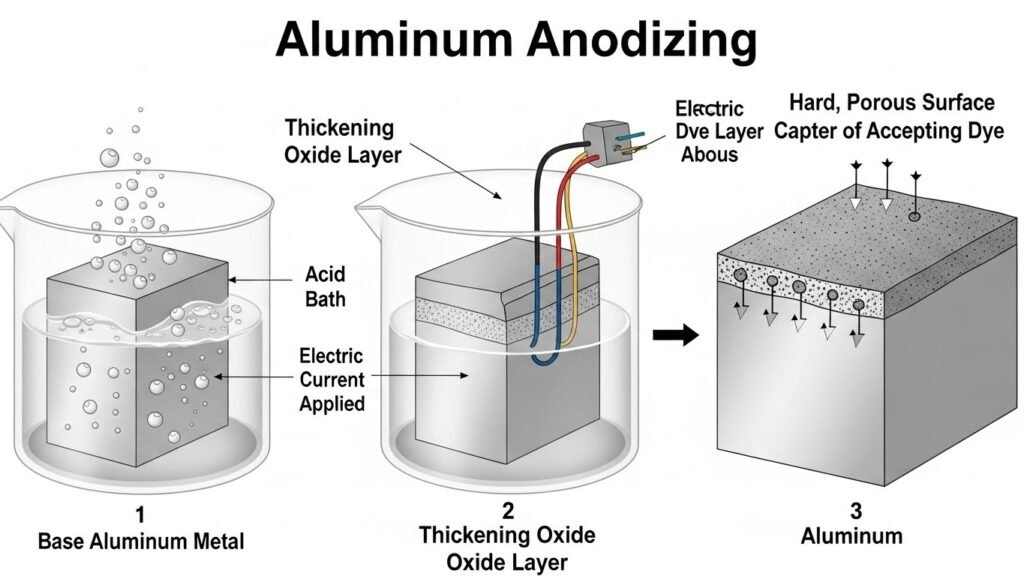
Anodizing is a unique electrochemical process used specifically for aluminum.
- The Process: Aluminum is immersed in an acid electrolyte bath and an electric current is passed through it. This thickens the naturally occurring surface oxide layer.
- Benefits: The resulting anodic layer is significantly harder, more resistant to abrasion, highly durable, and increases the metal’s natural corrosion resistance. The porous nature of the anodic film also allows for deep, vibrant coloring that is highly resistant to fading. This finish is common for architectural elements and consumer electronics.
High-Performance Paint Systems (PVDF/Kynar)
In the roofing and cladding industry, the quality of the paint system is often more important than the base metal for initial longevity and color retention.
- Fluoropolymer Coatings (PVDF/Kynar): These are the highest standard of exterior paint, often using resins like Kynar 500 or Hylar 5000. They provide superior resistance to UV radiation, acid rain, and chalking/fading.
- Coating Adhesion: Both aluminum and Galvalume utilize these paints. However, the substrate preparation differs: aluminum relies on its stable oxide layer for primer adhesion, while Galvalume uses a specialized passivization layer over the zinc/aluminum coating. These paint systems typically carry warranties of 30 to 50 years against chipping and fading.
Critical Design Considerations for Installation
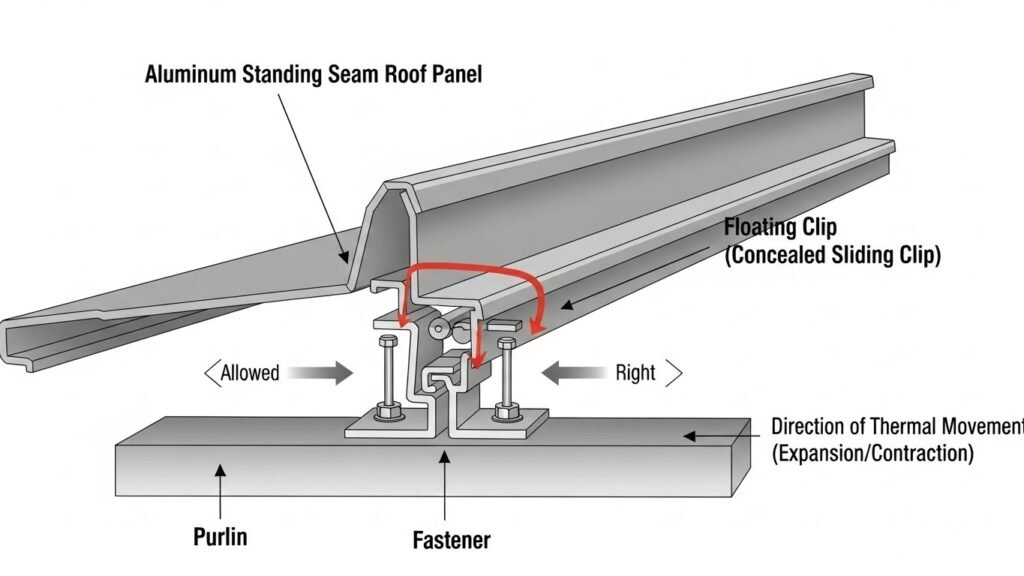
Practical installation factors heavily influence material choice, especially for exterior building components.
- Thermal Expansion (A Major Factor): Aluminum has a coefficient of thermal expansion (CTE) approximately twice that of steel. This means aluminum panels expand and contract much more dramatically with temperature changes.
- Design Impact: For long aluminum roof panels, this requires specialized concealed clip systems that allow the metal to slide freely beneath the surface, preventing buckling and fastener pull-out. Steel panels, while also needing room to move, are less susceptible to extreme movement.
- Impact Resistance and Gauge: While steel is inherently stronger, the practical difference in the field often comes down to thickness (gauge).
- Hail and Damage: To achieve the same dent and hail resistance of a standard 24-gauge (thick) steel panel, it may be necessary to use a thicker, and therefore heavier and more expensive, aluminum panel (e.g., 0.040-inch aluminum).
- Acoustics and Noise: Metal roofs are inherently loud during rain or hail.
- Noise Dampening: Steel tends to be slightly quieter due to its higher density. However, both metals often require the use of solid substrates (plywood) and sound-dampening membranes to mitigate noise transmission into the building structure.
Magnetic Properties and Fire Resistance
For niche engineering fields, the magnetic and fire characteristics are essential differentiators.
- Magnetic Properties:
- Galvanized Steel: Steel is ferromagnetic, meaning it is highly magnetic. This is a crucial consideration for electrical shielding, compass calibration, and equipment that cannot be near magnetic fields.
- Aluminum: Aluminum is non-magnetic (paramagnetic). This makes it ideal for specialized enclosures for sensitive electronic equipment, laboratories, and aerospace applications where magnetic interference must be avoided.
- Fire Resistance:
- Both aluminum and steel are non-combustible materials. They do not add fuel to a fire. This allows both materials to easily achieve the highest Class A fire rating when used as exterior cladding, offering superior fire safety compared to organic materials like asphalt shingles.
Environmental Impact and Sustainability
As environmental concerns grow, the sustainability and Environmental impact of materials become increasingly important.
Recyclability and Energy Consumption
The energy used in production is a key differentiator.
- Aluminum: It is one of the most recyclable metals globally. Its recycling rate is very high (over 70%). Recycling requires significantly less energy to produce than virgin aluminum.
- Galvanized Steel: Both steel and zinc are highly recyclable. Steel boasts one of the highest recycling rates. Primary steel production is an energy-intensive process.
Ecological Footprint
The long-term impact of the metals is also considered.
- Aluminum: It is considered the more sustainable choice due to superior recyclability and lower secondary production energy needs. This reduces its carbon footprint.
- Galvanized Steel: While it offers good longevity, its use can contribute to zinc pollution if not properly managed during its lifespan. Runoff from structures or improper disposal can release zinc into the environment. Maintenance activities, like repainting, also add to the environmental load.
Final Selection Guiding Principles for Galvanized Steel vs. Aluminum
The ultimate decision when weighing Galvanized Steel vs. Aluminum depends on prioritizing your project goals. There is no single “best” material.
Choose Galvanized/Galvalume Steel if:
- Strength is critical for structural applications, load-bearing components, or situations requiring high impact resistance.
- Upfront cost is the primary budget constraint.
- The application requires the material to be highly weldable and able to withstand environmental factors without complex maintenance initially.
Choose Aluminum if:
- Weight reduction (high strength-to-weight ratio) is crucial, such as in transportation.
- The part requires complex shapes (superior formability).
- Natural corrosion resistance in saltwater environments (marine environments) is paramount.
- Long-term, low maintenance is desired.
- Sustainability and recyclability are a priority.
| Feature | Galvanized Steel (Steel Base) | Aluminum |
| Density/Weight | High (Heavy) | Low (Lightweight) |
| Corrosion Protection | Sacrificial zinc coating | Natural, self-healing oxide layer |
| Rust Potential | Yes (if zinc is compromised) | No (rust-proof) |
| Cost (Upfront) | Lower (More Affordable) | Higher |
| Formability | Malleable, but less easily shaped | Highly malleable and ductile |
| Melting Point | High | Low |
| Ideal Use | Structural applications, infrastructure | Aerospace, transportation, packaging |
Choosing between these two engineering metals requires careful consideration of the entire project lifecycle. By analyzing your needs against this breakdown of Galvanized Steel vs. Aluminum, you can ensure a durable, cost-effective, and successful result.
Frequently Asked Questions (FAQs)
Can the surface oxide layer on aluminum ever be compromised?
The natural aluminum oxide layer is remarkably stable and self-healing in most atmospheric conditions. However, it can be compromised and rapid corrosion can occur in highly specialized environments. This includes extremely high $\text{pH}$ (alkaline) or extremely low $\text{pH}$ (acidic) environments, such as prolonged contact with uncured concrete, plaster, or specific types of cleaning chemicals. In these cases, the passive oxide layer dissolves, leaving the base metal vulnerable.
What is the typical lifespan difference between the two metals in coastal environments?
In harsh coastal or marine environments where salt spray is high, aluminum significantly outperforms galvanized steel. The sacrificial zinc coating on galvanized steel is rapidly consumed by the chlorides in saltwater, often leading to failure in 10 to 20 years. Aluminum’s non-sacrificial, stable oxide layer allows it to maintain structural integrity for 50 years or more with minimal degradation, making it the superior long-term choice for beachfront structures.
Does the thickness (gauge) of the metal affect the material choice?
Yes, the gauge (thickness) is critical, particularly for structural and roofing applications. Galvanized steel is often available in heavier gauges (like 22 or 24 gauge) which provides superior rigidity and dent resistance for a given weight. Aluminum, due to its lower density, often requires a thicker gauge (like 0.040-inch or more) to achieve comparable stiffness and impact resistance to a standard steel gauge, which adds to the material cost.
What is the specific impact of the zinc content on Galvalume?
Galvalume steel uses a coating that is roughly 55% aluminum and 43.4% zinc (with a small percentage of silicon). This combination leverages the barrier protection of aluminum and the sacrificial protection of zinc. Critically, the aluminum content helps Galvalume resist the flat-surface corrosion that standard galvanized steel can experience, while the zinc helps protect exposed cut edges (the “sacrificial” effect).
Is there a specific type of steel used before galvanization?
Yes, the base material is typically low-carbon mild steel. This type of steel is chosen because its chemical composition, particularly its silicon and phosphorus content, provides the best reaction with the molten zinc during the hot-dip galvanizing process, ensuring a uniform and durable zinc-iron alloy coating.
How does material fatigue differ between the two metals?
Material fatigue relates to the weakening of a material caused by repeatedly applied loads. Steel (including galvanized) generally has a defined fatigue limit, meaning it can withstand a certain stress level indefinitely without failure. Aluminum typically does not have a defined fatigue limit; it will eventually fail under almost any applied stress after enough cycles. This is why material selection is critical for parts subject to constant vibration or flexing.
Can aluminum be heat treated to increase its strength?
Yes, a significant advantage of many aluminum alloys (particularly the 2xxx, 6xxx, and 7xxx series) is that they can be strengthened considerably through heat treatment (known as precipitation hardening). This process involves heating the alloy and then cooling it slowly, which changes the internal microstructure to increase yield strength, tensile strength, and hardness. Galvanized steel cannot be further strengthened by this method.
Are there aesthetic coatings available that mimic the appearance of other metals?
Yes, both materials can be finished to mimic the appearance of metals like copper, bronze, or titanium. Aluminum is particularly suited for this because of the anodizing process, which allows for deep, metallic-looking colors. Pre-painted metal panels (both aluminum and Galvalume) use multi-layer PVDF paint systems to achieve specialized metallic finishes that are highly durable and UV-resistant.
How does magnetic interference affect their use in electronics?
This is a key differentiator. Since steel is ferromagnetic, any enclosure made of galvanized steel will interfere with or distort magnetic fields. Aluminum, being non-magnetic, is the preferred material for sensitive electronic enclosures, magnetic resonance imaging (MRI) equipment, and any application requiring minimal electromagnetic interference (EMI) or radio frequency interference (RFI) shielding.
What causes the “white rust” sometimes seen on galvanized steel?
White rust (or wet storage stain) is caused by the rapid, uniform corrosion of zinc when galvanized parts are stacked or stored without proper ventilation, allowing moisture to condense between surfaces. This lack of oxygen prevents the zinc from forming its stable, protective zinc carbonate layer, leading to a powdery white residue that can be unsightly but is often harmless to the underlying steel initially.
What is the typical temperature limit for galvanized steel before the coating is affected?
The zinc coating on galvanized steel begins to oxidize rapidly and flake off when exposed to temperatures exceeding approximately $200^{\circ}C$ ($392^{\circ}\text{F}$). Above this temperature, the protective capabilities of the zinc are compromised, making galvanized steel unsuitable for high-heat environments like flue stacks or furnace components.
What is “oil canning” and which material is more prone to it?
“Oil canning” is a term used to describe visible waviness or buckling on the flat surface of metal panels, most often seen on roofs and wall cladding. While it is an inherent characteristic of any cold-rolled flat metal and is not a structural defect, aluminum panels are generally considered more prone to oil canning due to their lower rigidity (Modulus of Elasticity) compared to steel, especially in wider panels.
How do environmental regulations impact the choice of these materials?
Environmental regulations increasingly favor materials with lower lifecycle energy consumption. Aluminum benefits significantly here due to the low energy required for secondary (recycled) production. While steel is also highly recyclable, the initial production of virgin steel is more energy-intensive, favoring aluminum from a “cradle-to-gate” sustainability perspective.
Is galvanized steel safe for use with potable (drinking) water?
Generally, yes. Galvanized steel pipes were historically common for residential plumbing. Modern plumbing often uses copper or PEX, but galvanized steel remains safe for water transport, provided the pipes are not heavily corroded. Excessive corrosion can release small amounts of zinc into the water, but zinc is an essential mineral, and the concentrations are usually within safe limits.
How does the expansion difference impact long exterior components like gutters?
The difference in the coefficient of thermal expansion means that a long aluminum gutter will expand and contract much more than a galvanized steel one. This requires specific installation techniques: aluminum gutters need expansion joints or larger gaps between sections to prevent buckling, while galvanized gutters are more dimensionally stable and require fewer allowances.
What determines the “finish” of Galvalume (e.g., standard vs. acrylic clear coat)?
Standard Galvalume has a natural, matte metallic finish. However, many suppliers apply an acrylic clear coat (a thin, non-colored polymer coating) on top. This clear coat provides temporary protection against scuffing during shipping and installation and acts as a barrier to delay the formation of white rust during storage, though it doesn’t add long-term corrosion resistance.
Are there fire risks associated with the high conductivity of aluminum?
Aluminum’s high electrical conductivity is usually beneficial (e.g., for power lines). However, if an aluminum structure is improperly grounded or comes into contact with live power, it can transmit electricity widely. This risk is managed through strict adherence to building and electrical codes requiring proper grounding of all aluminum components.
What is the primary cause of aluminum roofing failure?
The primary cause of long-term failure in aluminum roofing is not corrosion of the panel itself, but failure due to metal fatigue or fastener pull-out caused by repeated thermal expansion and contraction over decades. If the original installation did not allow sufficient room for movement, the material stresses itself, leading to cracking or loosening of the mechanical connection points.
How does the scrap value compare between the two materials?
Aluminum typically has a much higher scrap value than steel. This is due to the high energy cost required to produce virgin aluminum. Recycled aluminum is highly valuable, meaning that at the end of a project’s life, aluminum waste provides a much greater return than galvanized steel scrap.
Why is copper highly incompatible with both materials?
Copper is highly cathodic (noble) compared to both aluminum and galvanized steel. If water runs off a copper roof onto a steel or aluminum component, the copper ions in the water (an electrolyte) will accelerate the corrosion of both the zinc and the aluminum/steel substrate, potentially causing rapid and severe failure. Therefore, they must always be physically isolated from copper elements.
