 Skip to content
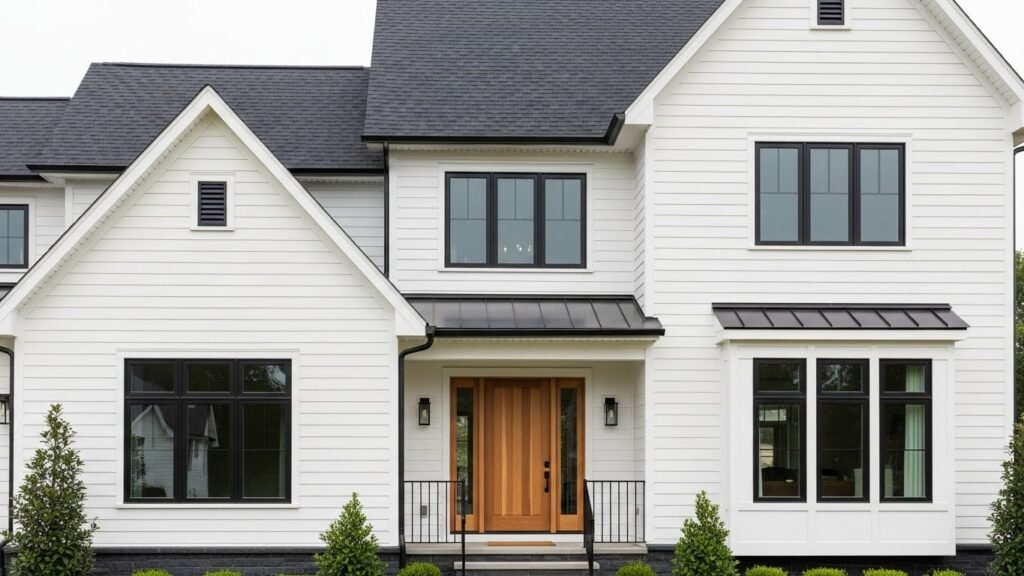
If you want a look that’s sharp, timeless, and packs a punch, you need the white house, black trim aesthetic. This classic color scheme is a winner. It is not just a passing trend. This style has major staying power. It works seamlessly with nearly every architectural style, from classic Colonials to sleek modern farmhouse designs.
Choosing this high-contrast pairing sets up the perfect foundation for amazing curb appeal. The bright white siding reflects natural light. This keeps your home cooler in the summer. Furthermore, the crisp black trim provides a strong visual frame. It defines every line and feature of your exterior. The neutral backdrop is perfect for adding vibrant holiday decor or other colorful potted plants. This color combo is simply a statement maker.
Foundations of Contrast and Architectural Styling
This design choice is all about being intentional. You are using the stark contrast between white and black to highlight your home’s best features. The goal is to make the contrast balanced and cohesive across the whole facade. Think of the black as the eyeliner for your home’s “eyes,” which are the windows and doors.
Achieving High Contrast with Structural Elements
The biggest areas of your home are often the best places to introduce deep, dark colors. These elements serve as anchors for the entire exterior design.
The Power of a Black Metal Roof
A metal roof is a major design element. Choosing a black finish here visually anchors the entire facade. It creates a strong, dark cap against the bright white walls.
- Visual Impact: A black metal roof provides a deep, dramatic contrast right at the top.
- Finish Choice: Select a matte black finish. This reduces glare from the sun and offers a sophisticated texture.
- Integration: Ensure your downspouts, gutters, and flashing are also done in black. This gives the roof a deliberate, integrated appearance.
- Practicality: A black roof offers excellent durability. It absorbs heat, which can be a plus in colder climates.
A black seamed roof often features prominent vertical lines. These lines enhance the feeling of height and modern design. It ties in perfectly with the geometric simplicity of a modern rustic or modern farmhouse look.
Emphasizing the Flat Roof

For homes with a modern or industrial chic design, the flat roof is a cool feature. You can emphasize the shape of a flat roof by following its edges with dark roof trim. This simple move reinforces the clean lines of a minimalist design.
Integrating Outdoor Structures
Your outdoor furniture and attached structures should match the home’s color scheme. This creates an unbroken, pleasing transition from house to yard.
- Black Pergola and Fencing: Stain or paint your black pergola and fencing a dark color. This intentionally integrates the outdoor space with the exterior.
- Porch Details: Paint the porch floor and steps black. This creates instant dimension and helps modernize the space. You can also use a dark gray variation for the floor.
Architectural Detail Enhancement
Black is the ideal color for highlighting the unique features of your home. It makes everything pop.
Making a Statement with Shutters
Black shutters are a classic choice. They create incredible contrast and highlight large windows.
- Highlighting Windows: Use them to frame oversized windows and add visual interest.
- Design Choice: A raised “X” design on the shutter adds a custom look.
- Modern Twist: For a unique touch, consider installing sliding shutters. These add privacy and a visually appealing element that works well on a midcentury modern home.
- Exterior Shutters: Ensure the size of your exterior shutters is correct. They should look like they could actually cover the window when closed.
Highlighting Unique Shapes
The contrast of black trim is perfect for drawing attention to interesting architectural shapes.
- Arched Windows and Doors: Highlight the trim around arched windows and arched French doors with black. This instantly elevates the facade for a custom, elegant look.
- Unique Window Shapes: Black trim is perfect for emphasizing unique window shapes. This is often seen in Tudor-style cottages.
Working with Brick and Siding
The combination of white and black works well with all common exterior materials. Brick adds amazing texture.
Painting Your Brick Exterior
Many homeowners want to update an older brick home. A coat of white paint job on the brick is a fast way to get a quick makeover.
- Dramatic Effect: Black trim on painted brick creates a bold and dramatic contrast. This is especially true if you use a deep charcoal black trim.
- Textural Quality: The paint still allows the unique texture of the brick to show through. This prevents the house from looking too flat.
- Limewashed Brick: Consider using limewashed brick instead of solid paint. This leaves a rustic, slightly mottled look. It works great for a cottage-style home.
Modern Contrast with Black and White
For a sleek, contemporary look, combine materials.
- Dynamic Look: Combine white brick with black siding or black shiplap. This creates dynamic sectioning.
- Clean Lines: This material mix is often seen in modern ranch designs. It emphasizes clean lines and geometric form.
Strategic Placement of Black Accents
The devil is in the details, so they say. Carefully placing small black accents throughout the exterior is key to achieving a polished, cohesive look.
Black Window and Door Frames
The windows are crucial design points. They offer the largest contrast area after the walls and roof.
- Reinforced Design: Black-framed windows reinforce the overall trim design. This gives a more unified feel.
- Thin Trim: Use thin window trim to give modern flair to traditional houses. This is perfect for a Spanish-style home.
- Modernizing Mixed Materials: You can use black panes with white trim on exteriors that mix stone and wood siding. This creates balance.
- Frame Size: Choose windows with a slimmer frame if possible. This keeps them from looking bulky or heavy.
Impactful Window Arrangements
How you arrange your windows can accentuate the black trim beautifully.
- Symmetrical Entrance: Use matching windows flanking your front door. This creates a clean and balanced symmetrical entrance. It is visually pleasing.
- Vertical Stacking: Arranging windows in vertical stacking rows makes the home look taller. This is great for a compact house.
- Horizontal Rows: Placing windows in horizontal rows emphasizes the width of a ranch or midcentury modern home.
Coordinating Patio and Entrance Doors
The doors must align with the overall design. Otherwise, the look falls apart.
- Cohesive Look: Use patio doors with black-framed windows. This is especially important for a minimalist design.
- Entrance Details: For the front door, you can use a black door itself or frame a wooden door with thick black door trim.
- Door Hardware: Ensure your door handles and locks have a matte black or charcoal black trim finish. This attention to detail matters.
Framing the Entrance with Black Fixtures
Black lighting and utility elements provide texture and depth.
- Black Sconces: Use black sconces, lanterns, or pendant lights around the entrance. These fixtures naturally reinforce the home’s architectural lines.
- Scale and Finish: Use oversized elements for bigger visual impact. Stick to matte black or satin finishes for modern appeal.
Using Minimalist Black House Numbers

Your address numbers are small but important details. They extend the black theme naturally.
- Sharp Contrast: Go for simple, bold fonts and mount the numbers directly onto the white walls. This creates a powerful, dramatic contrast.
- Consistency: Match the finishes of the house numbers, wall-mounted mailbox, and door hardware. This keeps things cohesive. You could even use a mail slot in the front door.
Introducing Warmth and Focal Points
While the high contrast of a white house with black trim is striking, using only black and white can feel cold or stark. The smart move is to introduce other elements. Natural materials and a third color are key to adding warmth, texture, and character. They soften the dramatic contrast beautifully.
Wood and Natural Accents

Natural wood is the single most effective way to warm up a black and white exterior. It provides a rich, organic tone that balances the crispness of the paint.
Incorporating Natural Wood Accents
Wood accents add character immediately. They prevent the facade from looking too flat or institutional.
- Wooden Door: A wooden door creates an instantly welcoming focal point. Options like walnut, mahogany, or cedar work well.
- Consistency: Mirror these wood tones in other spots. Use them on porch ceilings, soffits, and possibly the garage door.
- Wood Siding: Small sections of wood siding can add a rustic feel. Use it for a window seat area or an entryway detail.
- Modern Doors: For a modern or minimalist design, a pivot door or double entry doors in a simple wood grain are stunning.
Many homeowners prefer natural stains over paint for these wood features. This allows the natural grain and beauty of the wood to show through.
Pairing with Stone
Natural materials like stone accents add depth and soften the stark contrast. Stone has an irregular texture and varying colors.
- Dimension: Stone provides a grounding effect. It adds dimension that paint alone cannot achieve.
- Types of Stone: River stone adds a rustic charm. Stacked stone offers a modern, textured look.
- Pathway: A stone pathway leading up to the front door connects the house to the landscape.
Terracotta Roof Shingles
For a warmer, earthier vibe, particularly on a Mediterranean or Spanish-style home, consider terracotta roof shingles. This material instantly warms up the exterior. It gives the home a relaxed, sun-kissed appearance.
Door and Porch Statements
The entryway is the first thing guests see. It is the perfect place to make a strong visual statement using color or specific black elements.
Making a Front Door Decision

The front door is your chance to either embrace the black and white theme completely or introduce that third, welcoming color.
- The Black Door: Choosing a black door makes a classic, timeless statement. It acts as a neutral backdrop. This is perfect for any color holiday decor you might want to use later.
- The Pop of Color: Paint the front door a contrasting color for a lively, unexpected touch.
- Navy blue offers a deep, sophisticated look.
- Forest green suggests a connection to nature.
- Deep red or deep purple provide dramatic flair.
This pop of color is an easy way to express personality without committing to a full house repaint.
Bold Garage Doors
The garage door can sometimes overwhelm the facade. Making it black is a design choice that helps anchor the exterior.
- A black garage door grounds the home visually.
- It generally requires less maintenance to look clean compared to white.
Creating an Eye-Catching Porch
The front porch is an extension of the home’s design. Use black elements here to match the exterior.
- Black Accents: Paint the railing, balusters, and install black ceiling fans.
- Statement Ceiling: For a truly bold architecture choice, paint the porch ceiling black. This creates a dramatic, defined space above the rocking chairs or seating areas.
Landscaping and Cohesion
The landscape is the final layer. It grounds the home and prevents the black and white scheme from feeling isolated.
Contrasting Greenery

Lush greenery instantly livens up the monochrome exterior.
- Deep Greens: Use deep greens like boxwood, laurel, or holly for base plants. Their rich color provides excellent contrast against the bright white walls.
- White Blooms: Plant white blooms like hydrangeas, roses, or gardenias. These mirror the white of the siding.
- Black Accents: Use black planters or trellises to extend the black accent color into the yard.
This thoughtful foliage plan enhances the curb appeal year-round.
Grounding the Design
The paths leading to your home are important functional elements. They should be integrated visually.
- Stone Paths: Use dark gray or black-toned stone paths like slate, bluestone, or basalt.
- Concrete Walkways: Simple concrete walkways can also work if stained dark.
- Pattern: Consider a herringbone or basketweave pattern for the pathways. This adds more visual interest.
Black-and-White Tile
For patios, porch floor, or steps, black-and-white tile adds pattern.
- Patterned Tile: Use a graphic, patterned tile on the entry or patio. This breaks up solid surfaces.
- Modern Look: This choice is a popular way to modernize the outdoor space instantly.
The combination of the strong black and white house, warmed by wood, and anchored by deep greens creates a powerful, welcoming design. This comprehensive approach ensures that every element, from the roof trim to the balusters on the porch, contributes to the overall aesthetic.
Mastering Paint Selection and Practicalities
Once you have finalized your design choices, the most crucial step is selecting the exact shade of white and black. Getting the paint wrong can ruin the high-contrast effect. Furthermore, you need to think about the long-term cost and maintenance of the scheme.
Paint Selection: Choosing the Perfect White and Black
Not all whites and blacks are created equal. Different shades have distinct undertones that influence the entire look of your facade.
Understanding Paint Terminology
To choose like an exterior designer, you need to know the industry terms.
- Light Reflectance Value (LRV): This is a scale from 0 to 100. It measures how much light a color reflects.
- A high LRV (above 80) means the color is brighter. This can cause glare in very sunny climates.
- A low LRV (near 0) means the color absorbs light.
- Undertones: These are subtle colors beneath the main hue. Whites can lean warm with a yellow undertone or cool with a grey undertones or blue hint. Black colors often have brown tones or grey mixed in.
Understanding these terms helps you choose colors that will look right in your specific lighting conditions.
Selecting the Right White Paint
The wrong white can look blindingly bright or dingy gray. The goal is a balanced, soft white.
Important Point: Avoid overly bright Arctic White shades that may create an unpleasant glare. Aim for soft, balanced whites with warmth.
- Benjamin Moore White Dove (LRV 85): This is a crisp but creamy off-white with a subtle hint of gray. It is highly versatile for any architectural style.
- Sherwin-Williams Alabaster (LRV 82): A creamy white that is distinctly warmer. It softens the stark black trim and works well on north-facing houses that don’t get much direct sunlight.
- Sherwin-Williams Pure White (LRV 84): This is a crisp, neutral shade with minimal undertones. It is a safe and reliable choice for sunny climates.
- Benjamin Moore Seapearl (aka China White) (LRV 78): A soft, slightly darker off-white with greige undertones. This gives a more subdued appearance.
Remember to always test paint samples on foam board or poster board outside. View the sample near the eaves and under different light throughout the day.
Selecting the Right Black Trim Paint
Using a true black (LRV 3 or lower) on all trim can look too harsh. Experts recommend using a softer, off-black color.
Important Point: Use “off-black” colors (LRV over 5). These colors are softer and have richer undertones for a sophisticated look.
- Sherwin Williams Iron Ore (LRV 6): A deep, soft black with a hint of charcoal. It provides strong contrast without being jarring.
- Sherwin Williams Urbane Bronze (LRV 8): A dark, warm-toned greyish-brown black. It pairs beautifully with creamy off-white paint choices.
- Benjamin Moore Wrought Iron (LRV 8.17): A cooler, grey undertones black. It performs well in strong sunlight without absorbing too much heat.
- Sherwin Williams Tricorn Black (LRV 3): This is a rich, true black. Reserve this for small accents like the front door or window awnings only, due to its intensity.
It is wise to choose a paint formulated specifically for exterior trimming. This ensures better durability against the elements.
Practical Considerations
Designing a beautiful facade is only half the job. You must also consider the practical aspects of cost, energy use, and material alternatives.
Cost and Maintenance
Homeowners often wonder if the stylish look comes with extra headaches.
| Feature Comparison | Black Trim/Windows | White Trim/Windows | Consideration for Curb Appeal |
| Initial Cost (Windows) | Higher (Vinyl: $\approx$15% more) | Lower | The aesthetic upgrade often justifies the cost. |
| Maintenance | Higher (Shows dust/dirt more) | Lower | Regular washing is needed to prevent dullness. |
| Fading | Possible over time (UV exposure) | Minimal | Use high-quality exterior paint for resistance. |
The slightly higher initial cost for black-framed windows—especially vinyl windows or aluminum-clad windows—is common. However, the dramatic curb appeal increase is a major payoff.
Energy Efficiency
The color black absorbs heat. This impacts the home’s thermal properties.
- Heat Retention: Black trim absorbs more heat. This is beneficial for heat retention in colder climates. It helps maintain the internal temperature.
- Hot Climates: In warm, sunny climates, you need to compensate. Ensure you have high-quality insulation and energy-efficient windows. This offsets any slight temperature increase caused by the dark trimming.
- Solar Panels: If you use solar panels, the black trim blends well aesthetically with the panels. This creates a visually seamless modern roofline.
Material and Color Variations
What if you want the black-and-white look but need alternatives?
- Thin Brick: You can achieve the look of a white brick home without the weight. Thin brick (or brick veneer) is an excellent alternative. It offers the same texture with less thickness.
- Alternative Colors: While black is the focus, the core idea is a dark, bold contrast against white. Other rich, dark colors can also work. Consider using a very deep navy or a dark, brownish-black shade like Black Fox for a similar bold effect.
By focusing on these technical and practical details, you ensure your white house with black trim looks great now and performs well for years to come. The effort in selecting the right products and colors truly pays off in the final facade.
Navigating the Rules and Perfecting the Finish
Moving beyond aesthetic choices, successful implementation of a white house with black trim design requires careful attention to rules, regulations, and technical expertise. Ignoring these practical elements can lead to costly mistakes or community compliance issues.
Regulatory and Community Compliance
Before buying a single can of paint, you must check local rules. Architectural guidelines and community covenants can override your design dreams.
HOA Restrictions and Approval Process
In communities governed by a Homeowners Association (HOA), the freedom to choose your exterior colors is often restricted.
- Understanding the CC&Rs: The Declaration of Covenants, Conditions, and Restrictions (CC&Rs) dictate the rules for the community. These documents often include specific guidelines for exterior maintenance and appearance.
- Approved Color Palettes: Many HOAs work with paint companies like Sherwin-Williams to maintain an archive of pre-approved color schemes. If your black or white choice is not listed, you must apply for special permission.
- The Architectural Review Committee (ARC): You must submit a formal application to the ARC. This application details the exact colors, finishes, and the areas where the black trim will be applied. The ARC ensures your high-contrast look is considered “harmonious” with the neighborhood.
- The Risk of Denial: High-contrast looks like black and white can sometimes be denied if the community aims for a lower-key, uniform aesthetic. Get written approval before starting any work.
Historical District Guidelines
If your home is in a historical district, compliance is much stricter.
- Preservation Focus: Historical commissions prioritize preserving the home’s original architectural style and color palette.
- Trim Restrictions: In many districts, using stark black trim on a true Colonial or Victorian home may be prohibited. Historically, trim colors were often dark green, deep red, or a soft, brownish-black shade, not a modern, pure black.
- Material Requirements: These boards may also restrict the use of modern materials like vinyl windows or black fiberglass doors, requiring traditional wood sash windows instead.
Technical Mastery of Paint Application
Achieving that ultra-crisp, defined line between the white siding and the black trim is difficult. The success of the design depends entirely on professional-level preparation and application.
Preparation is Paramount
The longevity and appearance of your paint finish are determined by the prep work.
- Cleaning and Degreasing: Thoroughly power washing the facade removes dirt, dust, and mildew. If the surface is dirty, the new paint will fail to adhere properly. Use a fungicidal wash if mold is present.
- Sanding and Scraping: Remove any loose or flaking old paint to create a smooth, sound surface. Sanding provides a good substrate for the new paint to bite into.
- Priming the Surface: Always prime raw or uncoated materials. A quality primer ensures uniform paint absorption. For deep black paint, consider using a black primer (or dark gray primer) first. This helps achieve a richer color with fewer topcoats and prevents the bright white base from showing through if the topcoat fades slightly over time.
Precision Application Techniques
Black reveals every flaw, so application must be precise.
- Achieving Crisp Edges: Use high-quality painter’s tape to create a perfect separation line. Press down firmly to prevent bleed-through where the black trim meets the white siding.
- Tools for Trimming: Use a quality 2-inch to 2.5-inch nylon/polyester brush for cutting in along the edges of the window trim and door trim. Use a small foam roller for the flat surfaces of the trim for a smoother, uniform finish.
- Maintaining a Wet Edge: Apply paint in even strokes and try to maintain a “wet edge.” Do not brush back into paint that has already begun to dry. This avoids lap lines, which are highly visible with a color as intense as black.
- Conditions: Apply paint in temperatures between $50^{\circ}\text{F}$ and $90^{\circ}\text{F}$ with moderate humidity. Avoid direct, intense sunlight, as it can cause paint to cure too quickly and lead to premature failure.
Material Compatibility and Durability
The material you choose for your windows and doors must be able to handle the heat absorption of the black color.
Black-Framed Windows: Heat Concerns
Dark colors absorb significantly more solar heat. This is a real issue for window materials.
- Vinyl Windows: Black vinyl windows have a high coefficient of thermal expansion. In sunny climates, the black frame can absorb enough heat to cause the vinyl to soften, expand, and potentially warp or distort over time. To avoid this, only use black vinyl from reputable manufacturers who use high-quality, heat-stabilized vinyl and internal reinforcement.
- Fiberglass: Fiberglass is the best, most stable option for black-framed windows. It has a low rate of expansion and contraction. It maintains its structural integrity regardless of the dark color.
- Aluminum-Clad Windows: This option offers the stability of wood with a durable, factory-applied black coating over aluminum. It provides the best blend of stability, durability, and classic wood sash aesthetics.
Finishing Details: Powder Coating and Gloss
The finish on metal accents must be chosen for longevity.
- Matte Black Finish: Always opt for matte black or satin finishes for trim and metal accents like black sconces or railing. A high glossy finishes on trim exaggerates surface imperfections and can look plastic or cheap on a large area.
- Powder Coating: For all exposed metal elements—like railings, metal fencing, and decorative grilles—use a factory powder-coated finish. This electrostatically applied finish is highly resistant to chipping, fading, and rust, offering superior protection over standard paint.
Avoiding Common Design Pitfalls
The bold nature of the black and white scheme means small mistakes are magnified. A few key missteps can ruin the sophisticated look.
Overuse and Placement Mistakes
- Black Overload: Warning against using black on too many elements. Too much black can make the home look heavy, dark, and uninviting, like a “black hole.”
- Foundation and Trim: Keep the foundation and the main body of the house white. Limit black to the trim, windows, doors, and a few high-impact accents.
- Garage Door Integration: Avoid painting a prominent, forward-facing garage door jet black unless it is absolutely necessary for the style. If you must, use a soft off-black color like Sherwin Williams Iron Ore or frame a natural wooden door with black trim.
Clashing Colors
- Roofing Conflict: Do not pair stark black trim with a roof that has strong, warm colors, such as a brown, red, or highly varied multi-toned terracotta roof shingles. The clash is visually jarring. Opt for a neutral gray roof or a deep, monochromatic brownish-black shade for the roof.
- Stark White: Do not choose the starkest white paint available. A clinical, bright white with cool undertones can look blinding in sunlight. Choose a softer white with a hint of warmth, like Sherwin-Williams Alabaster, to keep the home feeling cozy and classic.
Advanced Hardscaping and Grounding
The exterior space—the landscape—must integrate the black and white theme without disrupting the natural setting.
Driveway and Walkway Integration
- Driveway Material: Use dark asphalt, dark interlocking pavers, or stamped concrete in a dark charcoal color. This visually extends the black trim into the driveway.
- Grass Pavers: For a modern, eco-friendly look, use grass pavers bordered by black stone or dark gravel. This breaks up the hard surface while reinforcing the contrasting color scheme.
- Patterned Tile and Stone: For walkways and entryways, use dark slate, basalt, or bluestone. These natural materials have a deep gray-black color that grounds the home. Use a subtle herringbone or basketweave pattern to introduce complexity without competing with the home’s structure.
By addressing these practical, technical, and regulatory layers, you ensure your white house with black trim design is not just a passing trend, but a durable, compliant, and beautifully executed timeless investment that maximizes your curb appeal.
Architectural Integration and Final Synthesis
The journey from selecting paint colors to considering maintenance has laid a solid foundation. Now, the final part focuses on the most exciting aspect: seeing how the white house with black trim color scheme flawlessly integrates with specific architectural style details. This ensures the design is not just beautiful, but historically and structurally appropriate.
Architectural Styles Where the Combination Shines
The black-and-white pairing is not limited to one era. Its versatility allows it to adapt its personality from formal elegance to rugged simplicity.
Important Point: The black-and-white combination is versatile. It can be adapted to almost any architectural style through deliberate detailing and placement.
Classic and Traditional Applications
In traditional homes, black trim serves to highlight the craftsmanship and formal structure of the build.
- Colonial: Black trim enhances the elegance of the home. It emphasizes the symmetrical entrance, formal entries, and any black exterior shutters. It gives the home a sharp, distinguished military precision.
- Victorian: Victorian houses are known for intricate trim and decorative balusters. Black accents here highlight this detailed Craftsman style woodwork. It makes the facade feel rich and layered.
- Classic Tudor Cottage: The black trim emphasizes the distinctive steep roofline and exposed timber beams. This instantly enhances the home’s vintage, storybook cottage character. It makes the unique window shapes stand out dramatically.
Adapting to Coastal and Ranch Styles
The high-contrast look can be adapted for relaxed styles too.
- Modern Ranch: This style uses simple geometry and often features steep gable roofs. Bold, black-framed windows define this look perfectly.
- Mediterranean: This style is usually white stucco. Pair it with sleek black balconies and thin window trim. This maintains the warmth while giving a modern edge.
This incredible flexibility is why the white house, black trim design is the ultimate choice for homeowners seeking a look that is both modern and truly timeless.
Modern and Contemporary Applications

The high contrast is the backbone of modern design, providing clean lines and bold architecture.
- Modern Farmhouse: This look perfectly blends rural charm with minimalism. It uses crisp white white siding, metal roof elements, and black-framed windows. The black trim on the gables and porch posts provides essential definition.
- Modern Minimalism: This style thrives on simple, unadorned structure. It uses smooth white stucco and black highlights. The black is often used on sleek patio doors and thin roof trim.
- Modern Ranch: Modern ranch homes rely on simple geometry and often feature steep gable roofs. Bold, black window trim defines these horizontal structures beautifully. The black pulls the entire sprawling design together.
Rustic and Earthy Applications
Even homes designed for comfort and nature benefit from the defining power of black trim.
- Craftsman Style: Black trim heightens the natural, rustic charm. It emphasizes the home’s sturdy structure and exposed wood details. When paired with natural elements like stone accents, the look is grounded and welcoming.
- Mediterranean (Spanish Style): The common white stucco is paired with sleek black balconies and thin trim. This modern touch maintains the house’s romantic warmth while eliminating the need for traditional red trims.
- Cottage Charm: This style blends traditional warmth with modern elements. The black window trim and warm wooden door work together to create a cozy but updated front porch.
Final Synthesis: Creating a Lasting Impression

This guide has covered everything from selecting the creamy off-white paint to choosing black planters. The success of your white house, black trim design rests on a few key concepts.
The Keys to Curb Appeal Success
The combination of white and black is undeniably elegant and bold. It fits seamlessly across both classic and contemporary farmhouse look designs.
- Intentional Design: Every black element—from the door trim to the black pergola—must be placed with purpose.
- Cohesion: The chosen shade of black must remain consistent across all elements, whether it’s the fencing or the balusters.
- Softening Contrast: Always introduce natural elements like walnut wood, stone paths, and contrasting greenery. This prevents the design from feeling too stark.
Enhancing Discoverability
For homeowners searching for the perfect exterior look, the black and white home is a statement maker. The visual clarity of the color scheme translates directly into strong curb appeal and increased home value.
| Design Element | Goal | Impact on Home Value |
| Black-Framed Windows | Defined architectural lines | Suggests high-end, modern renovation. |
| Wooden Door | Adds warmth and texture | Creates a strong, welcoming front door focus. |
| Landscaping | Grounds the design with deep greens | Enhances visual interest and perceived quality. |
The white house with black trim is more than a trend; it is a smart, timeless design choice. By adhering to these principles of contrast, warmth, and integration, you create a home that truly stands out.
❓ Frequently Asked Questions (FAQs)
Why is the white house with black trim color scheme so popular right now?
This color scheme is popular because it combines the best of both worlds. The white is clean and familiar, offering a sense of freshness and size. The black trim, however, provides a sharp contrast that makes the house look custom, modern, and expensive. It works seamlessly with the current trend of modern farmhouse and minimalism, offering bold architecture without using overly complex colors. It is the definition of timeless design.
Does black trim fade faster than white trim, and how do I prevent it?
Yes, black trim absorbs more UV radiation and heat, which breaks down the paint pigments more quickly than white. This can lead to a chalky or faded appearance over time. To prevent this, use high-quality exterior paint specifically formulated with enhanced UV protection. You can also opt for exterior-grade stains, like Onyx or Black Fox, that have deeper, richer pigments.
Can I use black trim on a home that has a brown brick foundation?
Yes, but you should choose a softer, warm-toned black. A pure, stark black can clash with reddish or brown brick. Instead, choose a black with brown tones or deep greige undertones, such as Sherwin Williams Urbane Bronze or Black Fox. These colors bridge the gap between the black trim and the brown brick, creating a more cohesive look.
How do I choose a white paint for a shaded, north-facing house?
North-facing homes receive cooler, blue light all day. If you choose a bright white with cool undertones, your house might look gray or stark. Instead, pick a creamy off-white that has a definite yellow undertone, like Sherwin-Williams Alabaster or Benjamin Moore White Dove. The warm tone in the paint will counteract the cool northern light, ensuring your house stays a beautiful, soft white.
Is it better to use black trim on thick or thin window frames?
For a traditional Craftsman style or Colonial home, thicker trim can handle the black color well, emphasizing the historical bulk. However, for a modern or minimalist design, thinner window trim painted black is preferred. Thin black trim creates a sleek, crisp line that maximizes the glass area, enhancing the clean lines of the home.
Should my black gutters and downspouts match the trim or the body of the house?
Your gutters and downspouts should always match the element they are running against. If the downspouts run down the white siding, paint them white to make them disappear. However, the horizontal gutters running along the roofline (fascia) should match the roof trim (black) to create a visual break between the roof and the house. This makes the home look cleaner and taller.
What are some good black metal lighting fixture styles that complement the look?
For a modern farmhouse or industrial chic style, choose geometric, angular lighting fixtures such as simple square lanterns or cylindrical black sconces. For a Victorian or Colonial home, choose classic lantern styles in a matte black finish. The key is to avoid high-gloss finishes and stick to classic shapes that reinforce the bold architecture.
Should I choose a glossy or matte finish for the black trim?
Always choose an eggshell or satin finish for the black trim. High glossy finishes are too reflective for a large exterior surface; they look cheap, highlight every imperfection in the wood, and cause excessive glare. A satin finish provides durability and a sophisticated, slightly subdued appearance that works beautifully with the contrasting white paint job.
How can I incorporate black elements into my patio or backyard area?
Extend the color scheme into your outdoor living spaces. Use black aluminum or iron for outdoor furniture frames. Install a black pergola or awning. For flooring, use a graphic black-and-white tile on the patio or porch floor. You can also use black planters filled with contrasting greenery to create continuity.
What is the ideal LRV for exterior white paint in a very sunny climate?
In areas with intense, direct sunlight (like the Southwest), using a very high LRV (90+) can cause eye-straining glare. The ideal range is generally between LRV 82 and 86. This range includes popular choices like Sherwin-Williams Pure White and Benjamin Moore White Dove. These are bright but soft enough to avoid being harsh.
How does the white house with black trim look work with solar panels?
The black trim and roofline are ideal for integrating solar panels. The black frame of the panels blends seamlessly with the dark accents, making the solar panels less noticeable. This helps maintain the home’s high curb appeal while maximizing thermal efficiency.
Should the front door be black, or a pop of color?
This depends on your goal. If you want a classic, timeless and formal look, the black door is the answer. If you want a fun, quirky, or welcoming statement maker, choose a contrasting color like a deep navy blue, forest green, or deep red. The black trim frames any color perfectly.
Can I mix black-framed windows with exterior shutters?
Yes, but you must be careful. If the window frames are black, the exterior shutters should also be black to avoid visual chaos. This look works best on classic Colonials or Victorian homes where the shutters are historically accurate architectural style elements. Avoid shutters entirely on modern minimalist or midcentury modern homes.
If my house has a prominent chimney, how should I treat it?
If the prominent chimney is limewashed brick or white stucco, paint the vertical edges of the chimney’s cap or the flashing black. This grounds the structure and ties it back to the roof trim. If the chimney features stone accents, ensure the mortar is a dark gray or charcoal color to maintain the monochromatic theme.
What wood species pair best with the black trim for natural elements?
The most popular wood species are those with a rich, dark grain that provides maximum warmth and contrast against the white. Options include walnut, mahogany, and Western cedar. These woods should be sealed with natural stains (not paint) to preserve their texture and prevent them from weathering gray.