

The Foundation: Why and How to Prepare Your Space
We all know the struggle. You have invested in a great entertainment space, but the large black screen, the TV, feels like a big, ugly void when it is off. It dominates your living room decor and throws off the whole vibe. This is where online decorating and smart interior design comes into play. You don’t have to choose between a gorgeous living room and enjoying your shows. You can have both.
Learning how to decorate around a tv stand is key. It is the best way to achieve that polished look you see in magazines. By treating your entertainment space as a crucial design area, you make the TV area part of the aesthetic and flow of the room. This leads to a truly seamless integration.
The Essential Case for TV Decor
A well-planned TV stand setup does more than just hold your television. It fundamentally changes the atmosphere of your room. The goal is to make the entire area feel like a stunning area with intentional design.
Why Decorating is Necessary: Avoiding the “Black Box” Look
When you ignore the space around your screen, the TV becomes a giant, attention-grabbing void. Decorating helps you integrate it. It transforms the area from a simple utility spot into a focal point that adds to your personality and design story. This move shifts focus away from the technology itself. Instead, it highlights your choices in accessories and style.
Emotional and Functional Benefits
Decorating around the screen has both emotional and practical perks. Addressing both aspects guarantees a comprehensive design solution.
- Emotional Benefits: By adding warmth and texture, you boost the ambiance of the room. Your space instantly feels cozy and inviting. This sense of harmony is essential for a truly harmonious space where people love to gather. It makes the space feel more lived-in and less like a showroom.
- Functional Benefits: Smart decorating offers fantastic options for clutter management. It provides hidden storage for remotes and electronics. With the right approach, you can even achieve concealment for the screen when it is not in use, making it virtually disappear.
Selecting the Ideal TV Stand
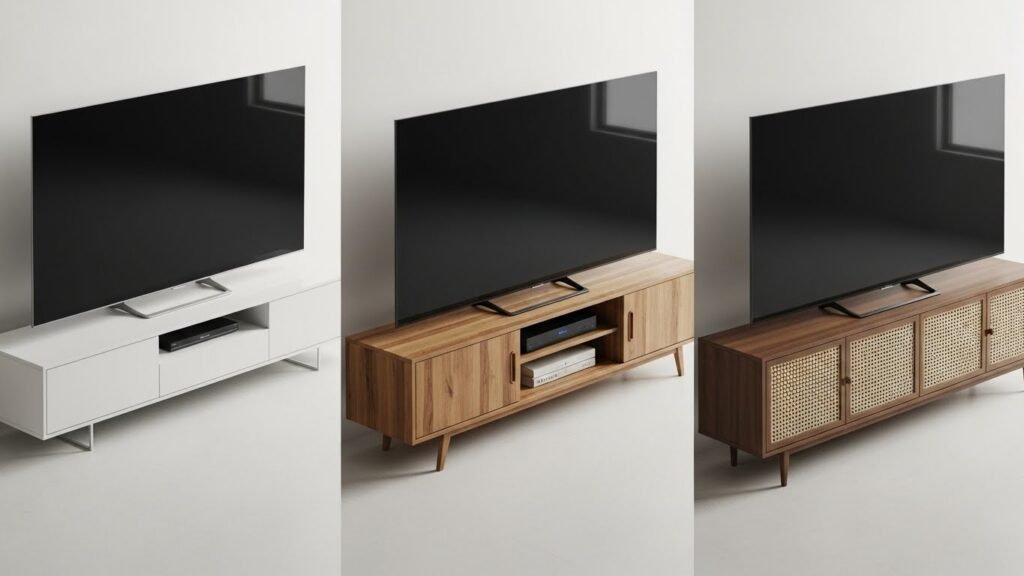
The journey toward a refined living room starts with the right furniture piece. Your TV stand choice dictates the rest of your design plan. It is all about finding the right balance between practicality and style. This initial decision is your biggest commitment to the final look.
Size and Design: Proportioning the Piece
Size matters, especially here. You must choose a TV stand that is wider than your television. This provides visual balance and space to display your accessories. A wider stand visually grounds the screen, preventing it from looking top-heavy or awkward.
If you have a smaller space, you should opt for a sleek, minimalist design. This ensures the piece does not overwhelm the area. For a touch of natural warmth, consider using wooden stands. They introduce lovely texture into the room, especially reclaimed wood paneling for a rustic feel. Conversely, a stand with a glass or metal frame can lend a modern minimalist or contemporary style feel.
| TV Screen Size (Diagonal) | Minimum Recommended Stand Width | Why It Matters |
| 55 inches | 58 – 65 inches | Allows space for objects and proper visual grounding. |
| 65 inches | 68 – 78 inches | Prevents the TV from looking too big for the stand. |
| 75 inches | 78 – 90 inches | Necessary for creating a balanced look and aesthetic flow. |
Functionality and Storage: Decluttering the Media Hub
The best TV stand includes smart storage. This is crucial for maintaining an organized look and keeping clutter out of sight. A stand’s storage capacity is just as important as its aesthetic appeal.
- Closed Cabinets: Perfect for stashing media components, extra cords, and gaming gear. They offer the best solution for hidden storage, keeping technological eyesores completely out of view.
- Open Shelves: Ideal for displaying curated items like a few carefully selected books or a stack of magazines. This allows you to show off your personality through accessories.
Make sure your stand provides sufficient space to house all your devices. Nothing ruins the aesthetic faster than a tangled mess of wires. Prioritize designs that offer built-in cable management channels.
Ergonomics and Height: Ensuring Optimal Viewing
You need to select a stand height that places the center of your TV at eye level when you are seated. This is vital for a comfortable viewing experience. If the TV is too high or too low, it can cause neck strain and fatigue.
A general rule of thumb for standard seating is that the bottom third of the TV screen should be at eye level. Always measure before you purchase. A tall stand combined with a wall-mounted TV can spell disaster for comfort, creating a setup that is far too high. This is a critical point for practicality.
Balancing the Room Layout and Seating
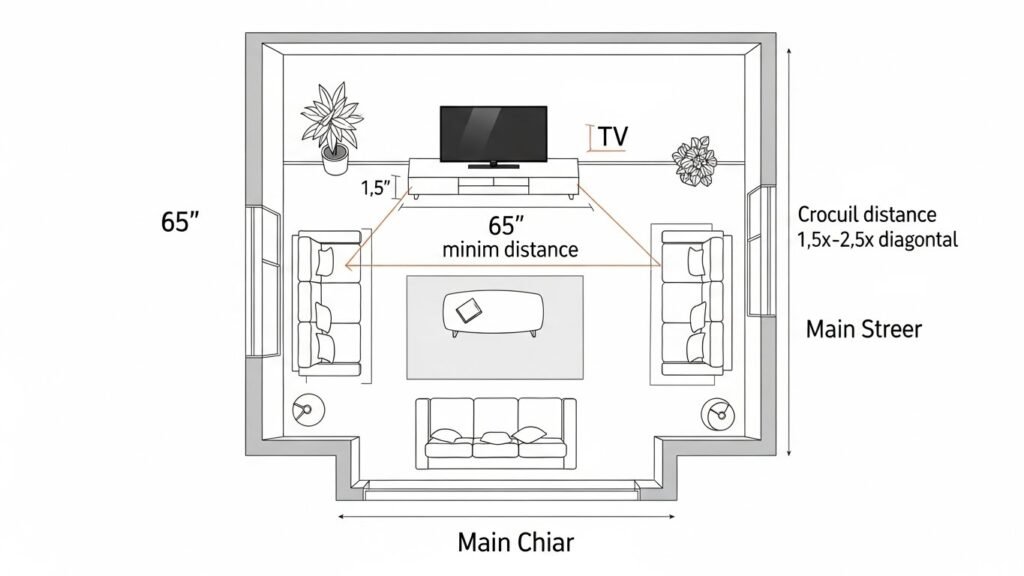
Once you have picked the perfect TV stand, the next step is positioning your furniture. A good layout ensures both aesthetic appeal and optimal functionality. Your seating arrangement must work with the TV as the focal point. This determines the overall flow and usability of your living room.
Seating Arrangement: Optimizing for Comfort and Conversation
The classic room layout involves placing seating in a U-shape or an L-shape facing the TV stand. This setup serves two main purposes in your living room design.
First, it creates the best viewing angles for everyone in the room. This ensures no one is stuck with a bad view. Second, it promotes conversation when the television is off. If you simply line all the chairs along one wall, you lose that sense of an inviting space. A successful arrangement encourages both social interaction and passive viewing.
- U-Shape: Best for larger rooms and encourages direct interaction across the space.
- L-Shape: Excellent for maximizing corner space while maintaining focus on the screen.
- Parallel: Placing a sofa directly opposite the TV with two accent chairs facing each other creates a symmetrical and organized look.
Proximity and Flow: Avoiding the Cramped Feeling
Ensure there is enough clear space between the TV stand and the seating. Cramming furniture together creates a confined or cramped feel. This compromises the comfort of your living room.
You need pathways that allow people to move easily through the living room. The furniture pieces should flow naturally into one another. Adding accent side tables or an ottoman should enhance, not obstruct, this flow. A good design maintains an open, airy feel, even in smaller spaces.
Crucial Distance Rule: Protecting Your Eyes
This is one of the most important rules for any entertainment space. Viewing a screen from too close or too far away can strain your eyes and diminish the picture quality. Getting this measurement right is non-negotiable for comfort.
The Golden Formula
Interior designers and eye doctors recommend keeping the distance between the seating and the TV within a specific range. You should aim for a distance that is $1.5 \text{ to } 2.5 \times$ the diagonal size of your TV screen. This ratio is tied to optimal visual acuity.
To illustrate this, we can look at common modern television sizes:
| TV Screen Size (Diagonal) | Minimum Distance (1.5x) | Maximum Distance (2.5x) |
| 55 inches | 82.5 inches (6.9 ft) | 137.5 inches (11.5 ft) |
| 65 inches | 97.5 inches (8.1 ft) | 162.5 inches (13.5 ft) |
| 75 inches | 112.5 inches (9.4 ft) | 187.5 inches (15.6 ft) |
Following this rule ensures optimal resolution and a truly immersive viewing experience. It is a simple way to combine the practicality of viewing with the seamless integration of your entire living room setup. This careful planning avoids common ergonomic mistakes.
Mastering the Art of Console and Wall Styling
Now that the foundation is set and your main furniture is placed, it is time to focus on the area immediately surrounding the screen. This is where you transform the TV space from functional to fabulous. We move from furniture placement to detailed surface and wall decor styling. The aim is to create a harmonious blend between the technological elements and your interior design.
Styling the Console Surface
The surface of your TV stand is premium real estate. It should showcase your style without becoming visually cluttered. This area needs to be styled with minimal decor to maintain a clean look. Think of the surface as a small stage for your favorite accessories.
Rule of Thumb for Console Decor
A good principle is to use items of varying height and texture on the TV stand. This prevents everything from looking flat. For example, pair a tall, slender glass vase with a stack of coffee table books. Keep the items weighted toward the ends of the stand. This leaves the central space open for viewing. It keeps the line of sight clear.
- Use three to five curated objects, adhering to the “Rule of Odds.”
- Incorporate contrasting materials like smooth ceramic vases against warm wood.
- Keep items low enough so they do not obstruct the screen or block remote sensors.
Solutions for Wall-Mounted TVs
If you have a wall-mounted TV, the space underneath still requires grounding. A low-profile bench or a floating console provides a necessary visual anchor. This prevents the TV from looking like it is just floating on the wall. The floating console is a great solution for modern minimalist spaces. You can style the surface the same way, focusing on minimal decor and a balanced look.
Building Custom Built-Ins and Bookcases
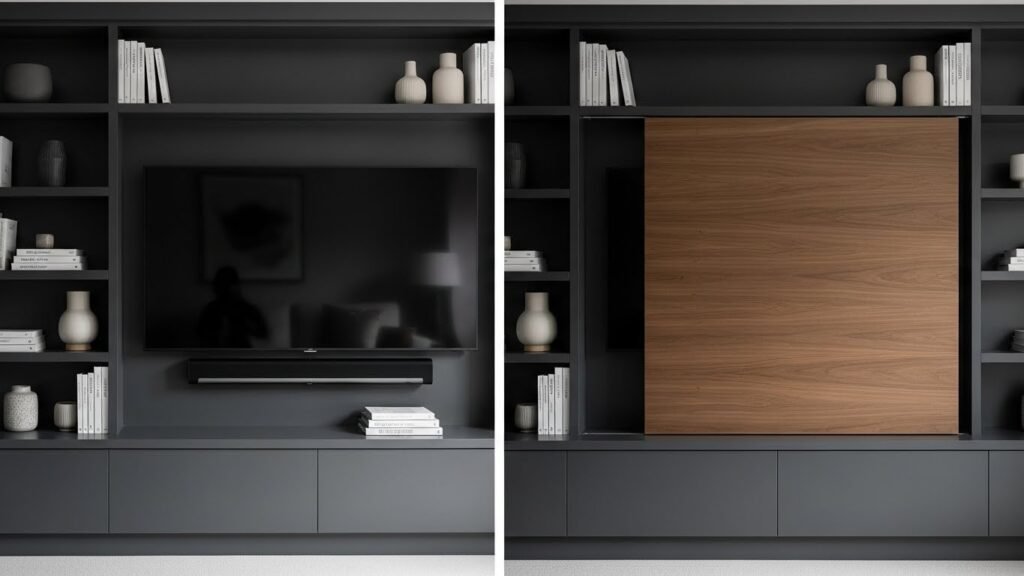
Moving beyond the stand, look to the vertical space on either side of the TV. Custom-built shelving is a powerful tool for integration. It turns the entire wall into a cohesive, architectural statement. This is a very popular technique in refined living room design.
Vertical Storage and Concealment
Built-ins offer the ultimate blend of style and functional storage. They frame the television, making it feel less like an intruder and more like a planned element.
- Display Shelves: Use open shelves to display carefully selected decorative objects, books, and framed photos. This adds layers of depth and personality.
- Hidden Compartments: Design closed cabinets below or above the screen to hide cables, electronics, and extra cords. This is a superior form of clutter management.
Creating a Seamless Look
For maximum seamless integration, paint the built-ins the same color as your surrounding accent wall or trim. This makes them truly look custom. For a truly organized look, consider installing a pocket or sliding door that can be pulled across to cover the screen entirely when not in use. This offers a practical solution to the “black box” problem.
Creating High-Impact Feature Walls
The wall directly behind the TV is your canvas for creating a dramatic statement. A strong background reduces the visual impact of the screen by providing more overall visual interest. This technique turns the area into a stunning area.
Feature Wall Material Deep Dive
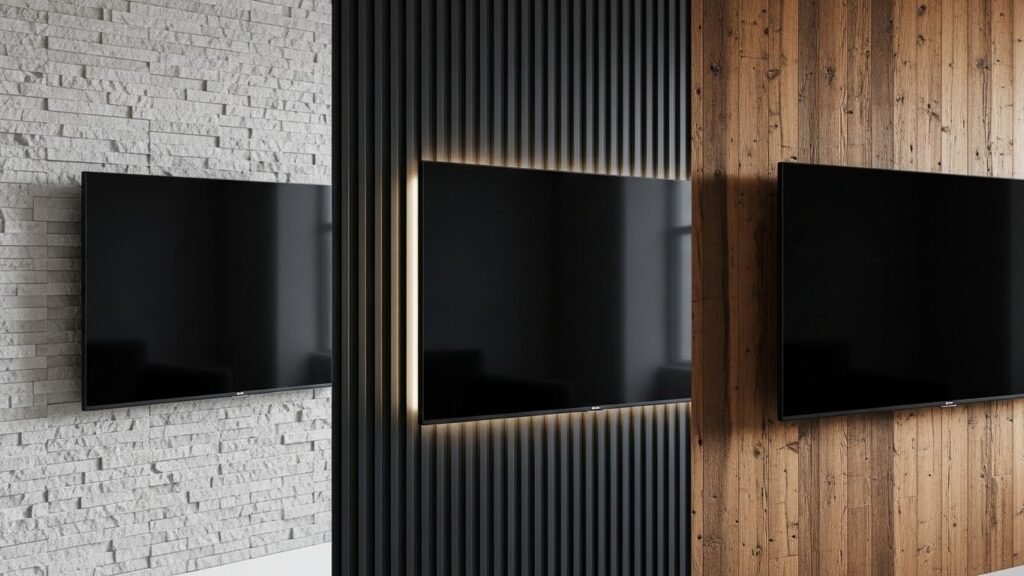
Choosing the right material transforms the wall into a focal point itself. This helps in achieving a sophisticated design.
- Stone Cladding: Using natural stone or brick creates a rustic, modern farmhouse feel and adds incredible texture.
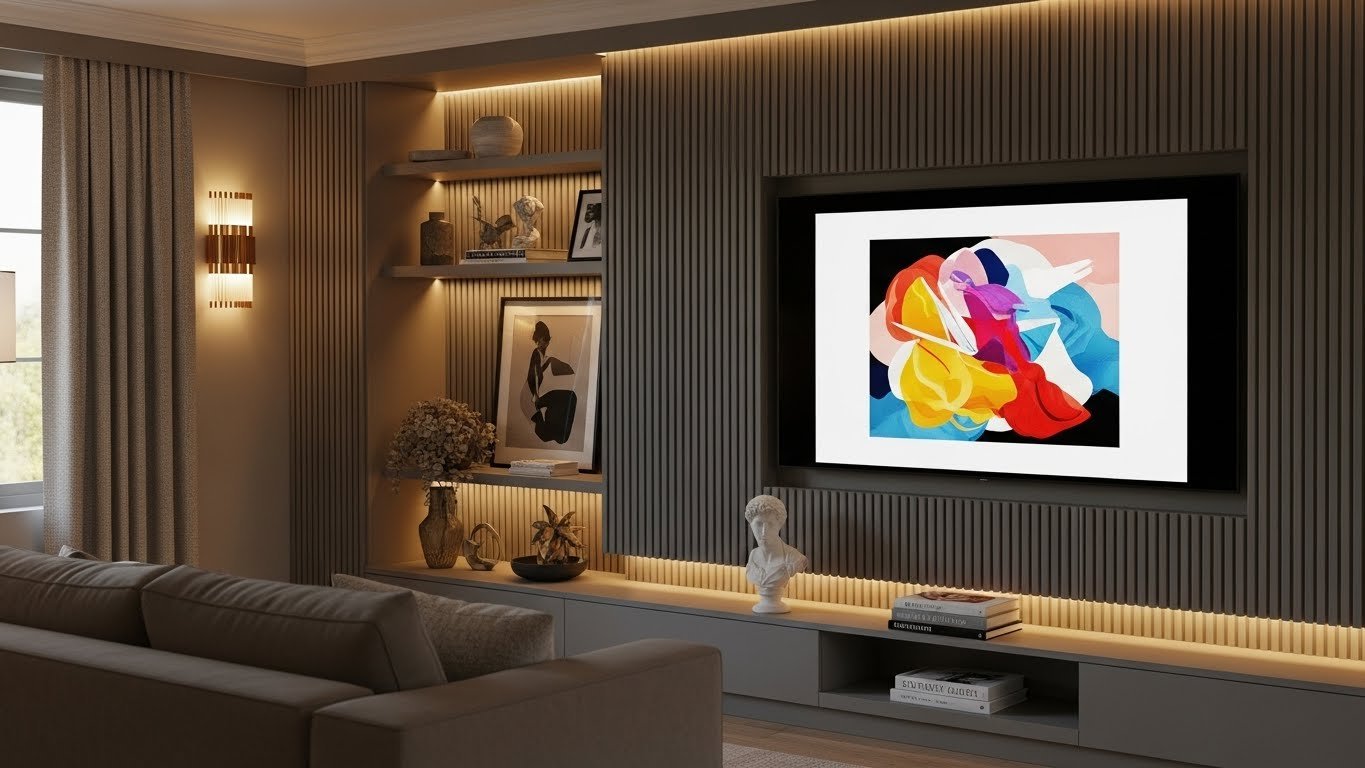
- Fluted Wall Panels: These panels offer a chic, contemporary look. Their vertical lines draw the eye upward, adding height to the room.
- Reclaimed Wood Paneling: Perfect for adding warmth and a unique, natural look. This gives an organic feel to the entertainment space.
Accent Lighting
To enhance your feature wall, incorporate LED backlighting. Installing LED strips behind the panels or around the edge of the screen adds a beautiful, soft warm glow. This backlighting also creates perceived depth and improves viewing comfort in a dark room. It lessens the contrast between the screen and the dark wall.
Gallery Wall Integration
A gallery wall is one of the best ways to frame a wall-mounted TV. The variety of shapes and sizes from the photos and frames helps the square screen blend into the overall pattern. This makes the TV feel like just another piece of oversized artwork. It is a fantastic camouflage technique.
- Cohesive Look: Use frames in a single material (e.g., black or gold) for a cohesive look, even if the artwork varies.
- Layouts: Try symmetrical layouts for a modern minimalist approach or staggered placements for a more transitional eclectic feel.
- The Frame TV: For the ultimate camouflage, the Frame TV is designed to display artwork when off, achieving near-perfect concealment.
This attention to the wall ensures that your TV area is not just functional but also a true highlight of your living room decor. Next, we will focus on the smaller, crucial accessories that complete the look.
Decorative Elements and Design Principles
The success of your TV area hinges on the small details. After sorting out the large structures like the wall and the stand, we focus on the accessories. These elements define your aesthetic and give the room personality. We will look closely at how to choose and arrange items effectively. This is where the intentional design truly shines through.
Curating Your Decorative Objects
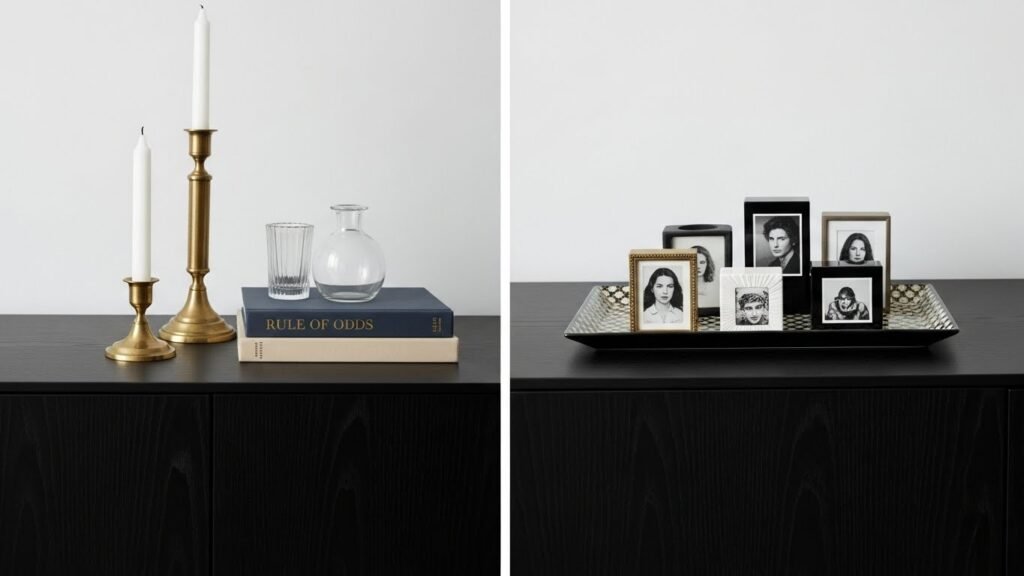
Placing decorative objects on the TV stand or shelving needs careful thought. It is easy for this space to become a dumping ground. Instead, treat it like a curated museum display. The goal is to use objects to achieve a visual interest that complements the technology.
The “Rule of Three to Four”
Using a limit of pieces is essential to avoid visual clutter. Too many objects look messy, and too few look sparse. Designers often suggest using the “Rule of Odds.” This means grouping items in sets of three or five. For a TV stand, keeping the total number of primary accessories between three and four usually works best. This ensures a minimal decor and organized look that won’t distract from the screen.
Playing with Dimension
Your objects should create visual interest by contrasting with each other. Don’t use four items that are all the same size. Play with shapes and height to add movement. A tall, thin candlesticks next to a small, round bust sculpture creates dynamic visual appeal. This variation keeps the eye moving and prevents the arrangement from looking static.
Stacking and Grouping
Stacking is a powerful tool for adding height without using large items. Start with a solid base like a coffee table book. Then, place a small ceramic vase or a decorative object on top. This elevates the smaller piece. Grouping smaller items on a beautiful decorative tray is also smart. This trick adds organization and introduces a new material or color to the arrangement, creating a defined zone for the accessories.
Working with Color, Material, and Style
The materials and colors you choose are the silent language of your interior design. They tell the story of your style, whether it is modern minimalist or transitional eclectic. Carefully selected textures and colors are key to a harmonious design.
Mix Textures for Warmth
Layering different textures creates an immediate feeling of depth and warmth. The tech elements are usually cold and smooth. You need to balance them with soft and rough elements to create a cozy atmosphere.
- Wood: Incorporate warm wood pieces, such as teak or walnut, for a cozy, organic feel. This balances the coldness of the screen.
- Woven Baskets: Use these for hidden storage or simply as decorative elements for a modern farmhouse texture near the console.
- Ceramic Vases: Select pieces with matte or textured finishes rather than glossy ones. These absorb light and add a nice contrast to the shiny screen.
Cohesive Palette and Tonal Harmony
Stick to a consistent color palette to keep the look harmonious and sophisticated. The accessories should not compete with the screen or the accent wall.
- The Minimalist Approach: If your style is contemporary minimalism, use neutral colors like gray, white, beige, and black. Pair these with subtle muted colors or soft tones, ensuring the colors are complementary and calming.
- Matching Accents: If your TV stand has metal hardware (like gold, silver, or copper), choose accessories that echo that metal. For instance, gold hardware pairs beautifully with yellow or cream decor, enhancing the room’s brightness. This trick ensures perfect cohesion between the furniture and the decor.
Thematic Styling: Mid-Century Modern Example
You can use the principles of color and material to lean into a specific theme. This gives your entertainment space a specific, intentional feel.
- For a Mid-Century Modern aesthetic, focus on retro design elements. This includes uniquely shaped furniture and geometric artwork. These pieces offer a nostalgic flair.
- Incorporate ’70s-inspired elements like a small old-school radio or brightly colored glass vases for a necessary pop of color. Mixing materials, such as combining warm wood with metal hairpin legs, is key here.
Integrating Accent Furniture
The space directly around your TV stand should not feel isolated. Accent furniture helps blend the entertainment space into the rest of the living room. These pieces add crucial layers of functionality and visual weight.
Functional Additions
Consider adding pieces that serve a purpose while enhancing the design. Side tables next to the sofa are perfect for table lamps. Ottomans or poufs are fantastic for extra seating or doubling as a footrest. These pieces help define the room layout and flow. Look for versatility in your accent furniture.
Material Harmony
The materials of these surrounding pieces must harmonize with your TV stand. A sleek, black console might look great next to a metal and glass coffee table. Conversely, a solid wooden stand would pair well with upholstered ottomans for added warmth and softness. Balance is key to ensuring the pieces look like they belong together.
Strategic Lighting Considerations
Lighting is essential for setting the ambiance and creating a sophisticated look. It provides a soft warm glow that makes the space cozy. We move beyond ceiling lights to specialized task and accent lighting, which directly impacts the viewing experience.
Creating a Layered Effect
Aim for a layered effect using a mix of different light sources. This prevents harsh shadows and adds depth to the room. Using three different sources (ambient, task, and accent) provides flexibility.
- Ambient Balance: Place floor lamps or table lamps on either side of the TV stand. This provides soft background light that balances the screen’s brightness, preventing eye strain.
- Functional Accents: Install wall sconces or hang pendant lights near the TV area. This adds architectural interest and focused light where you need it, often highlighting the built-ins.
- Anti-Glare Measures: Positioning the lights is crucial. Use soft, diffused lighting and position the fixtures to avoid any glare on the screen. Always test your lighting placement before committing.
Ambiance, Final Touches, and Troubleshooting
We have established the framework, built the backdrop, and curated the accessories. The final phase involves softening the space with natural elements, grounding the design with textiles, and addressing practical issues like wires and technological camouflage. These steps ensure a truly comfortable and functional environment.
Integrating Plants and Greenery
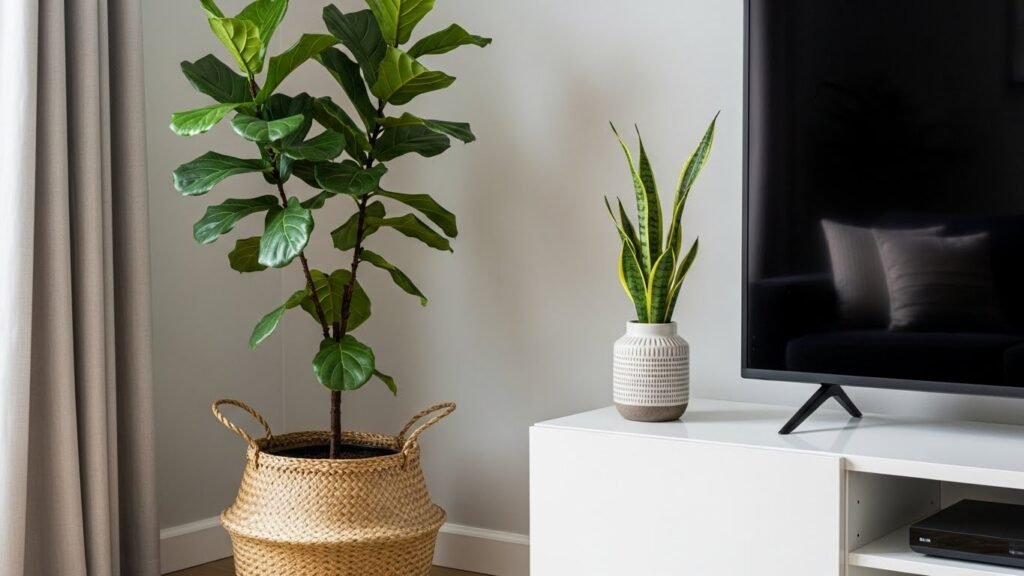
Bringing nature indoors instantly refreshes any room. Greenery is an effortless way to soften the cold, hard lines of electronics. It adds a fresh touch and an organic feel to your entertainment space.
Aesthetic and Health Benefits
Plants are essential for a harmonious design. They introduce vibrant color and living texture. Additionally, they naturally improve air quality, making your living room a healthier place. This is a simple, nature-inspired way to enhance the ambiance.
Placement Guide
Strategic placement of plants helps balance the height of the TV. You should mix sizes for maximum visual effect.
- Floor Plants: Place taller potted plants like fiddle leaf figs or rubber trees next to the TV stand. This adds verticality and framing.
- Console Plants: Use smaller succulents or ferns on the floating console or shelves. These introduce small bursts of color.
Maintenance Tips
If you do not have a green thumb, use high-quality faux plants or faux flowers. They offer the same visual benefits without the commitment. If you choose real plants, opt for low-maintenance plants like snake plants or pothos. They thrive in various light conditions and are a practical solution for busy homeowners.
Rug Selection to Define and Ground the Space
A rug is more than just flooring. It acts as the anchor for your entire furniture arrangement. It instantly defines the room layout and adds depth and warmth underfoot.
Defining the Zone and Sizing
The rug must be the right size to unify the seating area with the TV stand. A smaller rug will make the entire room feel disjointed.
- Crucial Rule: Select a rug that is large enough for all the front legs of your sofa and accent chairs to rest upon it. This ensures a unified look.
- Balance: If you have a large console or a bold feature wall, choose a rug with a subtle pattern. Conversely, a simple console can handle a more complex pattern or contrasting color to balance the visual weight.
Adding Personal Touches and Keepsakes
After the major elements are in place, the personal touches transform the house into a home. These items make the space cozy and reflective of your life.
- Reflecting Personality: Display meaningful keepsakes such as travel souvenirs or small family heirlooms. Place these items on your built-in shelving.
- Framed Elements: Use frames with photos or artwork that resonate with you. The style of the frames should complement the overall color scheme of the room.
Troubleshooting and Advanced TV Integration
Even the most beautiful design can be ruined by visible wires or outdated technology. These final checks ensure a truly seamless integration and a sophisticated design.
Hiding the Tech: Cable Management and Hardware Concealment
Nothing breaks the illusion of a polished look faster than a tangled mass of cords. Effective cable management is crucial for a clean organized look.
- Cable Solutions: Use plastic cable ties or fabric sleeves to bundle cords. For the best result, install raceways or channels behind the wall to completely hide the wires coming from a wall-mounted TV.
- Hardware Storage: Store media components like gaming consoles and routers inside the TV stand cabinets. This is the simplest form of hidden storage.
Achieving Visual Discretion
If your main goal is making the screen disappear when it is off, there are several advanced intentional design techniques:
| Technique | Description | Effect |
| Dark Wall | Paint the accent wall behind the TV in a deep navy, charcoal, or black shade. | The dark color absorbs the screen’s reflection, achieving effective camouflage. |
| Frame TV | Use a specialized Frame TV that displays high-resolution artwork or photos when in standby mode. | Transforms the screen into a framed picture, achieving near-perfect concealment. |
| Custom Panel | Use a rolling or pocket door (mentioned in Part 2) to physically hide the screen. | Provides a practical solution for complete concealment. |
Decorating Under a Wall-Mounted TV
A wall-mounted TV setup requires careful attention underneath to prevent the area from feeling top-heavy.
- Use a low floating console or bench to ground the space.
- Decorate the surface with minimal decor like books and a ceramic vase to provide visual balance.
Placement of Items Above the Screen
Generally, keep the space above the TV clear. However, if using built-in shelving, you can place a few items there.
- Safety and Aesthetics: Placing a lightweight floating shelf or a large, simple mirror (like a dramatic mirror) can work.
- Mounting Security: Ensure any shelves are securely mounted. Always choose minimal decor to prevent the space from looking top-heavy or distracting.
By addressing the design from the foundation to the smallest accessory and solving all technical issues, you have created a truly stunning area. Your living room is now an inviting space that reflects a sophisticated design and exceptional attention to detail.
Advanced Integration and Architectural Details
Integrating the television area requires looking beyond standard placement to consider specialized mounting, sound quality, and unique media solutions. These advanced techniques help achieve a truly customized and sophisticated design.
Specialized Mounting Solutions
While a wall-mounted TV is common, other mounting options can be essential depending on your room’s architecture and function. These specialized methods improve both flexibility and aesthetics.
Ceiling Mounts
In open-plan living spaces or lofts, a ceiling mount can be a game-changer. These mounts suspend the television from the ceiling, completely freeing up the wall space below. This is particularly useful where placing a TV stand against a wall would disrupt the flow or block windows. You must ensure that the ceiling structure can safely support the weight of the TV and the mount itself.
Articulating and Swivel Mounts
Articulating or swivel mounts allow the screen to be pulled away from the wall and tilted or rotated. This is a practical solution for viewing the screen from multiple seating areas within a large space, such as an adjacent kitchen or dining area. When not in use, the screen can be pushed back flush against the wall, minimizing its intrusion into the room’s aesthetic.
Acoustic Panel Integration
Sound is half of the entertainment experience. While a beautiful design is crucial, optimizing the acoustics ensures the room functions as a true media space.
Functional Sound Design
Hard surfaces like the stone cladding or fluted wall panels often increase echo and reverberation. Integrating acoustic panels around the TV area, particularly on the wall opposite the screen or on the ceiling, helps absorb sound. These panels are no longer strictly functional; they now come in decorative fabric finishes, unique shapes, and custom colors, allowing them to blend seamlessly with your interior design and enhance the texture of your feature wall.
Concealing Projectors and Retractable Screens
For homeowners who prefer a truly minimalist look or require a very large screen, a projector system is the alternative. However, the equipment must be concealed for a refined living room.
Projector Screen Solutions
A retractable projector screen can be housed in a small box or cassette installed directly into the ceiling. When not in use, the screen disappears completely, leaving only a smooth, finished surface. The mechanism is often hidden within the drywall for seamless integration.
Projector Concealment
The projector itself can be hidden in custom-built shelving behind a sliding panel or placed on a ceiling lift that lowers it into position only when needed. This preserves the minimalist decor and keeps the technology out of sight until showtime.
Decorating Adjacent to a Fireplace
The fireplace is another powerful focal point, and styling a TV nearby requires careful consideration of safety and symmetry.
Addressing Asymmetry
If your TV is placed on the wall next to the fireplace rather than above it, you create an asymmetrical layout. To balance the two dominant elements, use the TV wall for a built-in shelving unit that mirrors the height or scale of the fireplace mantel. Use metal wall sculptures or oversized artwork above the fireplace to balance the size of the TV on the adjacent wall.
Safety and Heat Concerns
Crucially, never place flammable accessories or delicate electronics too close to the fireplace insert. Ensure any decorative objects used on a mantel are heat-resistant. For TV placement near a working fireplace, always consult the manufacturer’s heat guidelines to prevent damage to the screen.
User Interface and Practical Organization
Modern living involves many small electronic devices. A sophisticated design must account for these items, ensuring they are functional yet aesthetically invisible.
Smart Home and Voice Assistant Concealment
Modern homes are full of discreet technology that still needs to be easily accessible.
- Voice Assistants: Place smart speakers or hubs on the lowest shelf of your built-in shelving or inside a stylish woven baskets on the floor near the console. They are often sensitive enough to hear commands without being overtly visible.
- Hubs and Chargers: Router boxes and smart home hubs should be placed inside a ventilated cabinet within the TV stand. Use grommets in the back of the cabinet for clean cable pass-through, maintaining an organized look.
Advanced Remote Control Management
Remotes are a universal source of clutter. Moving beyond simple baskets requires organization specific to the media area.
- Remote Caddies: Use sleek leather or wooden caddies designed to sit vertically on the console. Their height and material can enhance the decorative objects.
- Charging Stations: For rechargeable game controllers and universal remotes, integrate a small, covered charging station into a drawer of the TV stand. This allows charging out of sight, preventing the sight of stray cords.
- Universal Remotes: Investing in a universal remote control simplifies the hardware, eliminating the need to store multiple devices on the surface.
Budget, Rental, and Seasonal Solutions
A sophisticated design should be accessible to everyone, regardless of budget or housing situation. These tips focus on affordable, temporary, and dynamic decorating solutions.
Cost-Effective DIY Decor Ideas
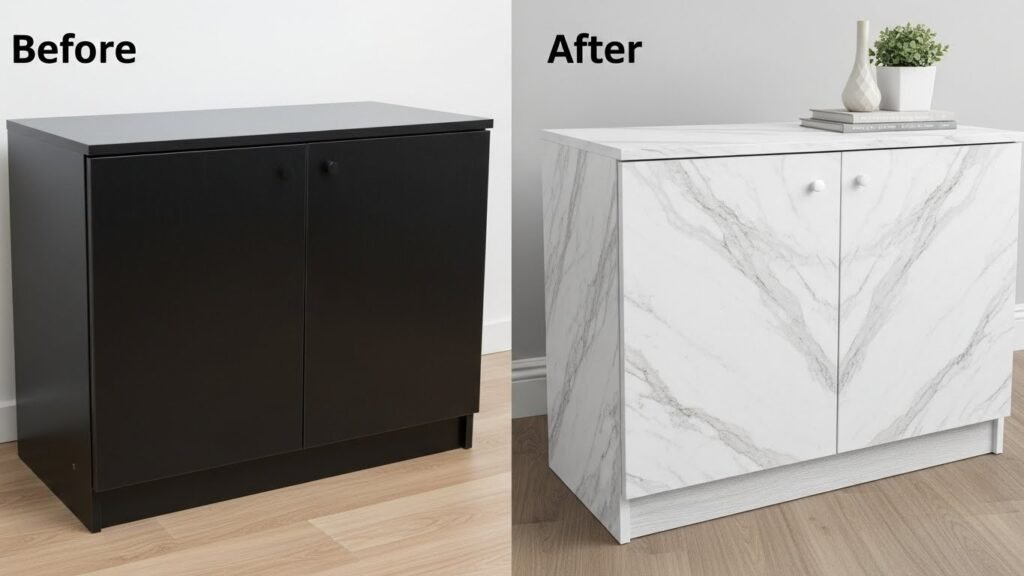
Achieving a high-end look doesn’t always require custom-built expenses.
- Console Upgrades: Use adhesive contact paper to cover an existing cheap TV stand, mimicking the look of marble, reclaimed wood paneling, or concrete for an instant visual upgrade.
- Gallery Wall on a Budget: Instead of expensive framed artwork, use printable art from online sources. Pair it with thrift store picture frames spray-painted a uniform color (like black or gold) to create a large-scale, cohesive gallery wall without breaking the bank.
- Faux Built-Ins: Use three affordable, matching tall IKEA bookcases. Place one on each side of the TV stand and one low cabinet underneath. Trim them out with simple molding and paint them the same color as the wall to mimic the look of custom built-in shelving at a fraction of the cost.
Rental-Friendly Decor Solutions
Renters must rely on non-permanent solutions that still create a dramatic statement.
- Temporary Feature Wall: Instead of paint or stone cladding, use removable peel-and-stick wallpaper for a temporary feature wall. This creates a bold color palette or texture that can be removed easily upon moving out.
- Decorative Screens: Use tall, folding decorative grids or screens to frame the TV area. These can be placed on either side of the console to create a defined zone without drilling into the wall.
- Heavy Drapes: Hang a curtain rod near the ceiling (use heavy-duty adhesive hooks if allowed) and use thick, patterned drapes to frame the TV. When closed, the curtains can act as a soft, textured covering, offering seamless integration.
Dynamic Seasonal Styling
The final step in having an inviting space is ensuring the decor evolves with the time of year.
- Seasonal Accessories: Change out the small decorative objects on the TV stand for each season. In autumn, use a glass vase filled with faux foliage and swap your blue decorative pillows for rich terracotta tones.
- Festive Greenery: Update your greenery choices. Swap out large potted plants for festive faux flowers or a small pine bouquet during winter. This adds a fresh touch without completely redesigning the core elements of the entertainment space.
Conclusion: The Art of Seamless Integration
Decorating around a TV stand is more than just arranging objects. It is about applying intentional design principles to solve a common modern problem: integrating technology into a cozy, harmonious space. By treating your entertainment center as a crucial focal point, you stop letting the large black screen dictate your living room’s aesthetic.
We started with the foundation, ensuring your TV stand and seating adhere to ergonomic rules for comfort and flow. We then moved vertically, transforming the background with feature walls, built-in shelving, and gallery walls to reduce the visual weight of the screen. Finally, we layered in textures, greenery, and lighting to add warmth and ambiance.
The result of this systematic approach is a refined living room that feels both sophisticated and practical. Whether you favor a modern minimalist look or a transitional eclectic style, the principles remain the same: careful planning, strategic concealment, and the use of curated decorative objects. Achieving this balanced look ensures your TV area is not an eyesore, but a beautiful, seamless part of your home. You have successfully turned a necessity into a stunning design opportunity.
Frequently Asked Questions (FAQs)
How can I decorate a corner TV stand?
Decorating a corner TV stand requires balancing symmetry in a tight space. Use a single, tall object (like a floor plant or a slender lamp) on one side of the screen to draw the eye up. On the opposite side, use a cluster of three lower items, such as stacked books and a small ceramic bowl. This triangular arrangement prevents the corner from feeling too cramped while still providing visual interest and a balanced look.
What is the ideal wall color to make a TV less noticeable?
Deep, saturated colors are best for minimizing the appearance of the black screen. Charcoal gray, deep navy blue, or even forest green walls help the TV blend into the background when it is off. These colors reduce the contrast between the black glass and the wall, providing a more seamless integration than a stark white wall would.
Should I put a mirror above or next to my TV?
Generally, placing a mirror directly above the TV is discouraged because it can reflect light sources and cause glare on the screen, ruining the viewing experience. However, placing a dramatic mirror on an adjacent wall or using a reflective accent piece on the opposite side of the room can help balance the visual weight of the console area without causing glare issues.
How do I hide the TV when I’m not using it?
Beyond custom built-in sliding panels, you can use specialized cabinet furniture called an “armoire” that is designed to conceal the television behind closed doors. Alternatively, you can use a decorative screen or a large, multi-panel room divider positioned in front of the TV when it is not in use for a practical solution.
What kind of lighting should I use for movie watching without glare?
Use indirect ambient lighting, often called bias lighting. This involves installing low-intensity LED strips behind the TV. This gentle glow reduces the strain on your eyes caused by the contrast between a bright screen and a dark room, enhancing the viewing experience without causing screen glare. Avoid placing bright lamps directly in front of or opposite the screen.
How do I incorporate a large soundbar into my decor?
If the soundbar is longer than the TV stand, it can look awkward. The best solution is often mounting the soundbar to the bottom of the wall-mounted TV so it moves with the screen. If it must sit on the console, make it look intentional by grouping it with low-profile decor (like a row of small books) to integrate it into the styling.
Can I hang family photos around a TV?
Yes, absolutely. Surrounding the TV with framed family photos creates a personalized gallery wall. Ensure all the frames have a similar color or style (e.g., all black or all wood) to maintain a cohesive look. Mix up the sizes of the frames to help the large rectangular screen feel like just another piece in the composition.
What is the best material for a TV stand to achieve a modern minimalist look?
For a modern minimalist aesthetic, choose a TV stand made of materials with clean lines, such as lacquered white wood, sleek matte black finish, or a combination of light wood and metal accents. These materials emphasize simplicity and functionality, promoting an organized look.
How do I hide large, bulky speakers near the TV?
If your speakers are too large to hide, treat them as part of the architecture. Place them symmetrically on either side of the TV stand. If they have fabric grilles, ensure the fabric color matches the accent wall. For a more sophisticated look, you can build custom cabinets or open shelving that integrates the speakers directly into the built-in system.
Should my TV stand be higher or lower than my fireplace mantel?
If the TV is mounted above the fireplace, it will naturally be higher than the mantel. However, if the TV and the TV stand are separate from the fireplace, the stand should typically be slightly lower than the mantel’s surface. This distinction prevents the room from feeling visually overwhelmed by competing horizontal lines and maintains a harmonious design.
What is the “Rule of Odds” and how does it apply to TV stand decor?
The “Rule of Odds” suggests that arrangements of objects in odd numbers (three, five, seven) are more aesthetically pleasing and memorable than even-numbered groupings. When styling a TV stand, grouping accessories in threes creates a visually dynamic and balanced look, often resulting in a stronger focal point.
How can I decorate a small, narrow TV stand surface?
When space is minimal, focus on height and function. Use a very small decorative tray to corral remotes and keys. Then, use one tall, slender vase or one stack of two books topped with a single decorative object. This keeps the decor minimal and the surface usable, preventing visual clutter in the confined space.
Are throw blankets and decorative pillows necessary near the TV?
While they don’t sit on the console, throw blankets and decorative pillows are essential for creating a cozy and inviting space. They introduce softness and textile textures (wool, knit, velvet) that contrast beautifully with the hard, tech-heavy elements of the TV area, significantly boosting the room’s ambiance.
How do I incorporate a gaming console into the design without clutter?
Gaming consoles, which often look bulky, should be housed inside the closed cabinets of the TV stand. Ensure the cabinet has proper ventilation to prevent overheating. Use universal remotes or controllers that don’t require line-of-sight if the cabinet doors must remain closed for a clean, sophisticated design.
Should the rug pattern match the artwork near the TV?
No, the rug pattern does not need to perfectly match the artwork. Instead, the colors in the rug and the art should share a few common tones from your established color palette. The rug provides texture and grounds the floor, while the artwork provides visual interest on the wall. They should complement each other, not duplicate one another.
