


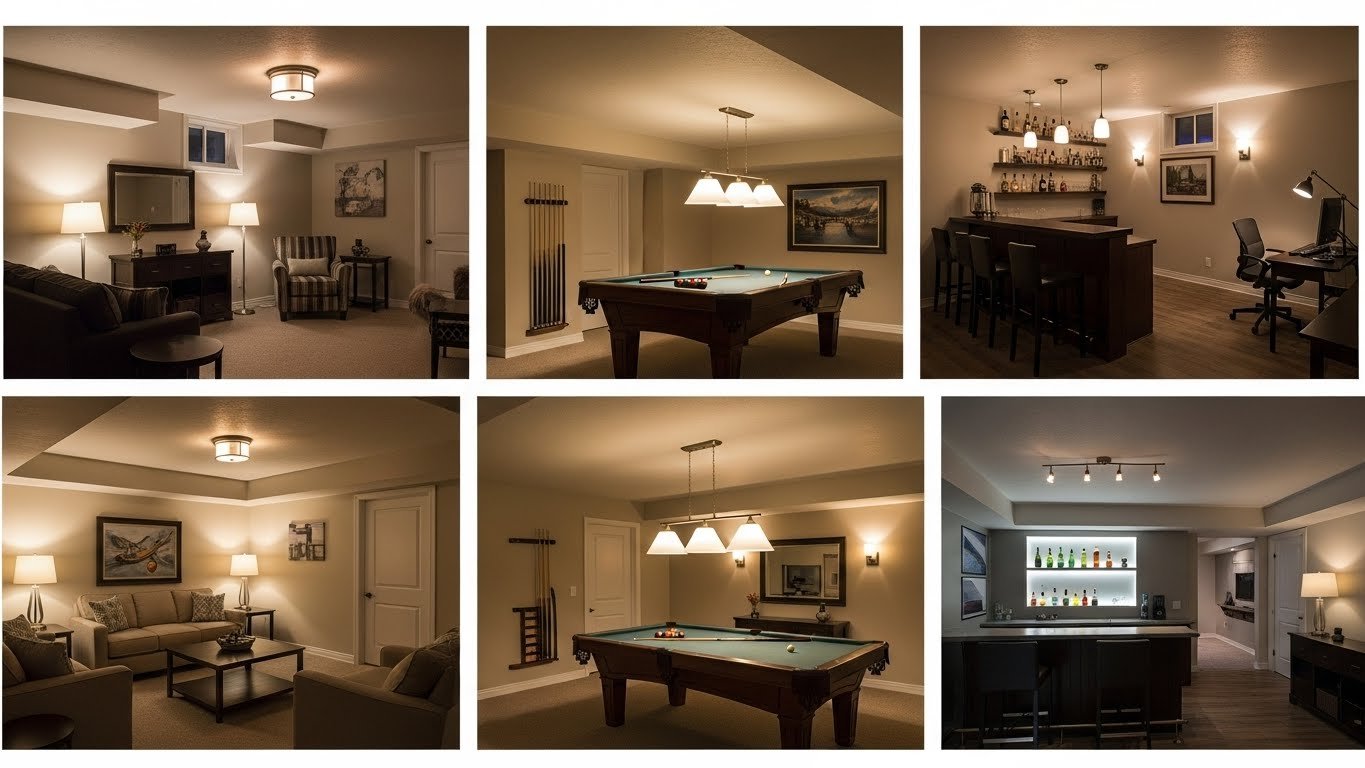
When it comes to basement renovations, one of the most impactful yet often overlooked elements is lighting. Basement lighting can transform a dark and uninviting space into a vibrant, warm, and functional area. With the right basement lighting decor tips, you can maximize your basement’s potential, whether you’re using the space for relaxation, work, or entertainment.
Lighting isn’t just about illumination; it’s about creating the right ambiance, mood, and functionality for every corner of your basement. Whether it’s your home cinema, game room, or a cozy lounge, effective lighting sets the tone and enhances every activity. The key to successful basement lighting lies in choosing the right combination of task, ambient, and accent lighting to meet your needs and style preferences.
The Basics of Basement Lighting
The Importance of Proper Lighting in a Basement
Basements often lack the natural light found in other rooms of the house, which can make them feel cramped, dark, and unwelcoming. Proper lighting addresses this issue by brightening up the space, adding a sense of openness and warmth. Here’s why proper lighting is essential:
- Enhanced Visibility: Good lighting ensures that every corner of the basement is well-lit, making the space more functional and safe.
- Mood Setting: Lighting has the power to change the atmosphere. A well-lit basement can feel cozy and inviting, while poor lighting can make it feel cold and isolated.
- Task Support: Whether you’re working, watching a movie, or enjoying a game night, lighting helps support specific activities by providing the right illumination for each task.
Types of Lighting for Basement Spaces
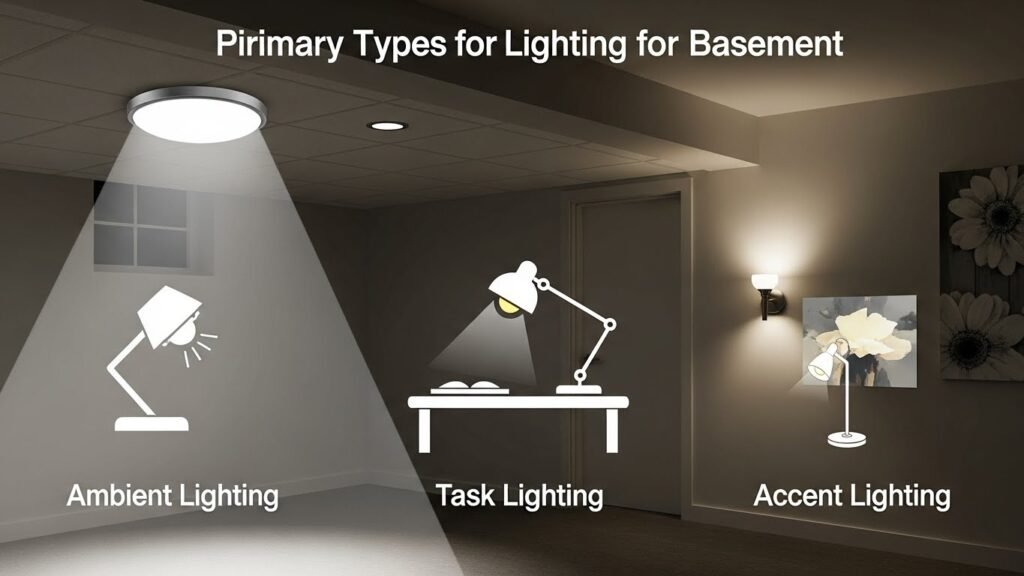
To create a well-lit basement, it’s essential to use different types of lighting that serve various purposes. The three main types of lighting are:
- Ambient Lighting: This is the primary source of light in any room. It provides general illumination, making it possible to see and move around the space. In basements, this is typically provided by recessed lighting, flush-mounted lights, or ceiling-mounted fixtures.
- Task Lighting: Task lighting is focused on specific areas where activities like reading, working, or cooking take place. Table lamps, desk lamps, and under-cabinet lighting are popular choices for task lighting in basements.
- Accent Lighting: This type of lighting adds a decorative element to your basement. It highlights certain features, such as artwork or architectural elements, and adds visual interest. Wall sconces, track lighting, and LED strip lights work well as accent lighting in a basement.
Determining the Purpose of Each Basement Area
Before selecting lighting, it’s important to define the purpose of your basement. Is it a home office, a game room, a home cinema, or a workout space? Each area will need different lighting solutions to function at its best.
For example:
- A home theater area will need dim, soft lighting that doesn’t interfere with the screen.
- A workout space needs bright, focused task lighting to ensure safety and functionality.
- A seating area or bar may benefit from a mix of ambient and accent lighting to create a warm, inviting environment.
Lighting zones are important here: divide the basement into sections based on the activities you’ll do in each area.
Lighting Fixture Ideas for Basements
When choosing fixtures, consider both aesthetic appeal and functionality. Different types of fixtures work best for different needs, and selecting the right one can make a huge difference in how your basement feels.
Pendant Lighting for Statement and Style
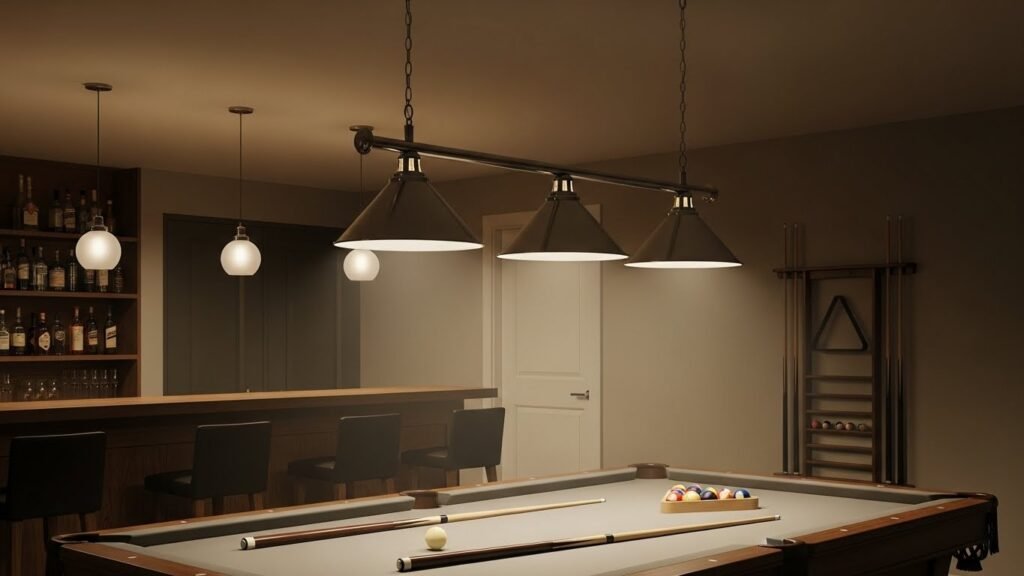
Pendant lights are perfect for creating a statement. Hanging fixtures add visual interest and are especially great in areas with higher ceilings. Here’s how you can use them:
- Game Rooms and Bars: Pendant lighting works wonders over pool tables or bars, providing focused illumination where you need it most.
- Modern Touch: Whether you choose a contemporary design or an industrial-style pendant light, this fixture can serve as a bold statement piece that also functions as task lighting.
Recessed and Surface-Mounted Ceiling Lights
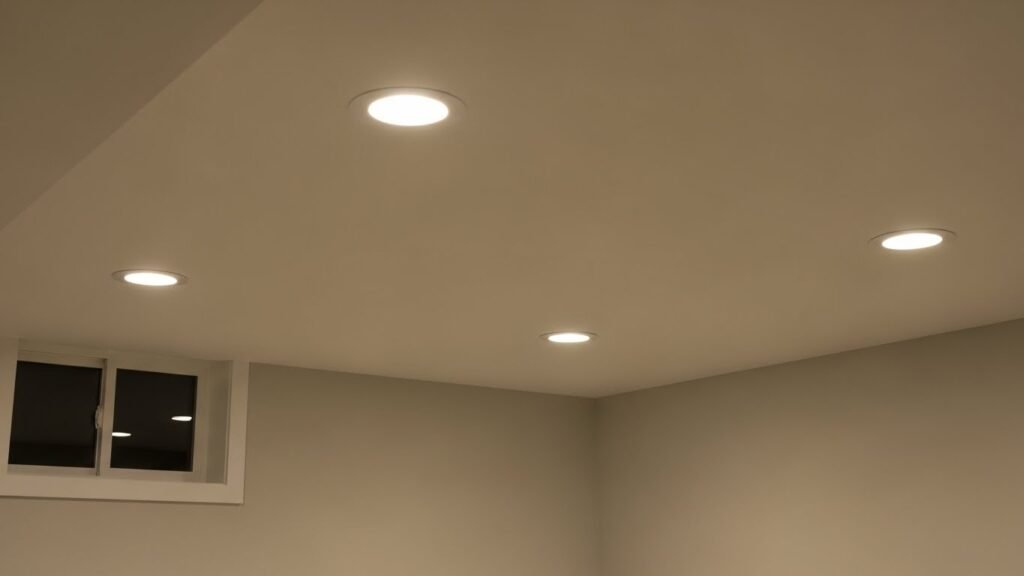
Both recessed lighting and surface-mounted lights are ideal for general lighting in your basement.
- Recessed Lighting: These lights are installed into the ceiling and can be used to create a sleek, modern look. They are perfect for low-ceiling basements where you want to save space while still providing bright illumination.
- Surface-Mounted Lights: These are ideal if you have slightly higher ceilings or want a more decorative option. They provide an even distribution of light, which is perfect for a basement remodel.
Wall Sconces for Elegance and Function
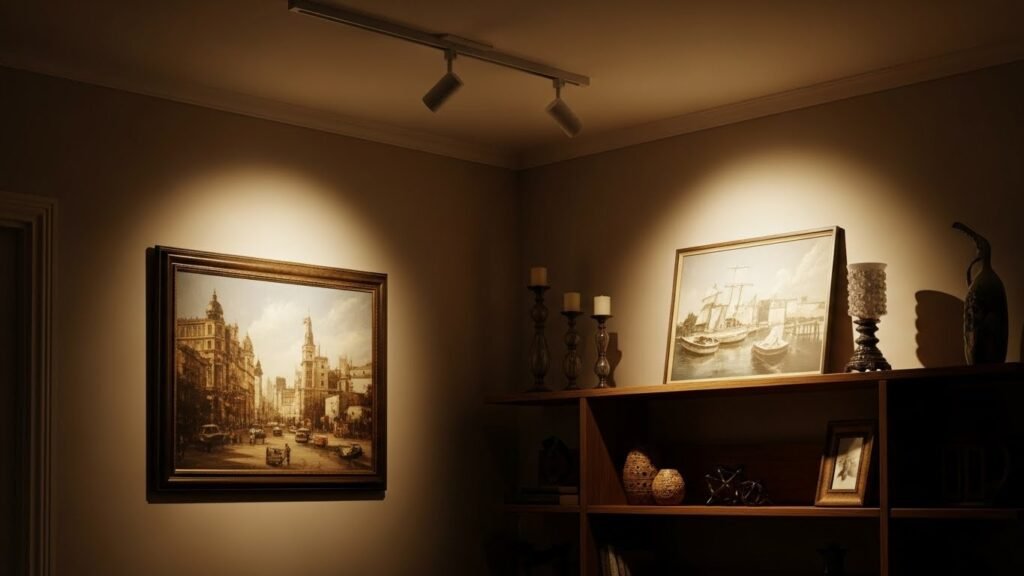
Wall sconces add style and functionality to a basement. They are perfect for hallways, stairs, or seating areas. These lights offer ambient light while also highlighting architectural elements or artwork.
- Use adjustable sconces for flexible lighting in reading corners or above furniture.
- For a modern aesthetic, choose sconces with sleek metallic finishes or frosted glass for a soft, diffused glow.
Chandeliers and Statement Ceiling Lights
If your basement has the ceiling height to accommodate them, chandeliers can add an element of luxury and elegance. Whether you go for a classic design or a contemporary chandelier, these fixtures can create a stunning focal point.
- Modern Chandeliers: Perfect for entertainment areas, bar zones, or even game rooms, chandeliers illuminate large spaces while also adding decorative flair.
- Multi-tiered chandeliers: These can create a dramatic effect in larger basements, elevating the space and adding sophistication.
Specialty Lighting Ideas
Beyond the basics, specialty lighting can elevate your basement’s atmosphere and provide unique functions. Here are some specialty lighting options that can add character and convenience to your basement:
Industrial-Style Lighting for a Trendy Basement
Industrial-style lighting is characterized by exposed bulbs, metal accents, and raw finishes. This type of lighting works well in basements with an urban or modern design.
- Exposed Bulbs and Metal Finishes: These fixtures create a bold, masculine look that works well in game rooms, bars, or workshops.
- Track Lighting: Flexible and adjustable, track lighting allows you to direct light where you need it, making it a great option for basements that require versatile lighting.
LED Strip Lights for Ambient and Accent Lighting
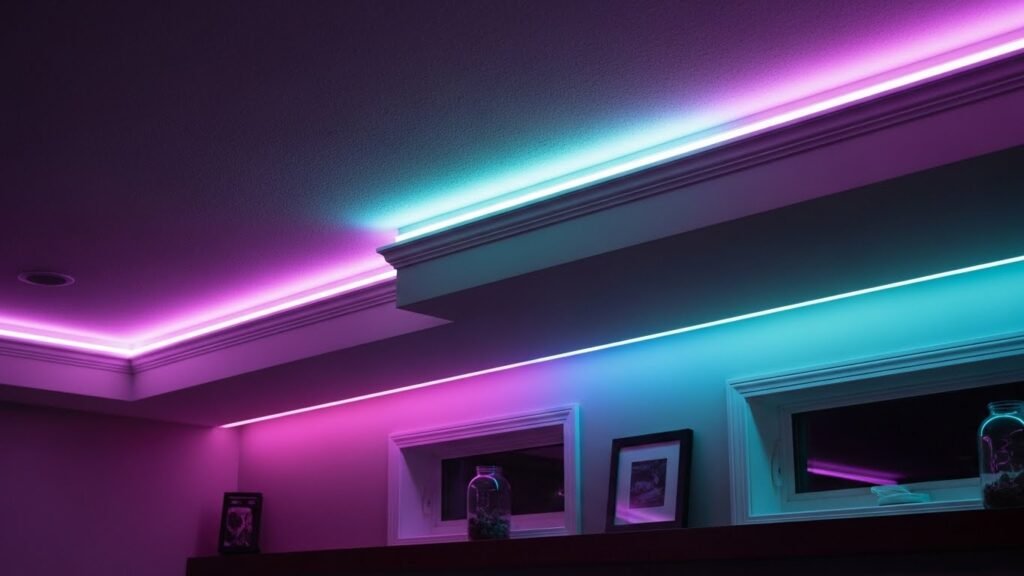
LED strips are an excellent choice for basements because they are flexible, affordable, and can be used in a variety of ways. You can install them in various places to create a soft ambient glow or provide focused accent lighting.
- Under-cabinet lighting: Perfect for kitchenettes or bars, LED strips can illuminate your countertops without taking up any space.
- Accent Lighting: Use LED strips along ceilings, floors, or shelves to highlight architectural features, artwork, or décor.
Lighting for Specific Basement Areas
Now that we’ve covered the basics and lighting fixture ideas, it’s time to focus on how to light up specific zones in your basement. Whether it’s for entertainment, storage, or functional workspaces, each area requires its own tailored lighting approach.
Basement Home Theater Lighting
Creating the perfect home theater atmosphere starts with the right lighting. You don’t want bright overhead lights competing with your screen, but you also don’t want to sit in the dark where it’s difficult to navigate. Here’s how to balance both:
- Ambient Lighting: Use soft indirect lighting like LED strip lights along the walls or behind the screen for a gentle glow. This prevents eye strain during long viewing sessions.
- Task Lighting: If your theater includes a bar area, ensure there’s sufficient lighting for drinks or snacks without distracting from the screen. Pendant lighting works well here.
- Accent Lighting: Highlight features such as artwork or the surround sound system with wall sconces or track lighting. It adds to the cinema-like atmosphere without overwhelming the space.
Game Room Lighting
Lighting in your game room needs to be functional and fun. You’ll likely want bright, focused lighting to keep things lively but also mood lighting for relaxed gaming nights. Here’s how to balance both:
- Task Lighting: Install pendant lights or track lights over game tables or pool tables to provide focused lighting for activities that need clarity.
- Ambient Lighting: Use recessed lighting for general illumination, but ensure it’s adjustable. This allows you to dial down the brightness when you’re watching movies or playing games.
- Accent Lighting: Add LED strips along the floor or around the ceiling to give the room a fun, futuristic vibe. Change colors for different games or moods with RGB LED lights.
Basement Bar Lighting
A basement bar is all about creating a warm, inviting space for entertaining guests. The right lighting helps define the area and ensures your bar is functional for both relaxing and mixing drinks.
- Ambient Lighting: Use flush-mount or semi-flush mount ceiling lights to create a balanced glow throughout the area.
- Task Lighting: Install pendant lighting directly over the bar counter for focused light that helps with tasks like pouring drinks or preparing snacks.
- Accent Lighting: Use under-cabinet lighting or shelving lights to showcase bottles, glassware, or other decorative items. LED strip lights under the bar also add an atmospheric glow.
Basement Office Lighting
If you’re setting up a home office in your basement, you’ll need good task lighting to ensure productivity while keeping the space bright and welcoming.
- Task Lighting: Use desk lamps with adjustable arms to direct light exactly where you need it for reading or working on the computer.
- Ambient Lighting: Incorporate recessed lighting or surface-mounted lights for general illumination, but avoid harsh lights that cause glare.
- Accent Lighting: Add some wall sconces or table lamps to give the office a cozy, inviting feel.
Multi-Purpose Basement Lighting
Many basements serve more than one function, like a living space that doubles as a playroom, office, or guest bedroom. To make this work, you need adaptable lighting that can be customized based on the activity.
- Layered Lighting: Use a combination of ambient, task, and accent lighting to create a balanced space that’s ready for anything.
- Smart Lighting: Install smart bulbs and dimmers that can easily change the lighting setup depending on whether you’re watching TV, working, or hosting guests.
- Lighting Zones: Divide the room into different zones with specific lighting for each area. Use track lights or wall-mounted fixtures to focus light on individual spaces.
Energy-Efficient Lighting Solutions
In today’s world, energy efficiency is not only a budget-friendly option, but it’s also important for the environment. When designing your basement lighting, consider energy-efficient options that reduce both electricity usage and the frequency of bulb replacements.
Benefits of Energy-Efficient Lighting
- Lower Energy Bills: LED lights use significantly less power than traditional incandescent bulbs.
- Longer Lifespan: LED bulbs last up to 25 times longer, saving on replacements and maintenance.
- Environmentally Friendly: Reduced energy usage means fewer carbon emissions, helping you contribute to environmental sustainability.
Top Energy-Efficient Lighting Options
- LED Recessed Lights: These are great for ambient lighting in low-ceiling basements. They use minimal energy and still provide ample brightness.
- LED Strip Lights: Ideal for accent and ambient lighting, these strips can be placed in numerous areas around the basement, offering great flexibility with low energy consumption.
- Smart LED Bulbs: These bulbs allow you to control the brightness and color temperature from your phone or voice assistant, further optimizing energy use.
Maximizing Lighting Efficiency
- Install Dimmer Switches: A smart dimmer switch can help adjust the brightness of your lights. This helps save energy when full brightness isn’t necessary.
- Use Motion Sensors: For areas like hallways or storage rooms, use motion-sensor lights to ensure the lights are only on when needed.
- Task-Specific Lighting: Use focused task lighting instead of overhead lights to avoid wasting energy. For example, use a desk lamp for reading or a pendant light for the bar area.
Smart Lighting and Automation for Basement Lighting Control
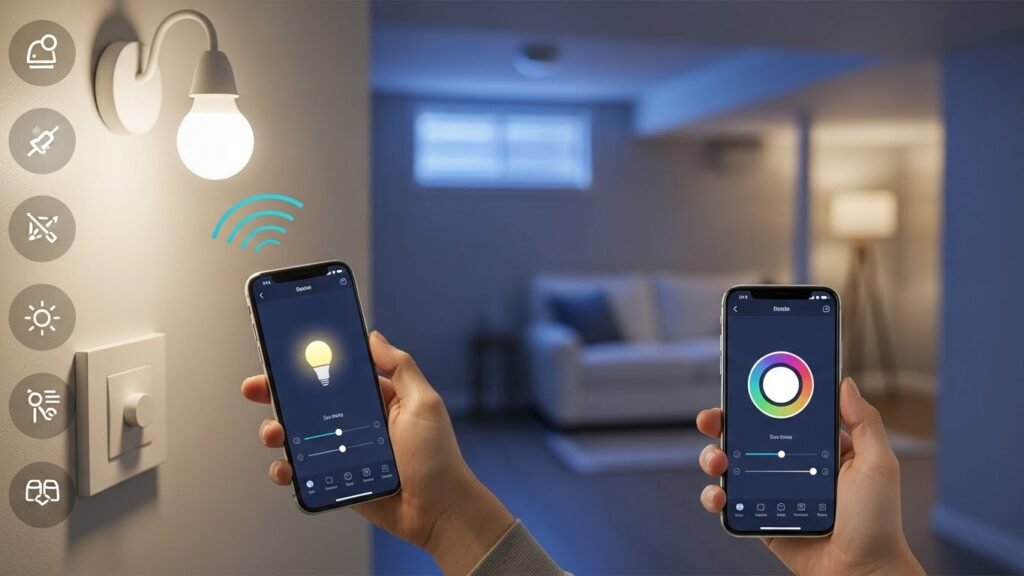
Incorporating smart lighting systems into your basement lighting design gives you the ultimate control over your space. You can adjust lighting intensity, color, and even create automated lighting schedules without ever touching a switch.
Benefits of Smart Lighting in Your Basement
- Convenience: With smart bulbs, you can control your lights from anywhere using your smartphone or voice commands.
- Customization: Set lighting scenes for different activities, such as movie nights, reading sessions, or entertaining guests.
- Energy Efficiency: Smart lighting systems help you control when lights turn off or dim, saving energy and money.
Types of Smart Lighting Solutions
- Smart Bulbs: Replace regular bulbs with smart bulbs to control brightness, color temperature, and even schedule them to turn on/off at set times.
- Smart Plugs: Use smart plugs to control traditional lamps or lights. With a smartphone app or voice assistant, you can switch lights on or off remotely.
- Smart Dimmers: For ultimate flexibility, install smart dimmers that let you control the lighting intensity for various activities.
Lighting for Mood and Atmosphere
Lighting is not just about visibility; it’s about creating the right atmosphere for the room’s function. The mood you want to set can be controlled by how you position and adjust your lighting.
Lighting for Relaxing Spaces
- Soft Lighting: Use warm LED bulbs and recessed lighting to create a calm, inviting ambiance. A dimmer switch can help adjust the light to match your mood.
- Adjustable Lighting: Dimmers allow you to adjust the lighting level to suit the activity or mood. For a relaxing evening, dim the lights to create a cozy, intimate setting.
Lighting for Activity Zones
- Bright Lighting: In areas where you work or engage in activities like games, use bright, focused lighting such as task lamps or pendant lights.
- Task Lighting: Use adjustable floor lamps and desk lamps to direct light where it’s most needed.
Lighting for Small and Large Basements
Lighting strategies will differ depending on the size of your basement. A large basement might need more ambient lighting and multiple light sources to create an even glow, while a small basement might benefit from focused or layered lighting to maximize the available space.
Lighting for Large Basements
Larger basements often have high ceilings or extensive open areas, which can lead to uneven lighting distribution. Here’s how to light them up effectively:
- Use of Layered Lighting: Large spaces benefit from ambient, task, and accent lighting. Make sure to incorporate recessed lighting for an even base glow, and complement it with pendant lights or track lighting in specific zones.
- Strategic Lighting Placement: Divide the basement into smaller lighting zones. For example, the bar area can have pendant lights, while the seating area can use floor lamps or wall sconces for more ambient light.
- Ceiling-Mounted Fixtures: To handle large spaces, use flush-mount or semi-flush-mount lights for general illumination. These can cover vast areas while not obstructing the view or making the ceiling appear lower.
Lighting for Small Basements
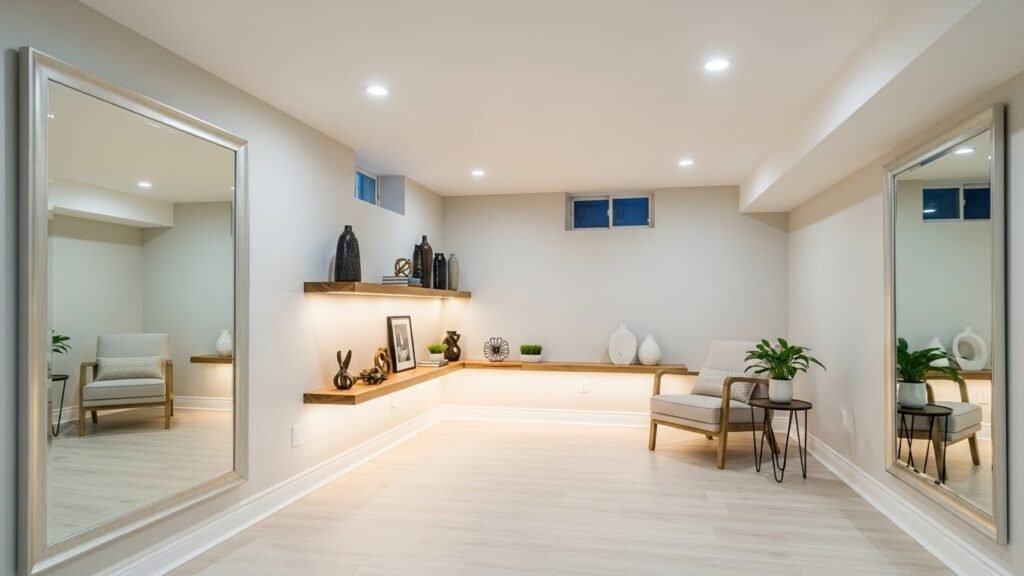
Small basements can feel cramped if over-lit, but they can also appear too dark if poorly lit. The key to lighting smaller spaces is creating the illusion of space while ensuring the room is functional.
- Use Bright, Focused Lighting: For small spaces, focus the lighting to avoid an overwhelming feel. Recessed lighting or under-cabinet lighting are great options as they provide bright, focused light while keeping things from looking cluttered.
- Avoid Cluttered Fixtures: In smaller spaces, avoid bulky chandeliers or large pendant lights that take up too much space. Opt for wall-mounted sconces or track lighting for versatility and style without overwhelming the room.
- Vertical Lighting: Install wall sconces or pendant lights that direct light upward, creating the illusion of height and space.
- Smart Placement: Place furniture and fixtures in a way that maximizes the light distribution. Keep light sources away from walls or corners where they may not reach the entire room.
Lighting Challenges and How to Overcome Them
While lighting can enhance any basement, it comes with its own set of challenges. Whether you’re dealing with small spaces, low ceilings, or inadequate natural light, these issues can affect how effectively you light your basement. Fortunately, there are simple strategies to overcome these obstacles and still achieve great results.
Lighting for Small Basements
Small basements often feel cramped and underlit, especially if they lack windows or natural light. Here’s how to make the most of the space and ensure your lighting works for you:
- Bright, Focused Lighting: For small spaces, focus the lighting to avoid an overwhelming feel. Recessed lights and under-cabinet lighting are great options as they provide bright, focused light while keeping things from looking cluttered.
- Use Reflective Surfaces: Mirrors and reflective surfaces, like glass or metallic finishes, help bounce light around the room and make it feel larger.
- Vertical Lighting: Install wall sconces across from windows or lighting fixtures to reflect light and make the room appear larger. This simple trick helps brighten the space without adding extra fixtures.
Lighting for Low Ceilings
Basements with low ceilings can be tricky to light, as many fixtures may end up obstructing the view or crowding the space. Here’s how to solve this:
- Use Flush or Semi-Flush-Mounted Lights: These fixtures sit closer to the ceiling, avoiding clutter while still offering adequate lighting. They work well in smaller or low-ceiling rooms.
- Recessed Lighting: Ideal for low ceilings, recessed lighting can blend seamlessly into the ceiling, providing ambient light without taking up vertical space.
- Avoid Large Fixtures: Steer clear of chandeliers or oversized pendant lights, which can make the ceiling feel even lower.
Dealing with Lack of Natural Light
Many basements have minimal natural light, making it difficult to keep the space bright without relying entirely on artificial lighting. Here’s how to maximize artificial light and boost the natural light you do get:
- Maximize Egress Windows: If your basement has egress windows, consider enlarging them or adding more windows to increase the flow of natural light.
- Use Sun Tunnels: A sun tunnel or light tube is an excellent option for bringing daylight into windowless spaces. It channels natural light from the roof into your basement.
- Strategic Mirror Placement: Mirrors placed across from windows or lighting fixtures reflect light and make your space feel more open and brighter.
Final Thoughts on Basement Lighting Decor Tips
By now, you’ve learned a variety of basement lighting decor tips that cover everything from functional task lighting to creating the perfect ambiance with accent lighting. It’s clear that a thoughtful lighting design can make all the difference in transforming your basement into a beautiful, practical space. Here’s a quick recap of the most important tips:
Key Takeaways
- Layer Your Lighting: A combination of ambient, task, and accent lighting is key to creating a balanced and well-lit basement. Make sure to incorporate all three to address the varied needs of the space.
- Use the Right Fixtures: Choose pendant lights, recessed lighting, track lights, and wall sconces based on your basement’s design and functional areas. Ensure that fixtures match the overall aesthetic and size of the space.
- Adapt Lighting to the Room’s Purpose: Different zones of your basement will require different lighting solutions. For example, the home theater area should have soft, indirect lighting, while a workout area needs bright, focused task lighting.
- Maximize Energy Efficiency: Make your lighting more eco-friendly with LED bulbs, motion sensors, and smart lighting systems that allow you to control brightness and energy consumption.
- Decor and Lighting: Lighting doesn’t just serve a functional purpose; it also enhances the style of your basement. Use accent lighting to highlight artwork or architectural features, and select smart bulbs or dimmers to set the mood for various activities.
Lighting Installation and Cost Considerations
Once you’ve planned out your lighting, the next step is installation. While many lighting fixtures can be easily installed by DIYers, some may require professional assistance. Here are a few things to keep in mind when it comes to installation and budgeting for your basement lighting:
Do-It-Yourself vs. Professional Installation
- DIY Installation: Many simple light fixtures (like pendant lights, table lamps, and floor lamps) can be installed by homeowners themselves. For LED strip lights or under-cabinet lighting, you can follow easy installation guides that come with the product.
- Professional Help: If you plan to install recessed lighting or smart lighting systems that involve electrical work, it may be worth hiring a professional. This is especially important for high-ceiling installations or when extending electrical wiring for additional outlets or fixtures.
Lighting Costs and Budgeting
- Fixture Costs: Basic lighting fixtures like flush mount lights or sconces can range from $20 to $200 depending on design and material. Chandeliers and pendant lights typically fall between $100 to $1,000+.
- Installation Costs: Professional installation costs will vary depending on complexity. Expect to pay around $100 to $250 per hour for an electrician.
- Energy-Efficiency Savings: LED bulbs may cost more upfront, but they last much longer and use significantly less energy, saving you money on your electric bills in the long term.
Cost-Effective Lighting Tips
- Use Dimmer Switches: These are affordable and can help you save on energy while giving you full control over the lighting mood.
- Invest in Smart Lighting: While smart bulbs may seem expensive, their versatility and energy efficiency pay off over time.
- Prioritize Key Areas: Focus your budget on lighting areas that need the most attention, like work zones or entertainment areas. Other spaces can rely on simple ambient lighting.
Conclusion
Incorporating the right basement lighting decor tips can completely transform your basement from a dark, unused space into a bright, functional, and stylish part of your home. Whether you’re lighting a home theater, game room, or multi-purpose space, the right lighting enhances both the look and feel of the room.
- Layer your lighting by using a mix of ambient, task, and accent lighting for a well-balanced effect.
- Choose energy-efficient lighting solutions, like LEDs and smart bulbs, to save money and energy.
- Don’t forget to integrate lighting with your decor and furniture placement for maximum impact.
- Always consider the functional needs of the space when planning your lighting—different zones will require different types of light.
By following these basement lighting decor tips, you’ll create a space that is not only well-lit but also welcoming, functional, and stylish. The right lighting is key to making your basement a space that you’ll want to spend time in.
FAQs on Basement Lighting Decor Tips
What are the best lighting options for a basement with low ceilings?
- For basements with low ceilings, the goal is to keep the space feeling open and unobstructed. The best options include flush-mounted lights or recessed lighting, which provide illumination without taking up vertical space. Track lighting can also be a good choice, as it’s adjustable and can be placed along the ceiling for a modern look.
How can I make a dark basement feel brighter without adding too many light fixtures?
- To make a dark basement feel brighter without adding excessive fixtures, focus on reflective surfaces. Consider placing mirrors opposite light sources to bounce light around the room. Additionally, use light-colored walls and ceilings to reflect light, and incorporate LED strip lighting along edges or under furniture to add an ambient glow.
What’s the best lighting for a basement home office?
- For a basement home office, you need bright and focused lighting for productivity. Task lighting like a desk lamp with adjustable brightness is essential. Also, ensure you have ambient lighting through recessed lights or surface-mounted fixtures. Avoid harsh lighting that causes glare on computer screens, and consider adding accent lighting with wall sconces to create a cozy work atmosphere.
How do I handle lighting in a basement with no windows?
- If your basement has no windows, you need to rely entirely on artificial lighting. Recessed lighting is an excellent choice for a clean and even distribution of light. Use a mix of task and accent lighting to create depth and interest. Also, consider installing LED strip lighting along walls or ceilings to brighten up dark corners.
How can I save on energy costs while lighting my basement?
- To save on energy costs, use LED lighting throughout your basement, as it consumes less power and lasts longer than traditional bulbs. Install motion sensors in areas with low foot traffic so lights turn off when not in use. Use dimmer switches to control brightness and smart plugs to automate when lights are on and off.
Can I use smart lighting in my basement to create different moods?
- Yes, smart lighting is a great way to create customizable moods in your basement. You can control brightness and color temperature through smart bulbs and even set automated schedules to adjust the lighting based on time of day or activity. For example, dim the lights for movie nights and brighten them for reading or working.
What’s the best way to light up a basement for entertainment?
- For entertainment purposes, focus on creating a balance between ambient, task, and accent lighting. Use soft, indirect lighting around the perimeter of the room to avoid glare on screens or projectors. Install pendant lights over the bar area or pool table, and use LED strip lights for an added fun effect around the room. Consider dimmable lights to adjust based on the activity.
How can I incorporate natural light into my basement?
- If you have a walkout basement or a daylight basement, you can maximize natural light by installing larger windows or egress windows. Sun tunnels are another option that channels natural light into the basement. For basement areas without windows, focus on smart artificial lighting and light-reflective surfaces to simulate natural light.
What are some budget-friendly lighting solutions for a basement?
- If you’re working within a budget, LED bulbs and strip lights are affordable and energy-efficient options. Wall-mounted sconces and floor lamps are also budget-friendly and can be moved around easily for flexibility. If you have existing light fixtures, replace the bulbs with energy-efficient ones or install dimmer switches to control lighting levels without purchasing new fixtures.
Can I use decorative lighting in my basement?
- Yes! Decorative lighting such as chandeliers, pendants, or string lights can add style and personality to your basement. Combine ambient lighting with accent lighting to highlight décor features like art, furniture, or architectural details. Just make sure the lighting is functional and does not overpower the room’s overall design.
How can I improve the lighting in my basement without rewiring?
- If you’re not ready for a full electrical upgrade, you can still improve lighting by using plug-in fixtures like floor lamps or table lamps with energy-efficient LED bulbs. Smart bulbs and smart plugs also give you control over brightness and scheduling without needing to rewire the basement. Additionally, adhesive LED strips can be applied along edges or under shelves to add ambient lighting.
What lighting is best for a basement bathroom?
- A basement bathroom should be well-lit to ensure visibility and comfort. Use bright, focused lighting around the mirror with vanity lights or LED strip lights. Consider recessed lighting in the ceiling for ambient light, and ensure that lighting is waterproof or damp-rated for areas near the shower or tub.
How do I use lighting to highlight architectural features in my basement?
- To highlight architectural features like exposed beams, columns, or accent walls, use accent lighting. Track lighting or spotlights can be directed at these features, while wall-mounted sconces can provide soft, even illumination. Consider LED strip lights under shelves or along edges to emphasize the structure without overwhelming the room.
